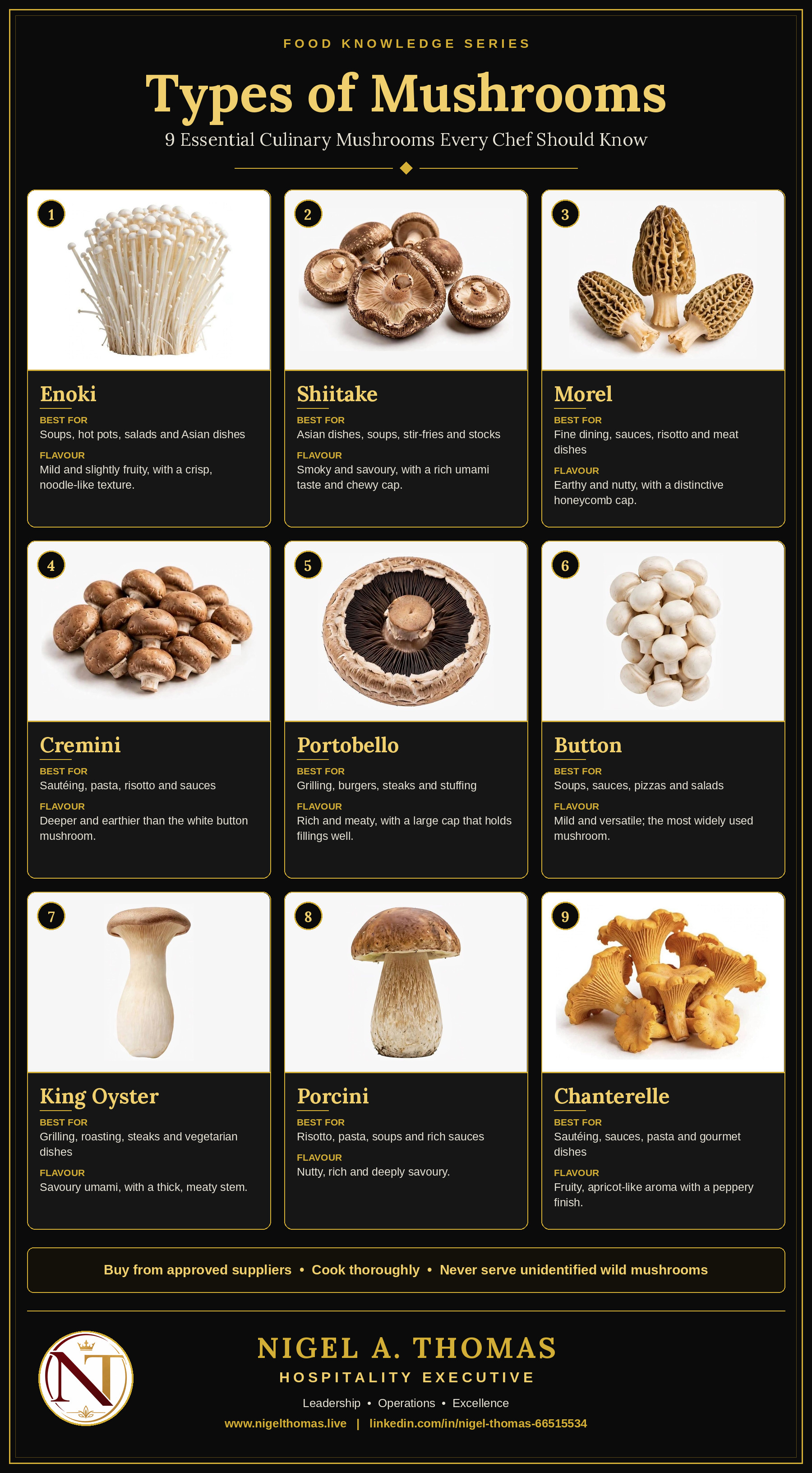
Mushrooms are one of the most useful ingredients in a professional kitchen. They add savoury depth to soups, sauces and stocks, act as a meaty centrepiece on vegetarian menus, and bring luxury to fine dining plates. Yet many cooks treat them all the same, and a team that cannot tell a button from a cremini, or an enoki from a king oyster, wastes both flavour and money. This guide covers nine essential culinary mushrooms: enoki, shiitake, morel, cremini, portobello, button, king oyster, porcini and chanterelle. For each one you will find its character, its best uses, cooking tips and handling notes, followed by buying, storage, costing and food safety guidance. A free black and gold poster at the bottom of the page summarises all nine on a single sheet.
What Makes Mushrooms Special in the Kitchen?
Mushrooms are the fruiting bodies of fungi, and they sit somewhere between vegetables and meat in the way chefs use them. They are naturally rich in compounds that give a savoury, umami taste, which is why a few mushrooms can deepen a sauce or a stock without adding any meat. They are low in fat and calories, and they contain fibre, B vitamins and minerals such as potassium and selenium, so they fit comfortably on healthy, vegetarian and vegan menus.
The nine mushrooms in this guide fall into three groups. Some are everyday cultivated varieties used in large volumes: button, cremini and portobello, which are actually the same species at different stages and colours. Others are cultivated specialty mushrooms with a distinct identity: enoki, shiitake and king oyster. The last group are prized, mostly wild or wild-harvested mushrooms: morel, porcini and chanterelle. Wild mushrooms cost more, have short seasons and require careful sourcing.
Core Principles for Cooking Mushrooms
A few rules apply to almost every variety, and teaching them early prevents the most common mistakes:
- Clean gently. Brush off soil or wipe with a damp cloth, and rinse quickly only when needed. Do not soak fresh mushrooms, because they become waterlogged and will not brown.
- Use high heat and a wide pan. Mushrooms contain a lot of water. In a crowded pan they steam and turn grey. Cook in batches, in a hot pan, until the liquid evaporates and the surface browns.
- Build flavour in layers. Brown the mushrooms, then add butter, garlic, shallot or thyme, and deglaze with wine or stock to capture the caramelised bits.
- Cook them thoroughly. Most mushrooms taste better and are easier to digest when cooked, and some must never be served raw. Treat cooking as the default.
- Season at the right moment. Salt draws out moisture, so many chefs add it once the mushrooms have started to brown.
1. Enoki Mushroom
Enoki are slender, white, noodle-like mushrooms with tiny round caps, grown in tight clusters. Their flavour is mild and slightly fruity, and their texture is delicately crisp, a little like al dente noodles. They are best known in Japanese, Chinese and Korean cooking.
Best for: soups, hot pots, salads and Asian dishes. Add enoki at the very end of cooking. In a hot pot or a clear broth, one or two minutes is enough, and longer cooking makes them rubbery.
Kitchen notes: trim off the tough, matted base and separate the strands gently before use. Enoki are grown in cool, moist conditions and have been linked to listeria recalls in several countries, so always cook them and never serve them raw on a salad unless your supplier and food safety plan specifically allow it. They work well wrapped in thin slices of beef, folded into omelettes or crisped in tempura.
2. Shiitake Mushroom
Shiitake have a broad, umbrella-shaped brown cap with a creamy underside and a tough, woody stem. They have a smoky, savoury flavour and a pleasantly chewy texture, and they are one of the best natural sources of umami in the kitchen.
Best for: Asian dishes, soups, stir-fries and stocks. Slice the caps and sear them for stir-fries, or leave them whole and score the tops for a grilled or braised dish.
Kitchen notes: remove the stems, which are too tough to eat but add excellent flavour to stocks and broths. Dried shiitake are even more intense than fresh and are used widely in Asian cuisines. Soak them in warm water until soft, then use the strained soaking liquid as a seasoning for soups and sauces. Shiitake pair well with soy, ginger, garlic, sesame, spring onion and rice.
3. Morel Mushroom
Morels are among the most distinctive mushrooms in the world. They have a conical, honeycomb-patterned cap that is hollow inside, and they range from pale blonde to dark brown. Their flavour is earthy, nutty and woodsy, and they are a signature of spring menus. They are usually foraged and therefore expensive.
Best for: fine dining, sauces, risotto and meat dishes. Classic partners include cream, butter, white wine, asparagus, peas, veal and chicken.
Kitchen notes: morels must always be cooked, because raw or undercooked morels can make people ill. Their hollow, ridged shape traps soil and insects, so cut them in half lengthways and rinse or soak them briefly in cold water, then drain and dry them thoroughly before cooking. Cook them gently in butter. Dried morels are widely available and rehydrate well, and the soaking liquid, strained carefully to remove grit, makes a fine base for a sauce.
4. Cremini Mushroom
Cremini, also sold as baby bella, are brown mushrooms with a firm texture and a deeper, earthier flavour than the white button mushroom. They are the same species as button and portobello mushrooms, harvested at a different stage and from a brown strain.
Best for: sautéing, pasta, risotto and sauces. They hold their shape and brown well, which makes them a dependable workhorse for volume cooking.
Kitchen notes: slice or quarter them evenly and sauté in batches in a hot pan. Finish with garlic, thyme and a splash of wine or stock for a quick sauce for steaks, chicken or pasta. Cremini are an easy way to upgrade a recipe that normally uses button mushrooms, since they give more flavour for a modest increase in cost.
5. Portobello Mushroom
A portobello is a fully mature cremini, with a wide, flat cap that can measure well over ten centimetres across. It has a rich, meaty taste and a dense texture, and the large dark gills on the underside give it a dramatic look.
Best for: grilling, burgers, steaks and stuffing. A whole marinated portobello cap is a popular vegetarian burger patty or steak substitute, and the wide cap is an ideal vessel for fillings such as spinach and cheese or herbed breadcrumbs.
Kitchen notes: remove the tough stem, and scrape out the gills if you want to avoid a dark, muddy colour in the finished dish. Marinate for about thirty minutes in oil, balsamic vinegar, garlic and herbs before grilling or roasting, and cook until tender, since an undercooked portobello is rubbery. Because it is large, it works well as a main course plate with sides.
6. Button Mushroom
The button mushroom, also called the white or common mushroom, is the most widely used mushroom in the world. It is small, round and white, with a mild flavour and a soft texture. It is the baseline against which other mushrooms are measured.
Best for: soups, sauces, pizzas and salads. Cream of mushroom soup, pizza toppings, stuffed mushroom starters and omelette fillings all rely on this mushroom, and it is also served thinly sliced and raw in salads when quality and handling are good.
Kitchen notes: choose firm, closed caps with no slime or dark spots. Slice them evenly and cook over high heat for a good colour. Because their flavour is mild, they benefit from a flavour booster such as dried porcini powder, a splash of soy sauce or a little thyme. Their low price and reliability make them essential for banquets and high-volume service.
7. King Oyster Mushroom
King oyster mushrooms have a thick, creamy-white stem and a small, tan cap. They are the largest of the oyster family and prized for their dense, meaty texture and savoury, mildly sweet flavour.
Best for: grilling, roasting, steaks and vegetarian dishes. The stem is the star: slice it into thick rounds and sear it hard in a hot pan to produce golden discs that resemble scallops, or cut it lengthways and score it for a mushroom steak. Shredded stems can be cooked to resemble pulled meat in tacos, sliders and plant-based mains.
Kitchen notes: because the texture is firm, king oysters tolerate high heat, long cooking and marinades well. Brush with oil, season generously and finish with butter, garlic and herbs or a glaze of soy and sesame. Their sturdy build also makes them one of the better mushrooms to prepare ahead and hold for service.
8. Porcini Mushroom
Porcini, called cèpes in France, are thick-stemmed wild mushrooms with a smooth brown cap and a sponge-like underside in place of gills. Their flavour is deeply nutty, rich and savoury, and they are a cornerstone of Italian and French cuisine.
Best for: risotto, pasta, soups and rich sauces. Fresh porcini, available in season, can be sliced and pan-fried, grilled or roasted. Dried porcini are used year-round and are one of the best pantry ingredients for intensifying flavour.
Kitchen notes: clean fresh porcini with a brush and remove any soft or wormy parts. To use dried porcini, soak them in hot water for twenty to thirty minutes, lift them out, chop them and strain the liquid through a coffee filter or fine cloth to remove grit. Add both the mushrooms and the liquid to risottos, pasta sauces, braises and gravies. Ground dried porcini powder is an inexpensive way to season burgers, steaks and soups.
9. Chanterelle Mushroom
Chanterelles are trumpet-shaped, golden-orange mushrooms with ridged, fork-like folds under the cap instead of true gills. They have a fruity, apricot-like aroma and a mild peppery finish, and they are one of the most celebrated wild mushrooms in gourmet cooking.
Best for: sautéing, sauces, pasta and gourmet dishes. They shine with butter, cream, eggs, shallots, parsley and chicken, and they make an elegant garnish for steak or fish.
Kitchen notes: chanterelles carry a lot of water. Dry-sauté them in a hot pan first, until the liquid evaporates, then add butter and aromatics. Clean them with a soft brush, and avoid long soaking. Because chanterelles have look-alikes, purchase them only from approved suppliers and never accept foraged mushrooms from an unverified source.
Which Mushroom for Which Dish?
| Dish or technique | Best mushrooms | Why |
|---|---|---|
| Clear soups and hot pots | Enoki, shiitake | Delicate texture and umami broth flavour |
| Cream soups and sauces | Button, cremini, porcini | Reliable flavour that blends smoothly |
| Risotto | Porcini, cremini, morel | Rich flavour that suits slow, creamy rice |
| Pasta | Cremini, chanterelle, porcini | Hold their shape and pair with butter or cream |
| Grill and burgers | Portobello, king oyster | Large, firm and meaty |
| Stir-fries | Shiitake, king oyster, enoki | Cook quickly and absorb sauces |
| Pizza and salads | Button, cremini | Mild, versatile and economical |
| Fine dining plates | Morel, chanterelle, porcini | Distinctive flavour and visual appeal |
Buying, Storing and Preparing Mushrooms
Good mushrooms start with good buying. Choose firm, dry, plump mushrooms with a fresh, earthy smell. Reject any that are slimy, wet, shrivelled, darkened or smell sour. Check the delivery temperature and the condition of the packaging on arrival.
- Store cold. Keep fresh mushrooms in the refrigerator, usually at or below 5 degrees Celsius, in a breathable container or paper bag, not sealed plastic, which traps moisture and speeds spoilage.
- Use quickly. Most fresh mushrooms keep for only a few days, and delicate wild varieties for less. Label with the date and rotate stock using first in, first out.
- Keep dry. Wash only what you will use immediately, and dry well.
- Store dried mushrooms properly. Keep dried varieties in an airtight container in a cool, dark, dry place, and rehydrate only what you need.
Dried Mushrooms and Rehydration
Drying concentrates mushroom flavour, which is why dried porcini, shiitake and morels are so valuable in the kitchen. To rehydrate, cover the dried mushrooms with hot water for twenty to thirty minutes, until soft. Lift them out rather than pouring them through a strainer, so any grit stays in the bowl, and pass the soaking liquid through a fine cloth or coffee filter. The strained liquid is full of flavour and should go into the dish. For more on this technique, see the guide to essential culinary terms in the related reading below.
Yield, Costing and Menu Planning
Mushrooms lose a large share of their weight during cooking, because so much of it is water, and some varieties also lose weight to trimming. Always cost mushroom dishes from the cooked or trimmed weight, not the purchase weight. Test your own yield: weigh the raw mushrooms, trim and cook them under normal conditions, and then weigh the result. As a rough guide, many kitchens plan around 80 to 100 grams of raw mushrooms for a side portion, but your recipe card should always have the final word.
Use the economical varieties in volume dishes, and reserve morels, porcini and chanterelles for dishes where they can be the centrepiece. A small amount of dried porcini added to a button mushroom sauce can give you the flavour of a premium dish at a fraction of the cost. For vegetarian and vegan menus, king oyster, portobello and shiitake are the most reliable meat alternatives.
Food Safety and Allergens
- Source with care. Buy only from approved suppliers who can identify wild mushrooms. Never serve unidentified or foraged mushrooms.
- Cook thoroughly. Morels must always be cooked, and enoki should be cooked as well. Most other varieties also taste better and are safer when cooked.
- Prevent cross-contamination. Keep mushrooms separate from raw meat and use clean boards, knives and containers.
- Control temperatures. Cool cooked mushroom dishes quickly, hold hot food above 63 degrees Celsius and chilled food at or below 5 degrees Celsius.
- Know the allergens. Mushroom allergy exists, though it is not common, and mushrooms often appear in sauces and fillings that contain dairy, gluten or alcohol. Make sure servers can answer questions about every dish.
Server Talk Track
Servers sell mushroom dishes best when they can describe the flavour in a sentence. For example:
"Our risotto is made with porcini mushrooms, which are wild mushrooms with a deep, nutty flavour. We also add a little of the soaking liquid from dried porcini, so the whole dish tastes richly of the forest."
Teach the team to describe the mushroom in terms of flavour, texture and how it is cooked, and to say clearly if a dish contains cream, butter, wine or other ingredients that matter to guests with dietary needs.
Common Mistakes to Avoid
- Soaking fresh mushrooms in water, which leads to soggy, grey results.
- Overcrowding the pan, so mushrooms steam instead of browning.
- Serving morels or enoki undercooked or raw.
- Throwing away shiitake stems and porcini soaking liquid, which are full of flavour.
- Storing mushrooms in sealed plastic, which speeds spoilage.
- Costing from purchase weight and ignoring trim and cooking loss.
- Buying wild mushrooms from unverified sources.
Mushroom Vocabulary at a Glance
| Term | Meaning |
|---|---|
| Umami | The savoury, mouth-filling taste found in mushrooms, stocks and aged foods |
| Cap and stem | The two main parts of a mushroom; the stem is often tougher and better in stock |
| Gills | The thin ridges under the cap of many mushrooms, such as portobello |
| Cep | The French name for porcini |
| Baby bella | A market name for cremini mushrooms |
| Foraged | Wild-harvested, not cultivated |
| Rehydrate | To soak a dried product so it regains moisture and volume |
| Duxelles | A finely chopped mushroom paste cooked with shallots and butter until dry |
Frequently Asked Questions
Are button, cremini and portobello mushrooms the same?
They are the same species. Button mushrooms are white, cremini are a brown strain with a deeper flavour, and portobello is a fully grown cremini with a large, open cap.
Should mushrooms be washed?
Brush or wipe them clean, and rinse quickly only if they are very dirty. Do not soak them, and dry them well before cooking.
Why do my mushrooms turn grey and watery?
The pan is probably overcrowded or not hot enough. Cook in smaller batches over high heat until the moisture evaporates and the mushrooms brown.
Can I use dried mushrooms instead of fresh?
Often yes, especially in soups, sauces and risottos. Dried mushrooms have a stronger flavour and a chewier texture, so use less and rehydrate them first.
Which mushroom is best for vegetarian main courses?
King oyster and portobello are the most popular because of their firm, meaty texture. Shiitake adds depth of flavour.
Final Thoughts
Knowing your mushrooms turns a basic ingredient into a menu advantage. Use button and cremini for dependable volume, portobello and king oyster for meaty mains, shiitake and enoki for Asian dishes, and reserve morel, porcini and chanterelle for moments that deserve a showpiece. Cook them hot, season them well, source wild varieties carefully and teach your team to describe them with confidence. Download the poster below for your next training session and keep it in the kitchen as a quick reference.