Why Herbs Matter
Herbs are the quiet professionals of the kitchen. They rarely take the starring role, yet a dish without them often feels flat, heavy or unfinished. A scatter of parsley wakes up a stew, a sprig of thyme gives a stock backbone, and a handful of mint turns a simple yoghurt into something memorable. For cooks, chefs and hospitality teams, knowing herbs well is one of the fastest ways to improve flavour without adding salt, fat or cost.
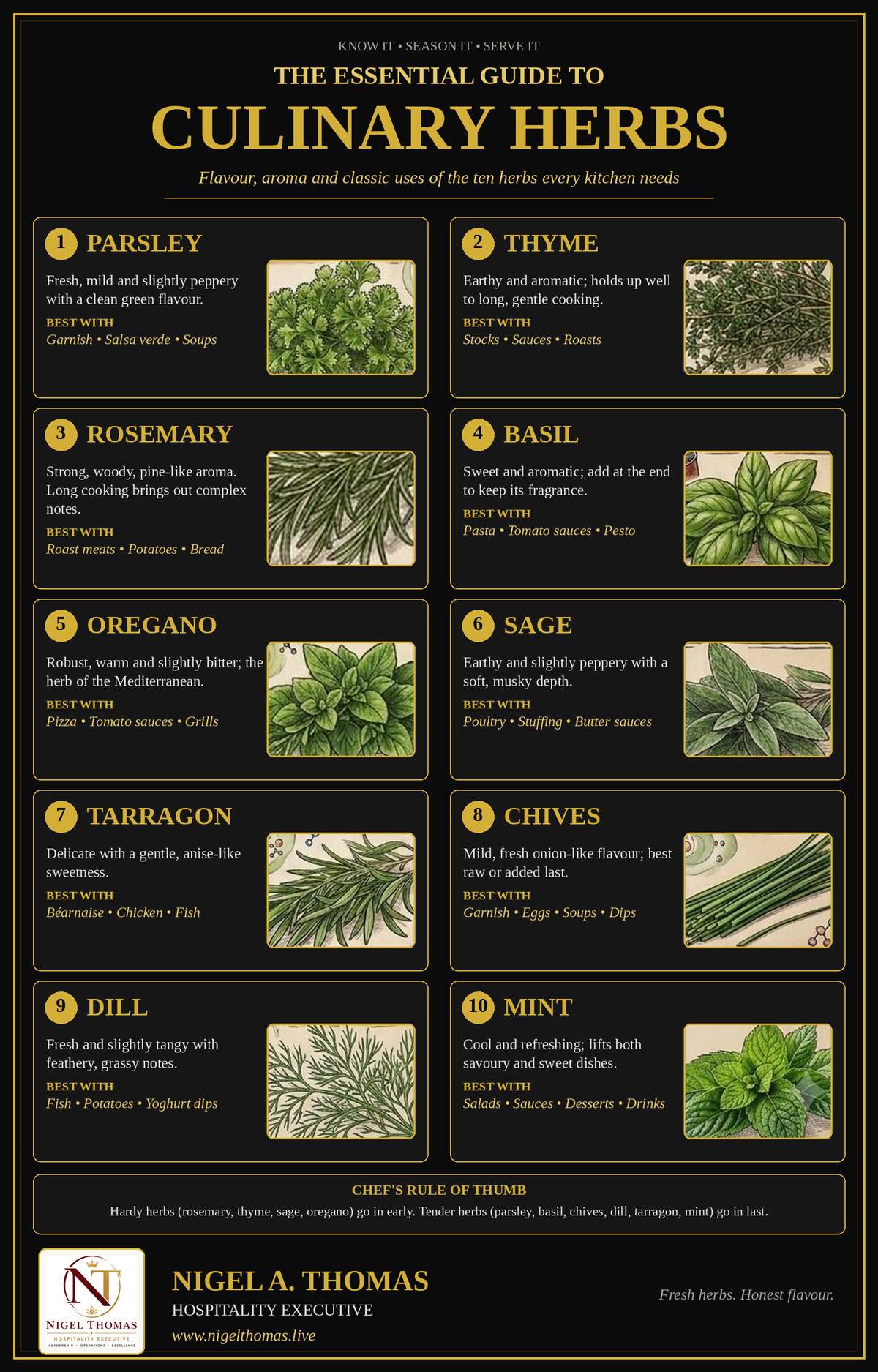
This guide walks through the ten essential culinary herbs: parsley, thyme, rosemary, basil, oregano, sage, tarragon, chives, dill and mint. For each one you will find its flavour profile, how to use it, what it pairs with and the common mistakes to avoid. You will also find practical advice on buying, washing and storing herbs, classic herb blends, food safety points for professional kitchens, and a bartender-style talk track for serving staff.
Herbs, Spices and Aromatics
The difference between herbs and spices is simple. Herbs are the leaves of soft-stemmed plants, used fresh or dried. Spices come from other parts of a plant, such as seeds, bark, roots, buds or fruit. Cinnamon is bark, cumin is a seed and ginger is a root, while basil, mint and thyme are all leaves. Some plants give us both: the leaves of the coriander plant are a herb, while its dried seeds are a spice.
Aromatics is a broader kitchen term for ingredients that build the base flavour of a dish, including onions, garlic, celery, carrot, ginger and herbs. When a recipe says to sweat the aromatics, the herbs are often added at the start or, for delicate leaves, held back for the end.
Hardy Herbs and Tender Herbs
The single most useful idea in herb cookery is the split between hardy and tender herbs. Understanding it solves most timing questions.
- Hardy herbs: Rosemary, thyme, sage and oregano have woody stems and tough, oil-rich leaves. Their flavour compounds are robust, so they stand up to long cooking and can go in early, in stews, roasts, braises and stocks.
- Tender herbs: Parsley, basil, chives, dill, tarragon and mint have soft stems and delicate leaves. Heat destroys their fresh aroma quickly, so they are usually added at the very end, or used raw.
A good rule for the pass: hardy herbs build flavour, tender herbs finish it. Tarragon is the grey area. It is delicate, but it stands a little more heat than basil, so it is often added in the last few minutes of a sauce.
Fresh or Dried?
Drying concentrates flavour, which is why the standard conversion is roughly three parts fresh herb to one part dried. In practice, one tablespoon of chopped fresh herb equals about one teaspoon of dried. Not every herb dries well. Oregano, thyme, rosemary and sage keep much of their character when dried, and dried oregano is arguably the better choice for pizza and tomato sauce. Parsley, chives, basil, dill and mint lose most of their charm when dried, so fresh is strongly preferred for them.
Dried herbs should be added earlier in cooking, so that they rehydrate and release flavour in the liquid. Fresh tender herbs should be added last. Whole dried herbs keep their flavour for about a year, while ground or crumbled herbs fade faster, so store them in airtight containers away from heat and light, and replace them when the aroma has gone.
The Ten Essential Herbs
1. Parsley
Flavour: Fresh, mild, clean and slightly peppery.
Varieties: Flat-leaf (Italian) parsley has a stronger, more rounded flavour and is preferred for cooking. Curly parsley is milder and is often used as a decorative garnish.
Best With: Garnishes, salsa verde, gremolata, chimichurri, soups, stocks, fish, potatoes and almost every savoury dish.
Chef's Tip: Do not throw away the stems. They hold more flavour than the leaves and are excellent in stocks and bouquet garni. Chop the leaves just before serving so that they stay bright green.
2. Thyme
Flavour: Earthy, aromatic and slightly minty, with a gentle floral note.
Varieties: Common thyme is the kitchen workhorse. Lemon thyme adds a citrus lift that suits fish and chicken.
Best With: Stocks, soups, sauces, roasted vegetables, poultry, lamb, mushrooms and slow braises.
Chef's Tip: Thyme stems are woody, so strip the leaves by running your fingers down the stem against the direction of growth. For stocks and braises, add whole sprigs and remove them at the end.
3. Rosemary
Flavour: Strong, woody and pine-like, with a resinous edge. Long cooking brings out its more complex, sweeter notes.
Best With: Roast lamb, chicken, pork, potatoes, focaccia, white beans and grilled vegetables.
Chef's Tip: Rosemary is powerful, so use it sparingly. Chop the needles very finely before adding them to food, because whole needles stay sharp and unpleasant to chew. Sturdy rosemary stems make excellent skewers for kebabs, adding fragrance from the inside.
4. Basil
Flavour: Sweet, fragrant and slightly peppery, with hints of clove and anise.
Varieties: Sweet or Genovese basil is the classic for pasta, tomato sauce and pesto. Thai basil has a pronounced anise note and holds up in stir-fries and curries. Holy basil is peppery and used in Southeast Asian cooking.
Best With: Tomatoes, mozzarella, pasta, pizza, salads, pesto, soups and fruit such as strawberries.
Chef's Tip: Basil bruises and blackens easily, so tear it or roll the leaves and slice them into thin ribbons, a cut known as chiffonade, just before use. Add it at the end of cooking to keep its fragrance, and do not refrigerate the fresh bunch, because the cold turns the leaves dark.
5. Oregano
Flavour: Robust, warm, savoury and slightly bitter.
Varieties: Mediterranean oregano, often called Greek oregano, is the standard. Mexican oregano is a different plant with a more citrusy, earthy flavour and is used in salsas, chilli and bean dishes.
Best With: Pizza, tomato sauces, grilled meats, olives, feta, roasted vegetables and marinades.
Chef's Tip: Oregano is one of the few herbs that is often better dried than fresh. Crush the dried leaves between your palms before adding them, to wake up the oils.
6. Sage
Flavour: Earthy, slightly peppery, with a soft, musky depth and a hint of camphor.
Best With: Poultry, pork, sausages, stuffing, butter sauces, pumpkin, squash, beans and liver.
Chef's Tip: Fry whole sage leaves briefly in butter or oil until crisp. They become a fragrant garnish for pasta, gnocchi and roasted squash. Sage is strong, so a few leaves are enough for a whole dish.
7. Tarragon
Flavour: Delicate, slightly sweet, with a distinctive anise or liquorice note.
Varieties: French tarragon has the true flavour that chefs prize. Russian tarragon is hardier to grow but much weaker in taste, so check which one you are buying.
Best With: Béarnaise sauce, chicken, fish, eggs, mushrooms, vinaigrettes and creamy sauces.
Chef's Tip: Tarragon is a classic partner for chicken and a core member of the French fines herbes. Add it in the last few minutes of cooking so that its subtle sweetness is not lost.
8. Chives
Flavour: Mild, fresh and onion-like, without the sharpness of raw onion.
Best With: Eggs, potatoes, soups, soft cheese, dips, fish, baked potatoes and salads.
Chef's Tip: Snip chives with sharp scissors rather than chopping them, which bruises the stems and makes them bitter and watery. Always add them at the very end. The purple flowers are edible and make a beautiful, mild garnish for salads and canapés.
9. Dill
Flavour: Fresh, slightly tangy and grassy, with a gentle anise note.
Best With: Salmon and gravlax, potatoes, cucumber, yoghurt dips such as tzatziki, pickles, eggs, soups and Scandinavian and Eastern European dishes.
Chef's Tip: The feathery fronds are the herb, while the seeds are a separate spice with a stronger, more caraway-like taste. Add the fronds at the end, because long cooking removes their freshness.
10. Mint
Flavour: Cool, sweet and refreshing, thanks to its menthol content.
Varieties: Spearmint is the standard culinary mint, softer and sweeter. Peppermint is stronger and better for teas and confectionery.
Best With: Lamb, peas, yoghurt, tabbouleh, salads, sauces, chocolate, fruit desserts, ice cream, and drinks such as the mojito.
Chef's Tip: Mint turns dark if chopped long before service, so prepare it at the last moment. For drinks, slap the leaves gently between your hands to release their oils instead of crushing them hard.
Herb Pairing Guide
Pairing by ingredient is the fastest way to choose a herb with confidence. These combinations are reliable starting points for any menu:
- Chicken: Thyme, tarragon, sage, rosemary and parsley.
- Beef and lamb: Rosemary, thyme, oregano and mint, especially with lamb.
- Pork and sausages: Sage, thyme and rosemary.
- Fish and seafood: Dill, parsley, chives, tarragon and lemon thyme.
- Eggs: Chives, parsley, tarragon and the fines herbes blend.
- Tomatoes: Basil, oregano and parsley.
- Potatoes: Rosemary, thyme, chives, dill and parsley.
- Mushrooms: Thyme, parsley and tarragon.
- Squash and pumpkin: Sage and thyme.
- Peas, cucumber and yoghurt: Mint and dill.
- Fruit and desserts: Mint, basil and sometimes rosemary or thyme with stone fruit.
When in doubt, follow the cuisine. Italian cooking leans on basil, oregano, parsley and rosemary. French cooking relies on thyme, tarragon, chives and parsley. Greek and Middle Eastern dishes favour oregano, mint and dill, while Nordic cooking is built around dill and chives. Matching herbs to the region of a dish is an easy way to keep a menu coherent.
Classic Herb Blends
Much of the world's best cooking relies on herbs working together. These blends are worth knowing by name:
- Bouquet garni: A small bundle of parsley stems, thyme and bay leaf, tied with string or wrapped in leek, simmered in stocks, soups and stews and removed before serving.
- Fines herbes: A French mix of parsley, chervil, tarragon and chives, added fresh at the end to omelettes, delicate sauces and fish.
- Herbes de Provence: A dried blend usually containing thyme, rosemary, oregano and savory, often with lavender, ideal for grilled meat and roasted vegetables.
- Gremolata: Finely chopped parsley, lemon zest and garlic, sprinkled over braised dishes such as osso buco to add brightness.
- Pesto: The Genoese sauce of basil, pine nuts, hard cheese, garlic and olive oil.
- Chimichurri: The Argentine sauce of parsley, oregano, garlic, vinegar and olive oil, served with grilled steak.
- Salsa verde: The Italian green sauce of parsley, capers, anchovy, garlic and olive oil, wonderful with fish and boiled meats.
Buying and Storing Herbs
Good herbs start with good buying. Choose bunches with bright, even colour, firm stems and no yellowing, sliminess or black spots. The scent should be clear and strong when you rub a leaf. Avoid wilted bunches, because they will not recover in the fridge.
Storing Hardy Herbs
Rosemary, thyme, sage and oregano keep best wrapped loosely in damp paper towel and placed in a container or bag in the refrigerator. They can last one to two weeks.
Storing Tender Herbs
Parsley, dill, mint and tarragon last longer if treated like cut flowers. Trim the stems, stand the bunch in a jar with a little water, cover the leaves loosely with a bag and refrigerate. Change the water every couple of days. Chives keep well wrapped in damp paper towel. Basil is the exception: keep it at room temperature in a glass of water, away from direct sun.
Freezing and Preserving
Chop herbs, press them into ice-cube trays and cover with olive oil or water, then freeze. These cubes drop straight into soups, sauces and braises. Freezing suits parsley, basil, dill and chives better than it suits herbs that you need as a crisp garnish. Hardy herbs can be dried by hanging small bundles in a warm, airy place until brittle.
Cooking Techniques with Herbs
Washing and Cutting
Wash herbs in cold water, lift them out so that grit sinks and stays behind, and dry them thoroughly in a salad spinner or on a clean towel. Wet herbs turn to mush under the knife. Use a very sharp knife, because a dull blade bruises the leaves. Cut tender herbs just before service.
Infusing Oils, Butters and Salts
Herbs flavour fat beautifully. Soft butter mixed with chopped parsley, chives and garlic makes a classic compound butter for steak and fish. Salt blended with rosemary and thyme gives a lovely finishing salt. Oil can be gently warmed with hardy herbs to carry their flavour into dressings and marinades.
Layering Flavour
Professional kitchens often use the same herb twice. A braise might begin with thyme in the pot, and finish with chopped parsley and thyme leaves at the end. The early addition gives depth, while the late addition adds a bright, fresh finish.
Food Safety in Professional Kitchens
Herbs are usually eaten raw or lightly cooked, so they need the same care as any ready-to-eat food.
- Wash and sanitise properly: Rinse herbs thoroughly under cold running water or in a clean basin, and follow your HACCP plan and local health authority guidance.
- Prevent cross-contamination: Keep herbs separate from raw meat, poultry and fish, and use dedicated, clean boards and knives.
- Be careful with flavoured oils: Fresh herbs or garlic stored in oil can create conditions that allow the bacterium behind botulism to grow if the mixture is left at room temperature. Refrigerate herb oils, use them within a few days, or freeze them for longer storage.
- Label and date: Chopped herbs and prepared herb mixtures should be labelled with the preparation date and discarded when they have wilted or turned slimy.
- Know your allergens: Parsley and dill belong to the carrot family, and some guests with celery or carrot-family sensitivities may react to them. Always ask about allergies and follow your kitchen's allergen procedures.
Garnishing and Plating
A garnish should taste good and add something to the dish. Whole small sprigs of dill, chervil or thyme suit fish and cold starters. Finely snipped chives look elegant over soups and eggs. Torn basil suits tomato salads and pizza. Fried sage leaves add crunch over pasta. Mint belongs on desserts and fruit. Avoid placing inedible sprigs, such as large rosemary stems, on a plate unless the guest is told that they are for fragrance, and avoid piling herbs on top of food that is going to be eaten quickly, because wilted garnish looks careless.
Growing Herbs at Home
Few ingredients repay home growing as generously as herbs. Basil, parsley, chives and mint thrive on a sunny windowsill or balcony. Rosemary, thyme, sage and oregano prefer full sun and free-draining soil, and many are perennials that return every year. Mint is vigorous and can take over a bed, so grow it in its own pot. Cutting herbs regularly encourages new growth, and picking basil before it flowers keeps the leaves sweet.
Server Talk Track
Guests are often curious about the herbs on the plate. A confident, brief explanation adds to the experience.
Guest says: "What is the green herb on the fish?"
Response: "That's fresh dill. It has a light, slightly tangy flavour that pairs naturally with salmon."
Why this works: It names the herb, describes the taste in a few words and links it to the dish.
Guest says: "Is there any rosemary in the lamb? I don't enjoy it."
Response: "Yes, the lamb is roasted with rosemary and garlic. I'd be happy to ask the chef whether we can prepare it without."
Why this works: It answers honestly and offers a solution, without making the guest feel awkward.
Guest says: "Can I get extra basil on my pizza?"
Response: "Of course. We add fresh basil after baking so that it stays fragrant."
Why this works: It agrees to the request and shares a small piece of kitchen knowledge.
Key Facts to Remember
- Hardy herbs: Rosemary, thyme, sage, oregano. Add early.
- Tender herbs: Parsley, basil, chives, dill, tarragon, mint. Add at the end.
- Conversion: Three parts fresh equals one part dried.
- Dry well: Oregano, thyme, rosemary, sage.
- Best fresh: Parsley, basil, chives, dill, mint.
- Classic blends: Bouquet garni, fines herbes, herbes de Provence, gremolata.
- Storage: Hardy herbs in damp paper towel, tender herbs like flowers in water, basil at room temperature.
- Safety: Wash herbs, refrigerate herb oils and know your allergens.
Important Interview Questions
If you are preparing for a cooking, culinary school or hospitality interview, these questions are worth knowing:
Q: What is the difference between hardy and tender herbs?
A: Hardy herbs have woody stems and tough leaves and can be cooked for a long time. Tender herbs have soft leaves and are best added at the end.
Q: How do you convert fresh herbs to dried?
A: Use about one third as much dried herb as fresh, so one teaspoon of dried replaces one tablespoon of fresh.
Q: What is a bouquet garni?
A: A small bundle of herbs, typically parsley stems, thyme and bay leaf, tied together and used to flavour stocks and stews, then removed.
Q: What is in fines herbes?
A: Parsley, chervil, tarragon and chives.
Q: Why should basil not be chopped long before service?
A: It bruises and turns black quickly, so it should be torn or cut just before serving.
Q: Why can herb-infused oil be a food safety risk?
A: Fresh herbs or garlic in oil can allow botulism bacteria to grow if the mixture is stored at room temperature, so it must be refrigerated and used quickly, or frozen.
Herbs reward attention. Buy them fresh, store them carefully, cut them sharply and add them at the right moment, and even the simplest dish will taste more alive. Whether you cook at home or lead a professional kitchen, treat herbs as seriously as any other ingredient, and your food will show the difference. Always follow your local food safety regulations and the allergen procedures of your kitchen.