Top 20 Protein-Rich Foods per 100 g
Protein drives menu design as much as flavour does. Whether you are building a banquet menu, a staff canteen plan, or simply shopping smarter at home, it helps to know which ingredients carry the most protein per 100 g. This ranking covers 20 common foods, from kitchen staples such as chicken breast and cheddar to concentrated ingredients such as whey and nutritional yeast.
The Ranking
| # | Food | Type | Protein |
|---|---|---|---|
| 1 | Dried Squid | Dried | 72 g |
| 2 | Whey Protein | Powder | 70 g |
| 3 | Nutritional Yeast | Flakes | 50 g |
| 4 | Parmesan Cheese | Hard cheese | 35.8 g |
| 5 | Beef Jerky | Dried meat | 33.2 g |
| 6 | Beef Skirt Steak | Red meat | 26.7 g |
| 7 | Cheddar Cheese | Cheese | 25.9 g |
| 8 | Lentils | Dry weight | 25.8 g |
| 9 | Canned Tuna | Seafood | 25.6 g |
| 10 | Turkey Breast | Poultry | 24.6 g |
| 11 | Chicken Breast | Poultry | 23.1 g |
| 12 | Lean Pork Chop | Meat | 22.4 g |
| 13 | Sockeye Salmon | Seafood | 21.3 g |
| 14 | Sardines | Seafood | 20.9 g |
| 15 | Lamb Chop | Red meat | 20.4 g |
| 16 | Shrimp | Seafood | 20.3 g |
| 17 | Cocoa | Powder | 20 g |
| 18 | Mackerel | Seafood | 18.6 g |
| 19 | Pumpkin Seeds | Seeds | 18.5 g |
| 20 | Cod | Seafood | 17.9 g |
What This Means in a Professional Kitchen
Think in portions, not just percentages. A 150 g chicken breast delivers more usable protein on the plate than a sprinkle of nutritional yeast, even though the yeast ranks higher per 100 g. Costing and menu engineering should always use the as-served portion.
Mix animal and plant sources. Lentils, pumpkin seeds and nutritional yeast give vegetarian guests real protein options without relying on a single ingredient. Pairing lentils with dairy or grains broadens the amino acid profile.
Use seafood for variety. Sockeye salmon, sardines, mackerel, shrimp and cod all sit between roughly 18 and 21 g per 100 g, and they offer a lighter alternative to red meat on a la carte and buffet menus.
Watch salt and fat. Parmesan, cheddar and beef jerky are protein-dense but also high in sodium or fat. They work best as accents, garnishes or snack items rather than the base of a dish.
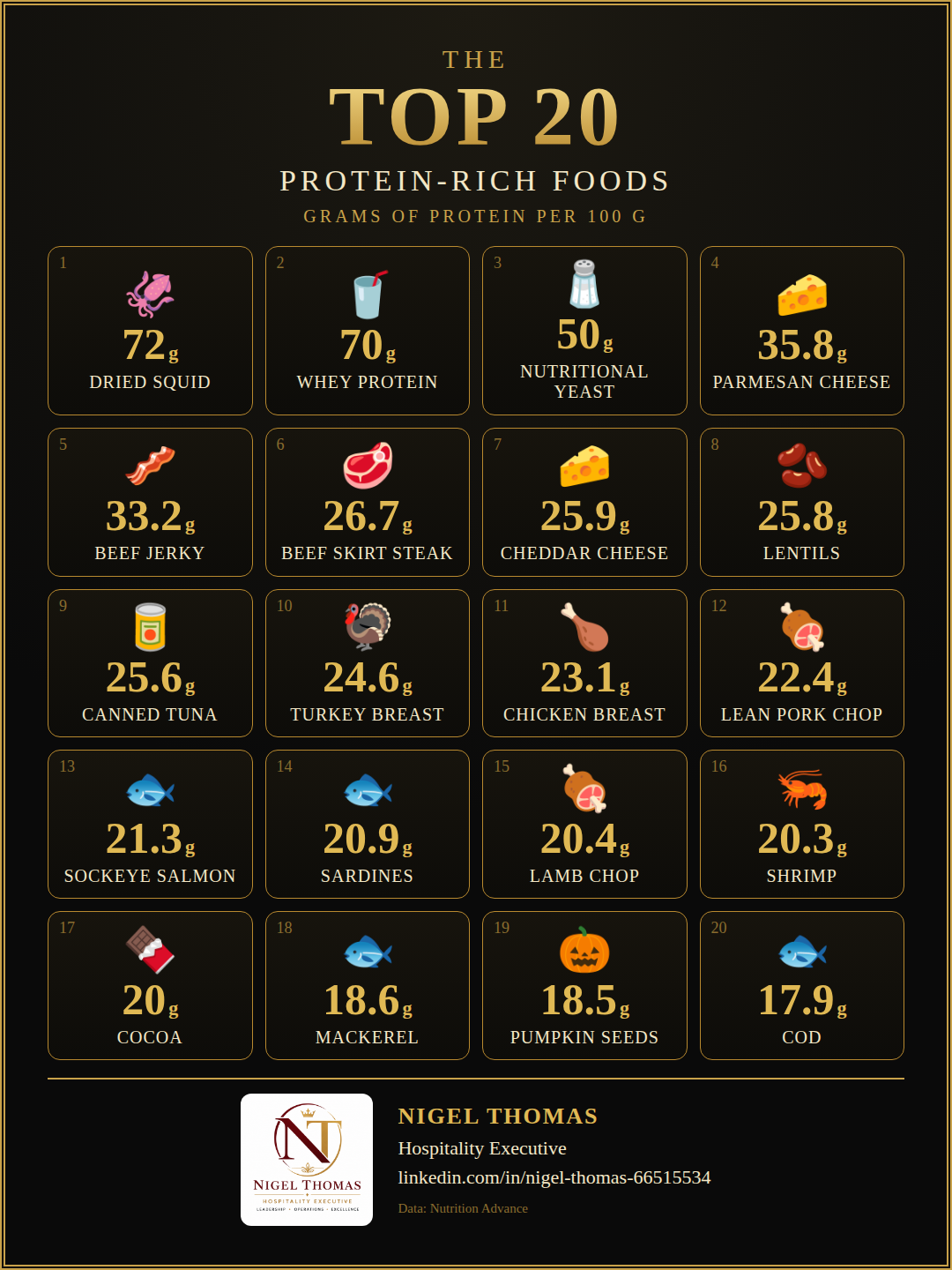
Free Infographic Poster
Tap the button to view the full black-and-gold poster, then download it to share with your team, print for a kitchen notice board, or save for menu planning.

More Food Reading From the Blog
- Types of MilkDairy varieties and how they are used in hotel kitchens
- Types of Cheese Used in HotelsParmesan, cheddar and more on the cheese board
- Popular Seafood Varieties28 seafood varieties explained
- Yogurt, Curd, Paneer & Plant-Based GuideDairy and plant-based protein options
- 6 Delicious Chicken Nugget RecipesPoultry protein, six ways
- 5 Classic Italian Pasta RecipesProtein-rich shrimp, beef and chicken pastas

Hospitality executive and corporate trainer with 30+ years across hotels, resorts, cruise lines and F&B operations.
Connect on LinkedIn