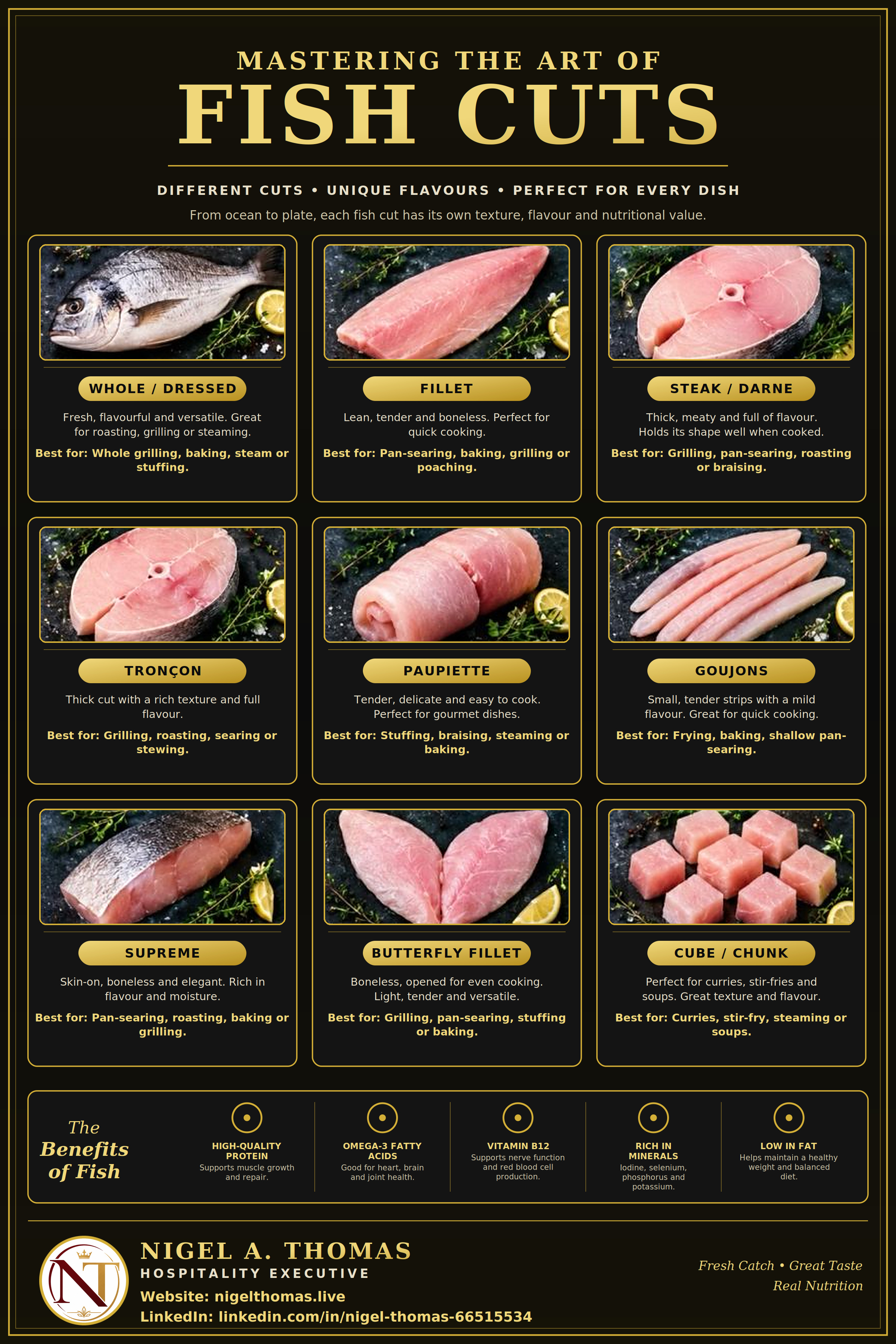
Most cooks know the names of a few fish cuts but not where each one sits on the fish, what it is best used for, or how it should be handled in the kitchen. This guide covers the six cuts that matter in professional cooking: loin, belly, tail, collar, cheek and frame. For each one, you will find its position, texture, best uses and cooking method. A free poster at the bottom summarises the whole guide on one page.
1. Why Fish Cuts Matter
A fish is not a uniform block of protein. The loin is firm and lean, the belly is fatty and delicate, the tail is thin and tough, and the collar and cheek carry some of the deepest flavour on the whole animal. Treat them all the same way and you either overcook the delicate parts or undersell the flavourful ones. Knowing the cuts is the difference between a kitchen that uses the whole fish well and one that trims half of it into the bin.
For F&B managers, the cuts also matter for costing. A whole fish bought at one price yields cuts of very different value. Understanding the yield lets you price a loin dish and a collar dish correctly, and it lets you turn trim into stock rather than waste.
2. The Six Cuts at a Glance
| Cut | Where it sits | Texture and fat | Best use |
|---|---|---|---|
| Loin | Along the back | Firm, lean, thick | Sear, roast, grill |
| Belly | Lower edge | Fatty, soft, rich | Raw, gentle poach |
| Tail | Rear taper | Thin, tough | Curry, cake, stock |
| Collar | Around the gills | Dark, fatty, intense | Grill, broil |
| Cheek | Side of the head | Small, sweet, tender | Pan-fry, poach |
| Frame | After filleting | Bony, gelatinous | Stock, soup base |
3. The Loin
The loin is the main fillet, running along the back of the fish from head to tail. It is the thickest, most uniform cut, and it is what most people picture when they think of a fish fillet. Because it is lean and firm, it holds together well under direct heat and cooks evenly.
Best uses
- Pan-searing, skin side down, for a crisp finish
- Roasting whole or in portions
- Grilling over charcoal or on a plancha
- Slicing for sashimi or crudo when the fish is sushi-grade
The loin is the default cut for a plated main course. It is also the most expensive per kilo, which is why portion control matters. A 150 to 180 gram portion is standard for most restaurant mains.
4. The Belly
The belly runs along the lower edge of the fish. It is the fattiest part of the animal, with soft flesh and a rich, buttery flavour. In Japanese cuisine, tuna belly is toro, one of the most prized cuts in the world. In Western kitchens, the belly is often trimmed off and discarded, which is a loss.
Best uses
- Sushi, sashimi and crudo
- Gentle poaching in a light broth
- Curing and smoking
- Confit in olive oil at low temperature
The belly is delicate and spoils faster than the loin, so it should be used first. It does not respond well to high heat, which renders the fat too quickly and leaves the flesh greasy. Keep the heat low and the cooking time short.
5. The Tail
The tail tapers thin toward the rear of the fish. It has less fat than the belly and less uniform flesh than the loin, and it can be tough if cooked as a whole portion. It is the cut most often used for dishes where the fish is broken down anyway.
Best uses
- Fish cakes, fish balls and croquettes
- Curries and stews where the fish flakes apart
- Stock and soup base
- Mincing for stuffing or forcemeat
Do not try to sear a tail portion and serve it whole unless the fish is small. The thin end will overcook before the thick end is done.
6. The Collar
The collar is the area around the gills and jaw, just behind the head. It is dark, fatty and intensely flavoured, and it is one of the best parts of the fish for high-heat cooking. In Japanese cuisine, hamachi collar grilled with salt is a delicacy. In Western kitchens, it is often thrown away with the head.
Best uses
- Grilling or broiling with salt and lemon
- Roasting on the bone
- Slow-braising in a flavoured liquid
- Using in fish soup or bouillabaisse
The collar is best cooked on the bone. The bone keeps the flesh moist and adds flavour. Serve it as a sharing plate or as a chef's treat, not as a plated main.
7. The Cheek
The cheek is a small, round medallion of flesh on the side of the head, just behind the eye. It is sweet, tender and rich, and it is often sold separately at a premium. Cod cheeks and halibut cheeks are the best-known examples.
Best uses
- Pan-frying in butter
- Poaching in a light broth
- Adding to fish pies and stews
- Tempura or light batter
Cheeks are small, so they cook quickly. A minute or two on each side is usually enough. They are a good way to add value to a menu without buying a more expensive cut.
8. The Frame
The frame is what remains after the fillets have been removed. It is not a cut in the culinary sense, but it is the foundation of fish stock. The frame carries collagen, gelatin and deep flavour, and it costs nothing if you are already buying whole fish.
Best uses
- Fish stock and fumet
- Soup base for bouillabaisse or bisque
- Sauces and reductions
- Pressure-cooked broth for ramen or congee
Rinse the frame well to remove blood, then simmer gently for 30 to 45 minutes with aromatics. Do not boil hard, or the stock will turn cloudy and bitter.
9. Cooking Methods by Cut
| Cut | Dry heat | Moist heat | Raw or cured |
|---|---|---|---|
| Loin | Sear, roast, grill | Poach, steam | Sashimi, crudo |
| Belly | Not recommended | Poach, confit | Sushi, cure, smoke |
| Tail | Not recommended | Curry, stew, stock | Not recommended |
| Collar | Grill, broil, roast | Braise | Not recommended |
| Cheek | Pan-fry | Poach | Not recommended |
| Frame | Not applicable | Stock, soup | Not applicable |
10. Food Safety for Fish Cuts
- Keep fish between 0 and 4 degrees Celsius at all times before cooking
- Cook fish to 63 degrees Celsius (145 degrees Fahrenheit) unless it is sushi-grade and served raw
- Use separate boards and knives for raw fish and ready-to-eat food
- Label and date every portion, and rotate stock first in, first out
- Belly and cheek spoil faster than loin, so use them first
- Freeze fish for sashimi according to your local food safety rules before serving raw
11. Buying and Costing
When you buy a whole fish, ask the fishmonger for the yield: the weight of usable fillet as a percentage of the whole fish. A typical round fish yields about 45 to 55 percent fillet, and a flat fish yields less. The trim and frame are not waste if you use them for stock.
Cost each cut separately. The loin carries most of the value, the belly is a premium cut in its own right, and the collar and cheek are low-cost, high-flavour additions to a menu. This lets you price a whole-fish menu honestly instead of hiding the trim in the food cost of one dish.
12. Common Mistakes
- Cooking belly or cheek at high heat and rendering the fat out
- Searing a tail portion and serving it whole
- Discarding the collar, cheek and frame
- Storing fish uncovered, which dries the surface
- Using the same board for raw fish and salad
- Freezing fish twice, which ruins the texture
- Not labelling portions, so the oldest fish gets used last
Frequently Asked Questions
Which fish cut is best for pan-searing?
The loin. It is thick, firm and uniform, so it cooks evenly and holds together under direct heat. Belly and cheek are too delicate for high heat.
Is fish collar good to eat?
Yes. The collar is dark, fatty and intensely flavoured, and it is one of the best parts of the fish for grilling or broiling. It is often discarded in Western kitchens, which is a waste.
Can I make stock from fish trim?
Yes. The frame, head and trim make excellent stock. Rinse well, simmer gently for 30 to 45 minutes with aromatics, and strain. Do not boil hard.
How long does raw fish keep in the fridge?
Fresh fish keeps for one to two days at 0 to 4 degrees Celsius. Belly and cheek spoil faster than loin, so use them first. Freeze only if you will not use the fish in time.
What is the difference between loin and fillet?
A fillet is the whole side of the fish after the bones are removed. The loin is the thick upper portion of that fillet. In practice, the terms are often used interchangeably, but the loin is the premium cut.
Final Thoughts
Every cut on a fish has a purpose. The loin is the workhorse, the belly is the luxury, the tail is the utility cut, the collar and cheek are the hidden gems, and the frame is the foundation of the stock pot. Learn the cuts, handle each one correctly, and you will get more value from every fish that comes into your kitchen. Use the poster below in your training sessions and share it with your team.