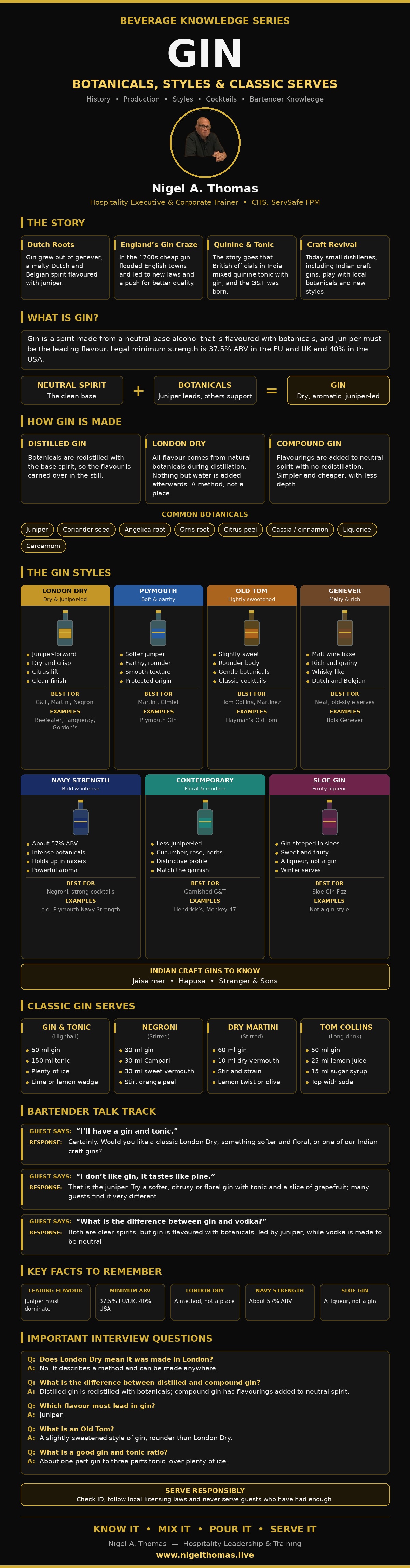
The Story of Gin
Gin is more than just a spirit; it is a cultural chameleon with a rich, tumultuous, and often controversial history. Its journey from a medicinal tonic to the centerpiece of the modern cocktail renaissance is a fascinating tale of trade, taxation, and botanical alchemy. Understanding the story of gin is essential to appreciating the nuanced liquid in your glass today.
Dutch Roots
Gin grew out of a European tradition of malty Dutch and Belgian spirit flavoured with juniper. In the 16th century, Dutch distillers created Genever (or Jenever), a malt wine-based spirit infused with juniper berries. Initially sold as a medicine to treat kidney and stomach ailments, it was quickly adopted as a recreational drink. The spirit traveled across the North Sea, where English soldiers fighting in the Thirty Years' War encountered it and brought it home, calling it "Dutch courage."
England's Gin Craze
In the early 1700s, cheap gin flooded English towns and cities, leading to new laws and a push for better quality. The infamous "Gin Craze" of the 18th century saw Londoners consuming vast quantities of crude, often poisonous, spirit. This era was immortalized in William Hogarth's satirical print "Gin Lane," which depicted the societal decay caused by excessive consumption. The government responded with the Gin Act of 1736, though it took several more decades of legislation to truly regulate the industry and elevate the quality of the spirit.
Quinine & Tonic
The story of the Gin & Tonic takes us to the British colonialists in India. To combat malaria, they consumed quinine, a bitter compound derived from the bark of the cinchona tree. To make the bitter medicine palatable, they mixed it with sugar, water, and gin. The result was the Gin & Tonic, a drink that became a staple of colonial life and eventually a global icon. The botanical complexity of gin proved to be the perfect foil for the bitter quinine.
The Craft Revival
Today, small distilleries, including a vibrant scene of Indian craft gins, play with local botanicals and new styles. The 21st century has seen an unprecedented explosion in gin production. The craft distilling movement has democratized the spirit, allowing small producers to experiment with terroir-driven botanicals, exotic spices, and innovative distillation techniques. Gin is no longer just a British or Dutch product; it is a global canvas for creativity.
What is Gin?
Gin is a spirit made from a neutral base alcohol that is flavoured with botanicals, and juniper must be the leading flavour. While the exact legal definitions vary by region, the core identity of gin remains constant: a clear, unaged (or lightly aged) spirit dominated by the piney, resinous character of juniper berries.
Legal minimum strength is 37.5% ABV in the EU and UK, and 40% in the USA. It is important to note that while many gins are diluted to bottling strength, the quality of the base spirit and the precise blend of botanicals dictate the final flavour profile. The equation is simple: Neutral Spirit + Botanicals = Gin.
How Gin is Made
Production methods significantly impact the final character of the gin. Broadly, gin is produced using one of two primary methods:
Distilled Gin
Botanicals are redistilled with the base spirit, so the flavour is carried over in the still. This is the hallmark of high-quality gin. The distiller creates a base mash, ferments it, and distills it to a high proof neutral spirit. Then, they either macerate the botanicals in the spirit before distillation or place them in a vapour basket (gin basket) in the still's neck. The resulting distillate is then cut with water to bottling strength.
London Dry
Despite the name, London Dry is a method, not a place. All flavour comes from natural botanicals during distillation. Nothing but water is added afterwards. It is a strict legal definition in the EU that requires the spirit to be distilled to at least 70% ABV, with no artificial flavourings, colourings, or added sugar. It represents the purest expression of the distiller's craft.
Compound Gin
Flavourings are added to neutral spirit with no redistillation. Simpler and cheaper, with less depth. Compound gins are often made by simply soaking botanicals in neutral grain spirit or adding essential oils and extracts. While perfectly legal in many jurisdictions, they generally lack the complexity and integration of flavour found in distilled gins.
Common Botanicals
While juniper is the mandatory lead, gin is defined by its supporting cast of botanicals. These are the most common ingredients found in a gin recipe:
- Juniper: The essential, piney, resinous berry that defines the category. It provides the backbone of the spirit.
- Coriander Seed: Adds a warm, spicy, citrusy, and slightly peppery note. It complements the juniper beautifully.
- Angelica Root: Provides earthy, musky, and slightly bitter notes. It acts as a fixative, helping to bind the other flavours together.
- Orris Root: Delicate, floral, and reminiscent of violets and parma violets. It adds a smooth, perfumed texture to the spirit.
- Citrus Peel: Lemon, orange, grapefruit, and lime peels add bright, zesty, and aromatic top notes.
- Cassia / Cinnamon: Adds warmth, sweetness, and a spicy kick, often used to give gins a comforting, wintery feel.
- Liquorice: Provides a sweet, woody, and slightly aniseed flavour that adds depth and a lingering finish.
- Cardamom: An intensely aromatic spice with notes of eucalyptus, mint, and citrus. Used sparingly, it adds exotic complexity.
The Gin Styles
Gin is incredibly diverse, with distinct styles emerging from different historical and geographical contexts. Here are the primary styles every enthusiast should know:
London Dry
Profile: Dry & juniper-led.
Characteristics: Juniper-forward, dry and crisp, citrus lift, clean finish.
Best For: G&T, Martini, Negroni.
Examples: Beefeater, Tanqueray, Gordon's.
This is the quintessential gin style, known for its sharp, crisp, and uncompromising juniper character. It is the backbone of classic cocktails.
Plymouth
Profile: Soft & earthy.
Characteristics: Softer juniper, earthy, rounder mouthfeel, protected origin.
Best For: Martini, Gimlet.
Examples: Plymouth Gin.
Plymouth Gin is a protected geographical indication (PGI) in the UK. It is slightly sweeter and earthier than London Dry, making it an excellent choice for a softer Martini.
Old Tom
Profile: Lightly sweetened.
Characteristics: Slightly sweet, rounder body, gentle botanicals, classic cocktails.
Best For: Tom Collins, Martinez.
Examples: Hayman's Old Tom.
Old Tom is a historic style that sits between Genever and London Dry. It is lightly sweetened (traditionally with sugar or honey), giving it a softer, more approachable character that shines in classic cocktails.
Genever
Profile: Malty & rich.
Characteristics: Malt wine base, rich and grainy, whisky-like, Dutch and Belgian.
Best For: Neat, old-style serves.
Examples: Bols Genever.
Genever is the grandfather of gin. It is made with a malt wine base, giving it a rich, grainy, and sometimes slightly smoky flavor profile that is closer to whisky than modern gin.
Navy Strength
Profile: Bold & intense.
Characteristics: About 57% ABV, intense botanicals, holds up in mixers, powerful aroma.
Best For: Negroni, strong cocktails.
Examples: e.g. Plymouth Navy Strength.
Historically, Navy Strength gin was bottled at a high proof to ensure it wouldn't ruin the gunpowder on naval ships if it spilled. Today, it is prized by bartenders for its intense flavour and ability to stand up to bold mixers.
Contemporary
Profile: Floral & modern.
Characteristics: Less juniper-led, cucumber, rose, herbs, distinctive profile, match the garnish.
Best For: Garnished G&T.
Examples: Hendrick's, Monkey 47.
This category encompasses "New Western" gins. They often downplay juniper in favor of other botanicals like cucumber, rose, or exotic herbs. They are best enjoyed with a garnish that reflects their dominant botanicals.
Sloe Gin
Profile: Fruity liqueur.
Characteristics: Gin steeped in sloes, sweet and fruity, a liqueur not a gin, winter serves.
Best For: Sloe Gin Fizz.
Examples: Not a gin style.
While often grouped with gins, Sloe Gin is technically a liqueur. It is made by steeping sloe berries in gin and adding sugar. It is deeply fruity, sweet, and perfect for winter warming drinks.
Indian Craft Gins to Know
The Indian craft gin scene is exploding with innovation, utilizing the subcontinent's rich botanical heritage. Here are three standout brands:
- Jaisalmer: A classic London Dry style gin that uses local botanicals like coriander, angelica, and liquorice, alongside a touch of Indian spice. It is a beautifully balanced gin that makes an excellent G&T.
- Hapusa: Named after the Sanskrit word for juniper, this gin is a celebration of the Himalayan juniper. It also features Gondhoraj lime, turmeric, and mango, creating a vibrant, distinctly Indian flavour profile.
- Stranger & Sons: A Goa-based gin that uses a unique blend of botanicals, including coriander, black pepper, and a secret mix of Indian spices. It has a bold, spicy, and citrus-forward character.
Classic Gin Serves
A great gin deserves a great serve. Here are the four foundational gin cocktails every bartender and enthusiast must master.
Gin & Tonic (Highball)
The ultimate refresher.
Recipe: 50 ml gin, 150 ml tonic, plenty of ice, lime or lemon wedge.
Method: Build in a highball glass over ice. Stir gently to combine. Garnish with a lime or lemon wedge.
Tip: The ratio of gin to tonic is a personal preference, but a 1:3 ratio is a classic starting point.
Negroni (Stirred)
A bold, bitter, and beautifully balanced aperitif.
Recipe: 30 ml gin, 30 ml Campari, 30 ml sweet vermouth.
Method: Stir all ingredients with ice until well-chilled. Strain into a rocks glass over a large ice cube. Garnish with an orange peel.
Tip: The equal parts ratio is the modern standard, but you can adjust the gin to taste.
Dry Martini (Stirred)
The king of cocktails.
Recipe: 60 ml gin, 10 ml dry vermouth.
Method: Stir with ice and strain into a chilled martini glass. Garnish with a lemon twist or olive.
Tip: The ratio of gin to vermouth is a matter of personal preference, but a 6:1 ratio is a good starting point.
Tom Collins (Long Drink)
A fizzy, refreshing, and slightly sweet classic.
Recipe: 50 ml gin, 25 ml lemon juice, 15 ml sugar syrup, top with soda.
Method: Shake the gin, lemon juice, and sugar syrup with ice. Strain into a Collins glass over ice. Top with soda water. Garnish with a lemon slice and a cherry.
Tip: Use fresh lemon juice for the best results.
Bartender Talk Track
Engaging with guests about gin is an art. Here are some common scenarios and how to handle them like a pro:
Guest says: "I'll have a gin and tonic."
Response: "Certainly. Would you like a classic London Dry, something softer and floral, or one of our Indian craft gins?"
Why this works: It educates the guest without being condescending. It opens up a conversation about their preferences.
Guest says: "I don't like gin, it tastes like pine."
Response: "That is the juniper. Try a softer, citrusy or floral gin with tonic and a slice of grapefruit; many guests find it very different."
Why this works: It acknowledges their complaint and offers a solution. Many people who dislike London Dry gins actually enjoy Contemporary gins.
Guest says: "What is the difference between gin and vodka?"
Response: "Both are clear spirits, but gin is flavoured with botanicals, led by juniper, while vodka is made to be neutral."
Why this works: It is a concise, accurate, and easy-to-understand explanation.
Key Facts to Remember
- Leading Flavour: Juniper must dominate.
- Minimum ABV: 37.5% EU/UK, 40% USA.
- London Dry: A method, not a place.
- Navy Strength: About 57% ABV.
- Sloe Gin: A liqueur, not a gin.
Important Interview Questions
If you are preparing for a bartending interview or a sommelier exam, these questions are essential:
Q: Does London Dry mean it was made in London?
A: No. It describes a method and can be made anywhere.
Q: What is the difference between distilled and compound gin?
A: Distilled gin is redistilled with botanicals; compound gin has flavourings added to neutral spirit.
Q: Which flavour must lead in gin?
A: Juniper.
Q: What is an Old Tom?
A: A slightly sweetened style of gin, rounder than London Dry.
Q: What is a good gin and tonic ratio?
A: About one part gin to three parts tonic, over plenty of ice.
Gin is a spirit of endless discovery. Whether you are a seasoned bartender or a curious enthusiast, the world of gin offers a botanical journey unlike any other. Remember to always serve responsibly, check ID, and follow local licensing laws. Never serve guests who have had enough.