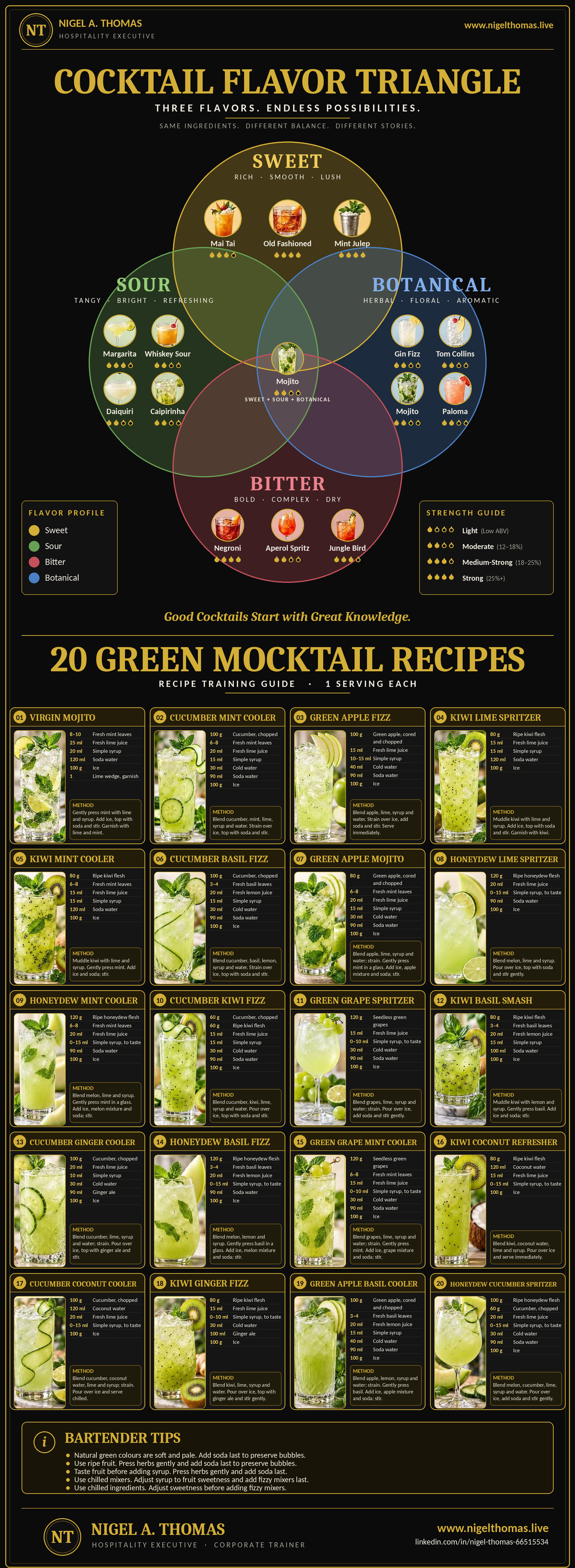
20 Green Mocktail Recipes: A Training Guide for Bartenders and F&B Teams
Green is the easiest colour to sell and the hardest to keep consistent. A guest sees a tall glass of pale green over ice, with mint, cucumber or kiwi on the rim, and expects something cool, clean and refreshing. Whether that is what arrives depends on small decisions: how ripe the fruit was, how hard the mint was pressed, how much syrup went in, and whether the soda was poured first or last.
This guide gives you 20 green mocktails, each built for one serving, with exact measures and a clear method. They come from a set of training sheets and are written for trainers, bar supervisors, hotel beverage teams, cafe owners and anyone who wants a non-alcoholic menu that looks premium and tastes balanced. A black and gold poster of all 20 recipes is available at the bottom of this page to print and pin in your bar.
Non-alcoholic drinks are no longer an afterthought. Guests who do not drink alcohol, drive home, are pregnant, fast, or simply want something lighter now expect the same care in their glass as the person ordering a cocktail. A strong mocktail list protects your beverage revenue and your guest experience at the same time.
The Balance Behind Every Glass
Alcohol gives a cocktail structure, bitterness and warmth. A mocktail has none of that to lean on, so balance has to come from four things you control completely.
Acid. Fresh lime or lemon juice gives lift and keeps the drink from tasting flat or syrupy. Lime suits mint, kiwi, apple and grape. Lemon suits basil, which can taste soapy against lime. Always squeeze to order or to the same shift; bottled juice dulls the whole drink.
Sweetness. Simple syrup adjusts sweetness without adding the grit of loose sugar. Ripe honeydew, grapes and kiwi bring their own sugar, which is why those recipes show a range such as 0–15 ml and say “to taste”. Taste the fruit first, then decide.
Aroma. Mint, basil, cucumber and ginger carry the freshness people associate with green drinks. They have to be pressed or blended carefully, because shredded herbs turn grassy and bitter.
Fizz. Soda water or ginger ale adds texture and lengthens the drink. It is always added last and stirred briefly, so the bubbles stay in the glass and not in the air.
Get these four right and the 20 recipes below become variations on one reliable idea rather than 20 separate things to memorise.
The Build Methods Used in This Guide
Every recipe follows one of four builds. Teach the build first and the recipes follow naturally.
1. Press and build. Fruit and herbs are pressed or muddled in the glass with citrus and syrup. Ice goes in, soda tops it, and the drink is stirred once. This is the fastest build and suits quiet and busy service alike. Recipes 01, 04, 05 and 12 use it.
2. Blend, strain and top. Fruit or vegetables are blended with citrus, syrup and cold water, then strained over ice and finished with soda or ginger ale. Straining gives a clean, smooth body with no pulp stuck to the straw. Recipes 02, 03, 06, 11, 13 and 19 use it.
3. Blend, press the herb, build. The fruit base is blended and strained, herbs are pressed gently in the glass, and the base, ice and soda are layered in. This keeps the herb aroma fresh while the fruit stays smooth. Recipes 07, 09, 14 and 15 use it.
4. Blend and pour. A simple blend poured over ice, finished with soda or ginger ale, or served as it is with coconut water. Recipes 08, 10, 16, 17, 18 and 20 use it.
Equipment and Mise en Place
Good mocktails come from a prepared station. Before service, set out a muddler, jigger, bar spoon, fine strainer, a small blender or stick blender, chilled glassware and a clean ice scoop. Keep a labelled container of simple syrup, a tub of fresh mint and basil with stems wrapped in a damp cloth, and pre-cut cucumber, apple, honeydew and kiwi in covered, chilled containers.
Chill your soda water and ginger ale. Warm mixers melt ice quickly, flatten the fizz and leave a thin, watery drink by the last third of the glass. Fill glasses with ice to the top; a half-filled glass warms and dilutes much faster.
Ingredient Standards
Fruit. Use ripe fruit. Under-ripe kiwi and honeydew taste sour and woody, and no amount of syrup fixes that. Cut grapes, seedless only, and core green apple completely. Taste a piece before every shift.
Herbs. Use fresh leaves that are green and unbruised. Press them gently so the oils release; do not tear, shred or grind. Basil blackens quickly once bruised, so press it in the glass just before the pour.
Simple syrup. One part sugar to one part water, dissolved and cooled. Make it fresh and store it covered and chilled, following your property’s shelf-life rule.
Ice. Clean, fresh ice at 100 g per glass in every recipe here. Standardising the ice weight standardises the dilution, and that is what makes two bartenders produce the same drink.
Colour. Natural green is soft and pale. Do not chase a neon shade with colouring; the gentle pastel look is a sign of real fruit and fresh herbs.
Hygiene and Allergen Awareness
Wash all produce, including cucumbers, apples and melon rind before cutting, and use dedicated chopping boards and knives for raw fruit. Use a scoop for ice, never a glass. Kiwi is a known allergen for some guests, and coconut water may concern guests with tree nut or coconut sensitivities; train staff to answer ingredient questions confidently and to check with the guest before serving. Label blenders and strainers as shared equipment if your bar also handles milk-based or alcoholic drinks.
The 20 Green Mocktail Recipes
All recipes make one serving. Where syrup is given as a range, taste the fruit and adjust before adding any fizzy mixer.
01. Virgin Mojito
8–10 fresh mint leaves • 25 ml fresh lime juice • 20 ml simple syrup • 120 ml soda water • 100 g ice • 1 lime wedge, garnish
Method: Gently press mint with lime and syrup. Add ice, top with soda and stir. Garnish with lime and mint. The benchmark non-alcoholic drink: press the mint just enough to release the aroma, because heavy muddling pulls out bitterness. A fresh mint sprig on top gives the guest the scent before the first sip.
02. Cucumber Mint Cooler
100 g cucumber, chopped • 6–8 fresh mint leaves • 20 ml fresh lime juice • 15 ml simple syrup • 30 ml cold water • 90 ml soda water • 100 g ice
Method: Blend cucumber, mint, lime, syrup and water. Strain over ice, top with soda and stir. A spa-style favourite for hotel pool bars and lunch service. The cold water loosens the blend so it strains cleanly. Garnish with a cucumber ribbon for a high-value look at very low cost.
03. Green Apple Fizz
100 g green apple, cored and chopped • 15 ml fresh lime juice • 10–15 ml simple syrup • 40 ml cold water • 90 ml soda water • 100 g ice
Method: Blend apple, lime, syrup and water. Strain over ice, add soda and stir. Serve immediately. Apple browns quickly once cut, and the lime slows that down, but speed still matters. Blend to order and serve right away for the crispest colour and flavour.
04. Kiwi Lime Spritzer
80 g ripe kiwi flesh • 15 ml fresh lime juice • 15 ml simple syrup • 120 ml soda water • 100 g ice
Method: Muddle kiwi with lime and syrup. Add ice, top with soda and stir. Garnish with kiwi. The black seeds stay in the drink and give it its speckled, natural look. Muddle lightly so the fruit breaks down without turning to a paste.
05. Kiwi Mint Cooler
80 g ripe kiwi flesh • 6–8 fresh mint leaves • 15 ml fresh lime juice • 15 ml simple syrup • 120 ml soda water • 100 g ice
Method: Muddle kiwi with lime and syrup. Gently press mint. Add ice and soda; stir. Kiwi first, mint second: muddling the kiwi hard and then pressing the mint lightly keeps the herb fragrant. A kiwi wheel on the rim signals the flavour before the glass is lifted.
06. Cucumber Basil Fizz
100 g cucumber, chopped • 3–4 fresh basil leaves • 20 ml fresh lemon juice • 15 ml simple syrup • 30 ml cold water • 90 ml soda water • 100 g ice
Method: Blend cucumber, basil, lemon, syrup and water. Strain over ice, top with soda and stir. Lemon, not lime, is used here because it flatters basil. Use only three or four leaves; basil is powerful, and extra leaves make the drink taste of salad.
07. Green Apple Mojito
80 g green apple, cored and chopped • 6–8 fresh mint leaves • 20 ml fresh lime juice • 15 ml simple syrup • 30 ml cold water • 90 ml soda water • 100 g ice
Method: Blend apple, lime, syrup and water; strain. Gently press mint in a glass. Add ice, apple mixture and soda; stir. A mojito with a crisp orchard edge. Keeping the mint out of the blender preserves the clear apple colour and gives the herb a fresher scent.
08. Honeydew Lime Spritzer
120 g ripe honeydew flesh • 20 ml fresh lime juice • 0–15 ml simple syrup, to taste • 90 ml soda water • 100 g ice
Method: Blend melon, lime and syrup. Pour over ice, top with soda and stir gently. The palest and softest drink on the list. A very ripe melon needs almost no syrup, while a firmer one needs more, so taste before you pour. A thin lime wheel and a melon wedge finish it.
09. Honeydew Mint Cooler
120 g ripe honeydew flesh • 6–8 fresh mint leaves • 20 ml fresh lime juice • 0–15 ml simple syrup, to taste • 90 ml soda water • 100 g ice
Method: Blend melon, lime and syrup. Gently press mint in a glass. Add ice, melon mixture and soda; stir. Melon and mint is a classic pairing for hot weather. Press the mint lightly in the glass so the oils sit on top of the sweet melon base.
10. Cucumber Kiwi Fizz
60 g cucumber, chopped • 60 g ripe kiwi flesh • 15 ml fresh lime juice • 15 ml simple syrup • 30 ml cold water • 90 ml soda water • 100 g ice
Method: Blend cucumber, kiwi, lime, syrup and water. Pour over ice, top with soda and stir. The even 60 g split keeps the cucumber cool and the kiwi tangy without either taking over. Blended seeds make this one speckled, and it is not strained, so pour it straight over ice.
11. Green Grape Spritzer
120 g seedless green grapes • 15 ml fresh lime juice • 0–10 ml simple syrup, to taste • 30 ml cold water • 90 ml soda water • 100 g ice
Method: Blend grapes, lime, syrup and water; strain. Pour over ice, add soda and stir gently. Grapes are naturally sweet, so the syrup range is small. Served in a wine glass with skewered grapes, this looks and feels like a refined aperitif without alcohol.
12. Kiwi Basil Smash
80 g ripe kiwi flesh • 3–4 fresh basil leaves • 20 ml fresh lemon juice • 15 ml simple syrup • 100 ml soda water • 100 g ice
Method: Muddle kiwi with lemon and syrup. Gently press basil. Add ice and soda; stir. Served in a short glass in the style of a smash. Kiwi and basil is an unexpected pairing that guests remember, and it is worth a spot on a signature mocktail list.
13. Cucumber Ginger Cooler
100 g cucumber, chopped • 20 ml fresh lime juice • 10 ml simple syrup • 30 ml cold water • 90 ml ginger ale • 100 g ice
Method: Blend cucumber, lime, syrup and water; strain. Pour over ice, top with ginger ale and stir. Ginger ale is already sweet, which is why the syrup is cut to 10 ml. The result is cool and gently spiced, and the drink has a warmer finish than the soda-based recipes.
14. Honeydew Basil Fizz
120 g ripe honeydew flesh • 3–4 fresh basil leaves • 20 ml fresh lemon juice • 0–15 ml simple syrup, to taste • 90 ml soda water • 100 g ice
Method: Blend melon, lemon and syrup. Gently press basil in a glass. Add ice, melon mixture and soda; stir. Sweet melon with fragrant basil and a lemon edge. Press the basil only at the last moment so it stays bright green and does not darken.
15. Green Grape Mint Cooler
120 g seedless green grapes • 6–8 fresh mint leaves • 15 ml fresh lime juice • 0–10 ml simple syrup, to taste • 30 ml cold water • 90 ml soda water • 100 g ice
Method: Blend grapes, lime, syrup and water; strain. Gently press mint. Add ice, grape mixture and soda; stir. Light, clean and lightly sweet. A skewer of grapes with a mint sprig makes a polished garnish that costs almost nothing.
16. Kiwi Coconut Refresher
80 g ripe kiwi flesh • 120 ml coconut water • 15 ml fresh lime juice • 0–15 ml simple syrup, to taste • 100 g ice
Method: Blend kiwi, coconut water, lime and syrup. Pour over ice and serve immediately. There is no soda in this one, so the drink is still, creamy-light and tropical. Blended kiwi and coconut water can separate if left standing, so make it to order.
17. Cucumber Coconut Cooler
100 g cucumber, chopped • 120 ml coconut water • 20 ml fresh lime juice • 0–15 ml simple syrup, to taste • 100 g ice
Method: Blend cucumber, coconut water, lime and syrup; strain. Pour over ice and serve chilled. A hydrating, quiet drink for spa menus, breakfast service and guests who want no fizz. Chill the coconut water in advance so the ice lasts the whole glass.
18. Kiwi Ginger Fizz
80 g ripe kiwi flesh • 15 ml fresh lime juice • 0–10 ml simple syrup, to taste • 30 ml cold water • 100 ml ginger ale • 100 g ice
Method: Blend kiwi, lime, syrup and water. Pour over ice, top with ginger ale and stir gently. Tart kiwi against warm ginger gives the drink a lively edge. Because the ginger ale adds sweetness, keep the syrup near the low end of the range.
19. Green Apple Basil Cooler
100 g green apple, cored and chopped • 3–4 fresh basil leaves • 20 ml fresh lemon juice • 15 ml simple syrup • 40 ml cold water • 90 ml soda water • 100 g ice
Method: Blend apple, lemon, syrup and water; strain. Gently press basil. Add ice, apple mixture and soda; stir. Crisp apple, a lemon lift and a herbal finish. It pairs well with salads, light starters and grilled dishes, so suggest it to guests ordering lunch.
20. Honeydew Cucumber Spritzer
100 g ripe honeydew flesh • 60 g cucumber, chopped • 20 ml fresh lime juice • 0–15 ml simple syrup, to taste • 30 ml cold water • 90 ml soda water • 100 g ice
Method: Blend melon, cucumber, lime, syrup and water. Pour over ice, add soda and stir gently. The most delicate drink in the guide, with a soft melon sweetness balanced by cucumber freshness. Serve in a wine glass with a cucumber twist and a melon wedge.
Bartender Tips to Teach the Team
Five rules from the training poster
1. Natural green colours are soft and pale. Add soda last to preserve bubbles.
2. Use ripe fruit. Press herbs gently and add soda last to preserve bubbles.
3. Taste fruit before adding syrup. Press herbs gently and add soda last.
4. Use chilled mixers. Adjust syrup to fruit sweetness and add fizzy mixers last.
5. Use chilled ingredients. Adjust sweetness before adding fizzy mixers.
When you train a new bartender, have them make the same recipe three times with a different tasting step each time: once with the fruit untasted, once with the syrup adjusted to the fruit, and once with the soda added first rather than last. The difference in the glass teaches the rules faster than any lecture. Then have them taste one of each recipe family, a press-and-build, a blend-strain-top, a blend-press-build and a blend-and-pour, so they learn the logic and not 20 separate lists.
Finally, write the measures on a laminated card or print the poster below and place it at the station. Consistency is the real skill in a bar, and a clear card at eye level is the cheapest consistency tool there is.
Free Training Poster
Print the black and gold infographic with all 20 recipes, measures and methods for your bar, training room or kitchen office.