Why Every Bar Needs a Strong Mocktail List
A mocktail is a non-alcoholic drink designed with the same care as a cocktail: balanced flavour, good colour, correct dilution and a presentation that suits the venue. For hotels, restaurants, resorts and cafes it is no longer a side item. A growing share of guests do not drink alcohol, whether for religious, health, driving or personal reasons, and they expect more than a glass of juice. A well-built mocktail list keeps those guests at the table longer, raises the average spend per cover and carries a high margin because the ingredients are inexpensive.
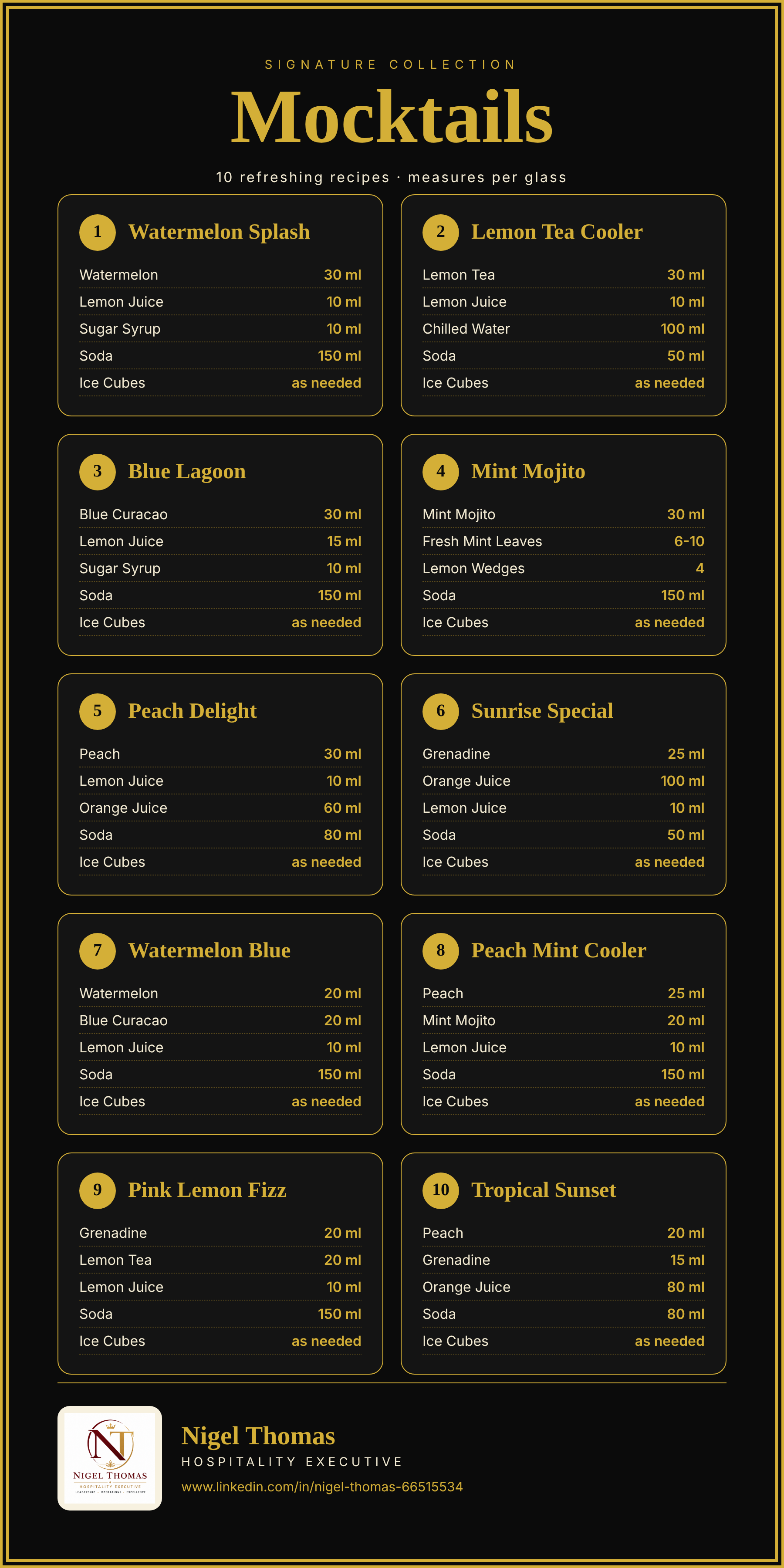
This guide covers a compact, practical set of ten mocktails, all built in a tall glass with the same simple structure: a flavour base, a citrus element, a sweetener where needed, soda for sparkle and plenty of ice. That repeatable structure is the point. When ten drinks share the same ingredients, the bar stays fast, training is short and stock is easy to control. The poster accompanying this article gives every measure per glass, so a bartender can read it at the station and make each drink consistently.
Setting Up the Mocktail Station
Before any drink is made, the station has to be organised. Keep the following within one arm's reach of the person making the drinks:
- Syrups and bases: watermelon, peach, grenadine, blue curacao syrup (the non-alcoholic kind), mint mojito syrup and lemon tea concentrate, each in a labelled pourer.
- Fresh items: lemons (wedges, wheels and juice), mint, oranges and watermelon, kept cold and prepped before service.
- Soda and chilled water: opened for the shift, never stored warm, because warm soda melts ice and goes flat quickly.
- Tools: jigger or measured pourers, bar spoon, muddler, strainer, tall glasses, straws and napkins.
Always measure. Free pouring is the quickest way to lose consistency and margin. Ten millilitres of syrup too much per glass, across a hundred glasses, is a full litre of wasted stock and a drink that tastes different every night. A jigger with 10 ml, 15 ml, 20 ml, 25 ml and 30 ml marks removes the guesswork, and a laminated copy of the recipe poster beside the station keeps new staff accurate from the first shift.
Core Techniques
Four techniques cover every recipe on this page.
Build in the glass
Most of the ten drinks are built directly over ice. Add the flavour ingredients first, stir briefly to combine, then add the soda last. Soda is always the final pour because pouring it first and stirring hard knocks out the carbonation.
Layer
The Sunrise Special, Watermelon Blue and Tropical Sunset get their colour from layering. Heavier, sweeter liquids such as grenadine sink, so they are poured last and slowly down the inside wall of the glass. Blue syrup can instead be poured first, with the lighter mixture floated over it using the back of a bar spoon. Do not stir a layered drink before it is served.
Muddle gently
Muddling is only needed for the Mint Mojito. Press the mint and lemon wedges just enough to release oils and juice. Hard muddling tears the mint and adds a grassy bitterness that no syrup can hide.
Ice and dilution
Use plenty of cold, clean ice. A glass packed with ice melts more slowly than one with a few cubes, which means the drink stays at the correct strength for longer. Avoid wet ice straight from a bin with standing water.
Understanding Flavour Balance
Every drink on this list follows the same flavour logic, and understanding it lets a bartender fix a drink by taste rather than by guessing. A balanced mocktail has four parts: sweetness from the syrup or juice, acidity from the lemon, dilution from the soda or water, and aroma from the garnish. If a drink tastes sharp, there is too much lemon for the syrup. If it tastes cloying, the syrup is high or the acid is low. If it tastes weak and watery, the ice has melted or the soda was over-poured. Most problems are solved by changing a measure by five millilitres, not by changing the recipe.
Notice that nearly every recipe includes 10 ml of lemon juice. This small, consistent amount is deliberate. It lifts the fruit flavours, keeps the syrups from tasting heavy and means staff only need to remember one citrus measure. The Blue Lagoon is the exception at 15 ml, because blue curacao syrup is sweeter and needs more acid to balance it. Once your team understands that rule, they can taste a drink and tell at once what it needs.
Ingredient Notes
Grenadine
A red pomegranate-style syrup that sinks in water because of its density. It is the layering tool for the Sunrise Special and the Tropical Sunset. Buy a good-quality bottle, because poor grenadine tastes of artificial cherry. Store it as the label directs and wipe the pourer after every shift.
Blue curacao syrup
Used in the Blue Lagoon and Watermelon Blue. Make sure it is the non-alcoholic syrup, not the liqueur, and keep the bottle visibly labelled so no one confuses them in a busy service. It gives the colour but little flavour of its own, so the lemon and sugar decide how the drink tastes.
Mint mojito syrup
A mint-and-lime flavoured syrup that provides the base for the Mint Mojito and the Peach Mint Cooler. Fresh mint is still added to the Mint Mojito for aroma, as the syrup alone cannot replace it.
Peach and watermelon
Both can be syrups, crushes or purees depending on your supplier. Whichever form you use, stay consistent: a change from syrup to puree changes the sweetness, thickness and shelf life, so retest the recipe before putting it into service.
Lemon tea
A concentrate or brewed and chilled lemon tea, used in the Lemon Tea Cooler and Pink Lemon Fizz. If you brew it yourself, cool it completely before it goes near the ice.
The 10 Signature Mocktail Recipes
All measures are per glass. Soda is always added last, and ice is added generously to a tall glass.
1Watermelon Splash
Ingredients: Watermelon (syrup or crush) 30 ml; Lemon Juice 10 ml; Sugar Syrup 10 ml; Soda 150 ml; Ice Cubes.
Method: Build in a tall highball glass over ice: watermelon first, then lemon juice and sugar syrup, a short stir, and soda poured last and slowly so the fizz stays alive. Garnish with a thin watermelon wedge on the rim.
This is the safest crowd-pleaser on the card. It is pink, sweet-tart and instantly recognisable, so it sells to guests who do not know what to order. The lemon keeps the watermelon from tasting flat, and the sugar syrup is deliberately small because watermelon concentrates are often sweet already. Taste your batch before you set the syrup measure for the week.
2Lemon Tea Cooler
Ingredients: Lemon Tea 30 ml; Lemon Juice 10 ml; Chilled Water 100 ml; Soda 50 ml; Ice Cubes.
Method: Add lemon tea and lemon juice to a tall glass of ice, top with chilled water, stir gently, then finish with a splash of soda. Garnish with a lemon wheel.
The only recipe on the page that is built mostly on still water, which makes it the lightest and least sweet option. It suits lunch service, guests avoiding sugar and hot afternoons. Always use properly chilled water, not ice melt, otherwise the drink dilutes before it reaches the table. A fresh lemon wheel carries most of the aroma.
3Blue Lagoon
Ingredients: Blue Curacao (non-alcoholic syrup) 30 ml; Lemon Juice 15 ml; Sugar Syrup 10 ml; Soda 150 ml; Ice Cubes.
Method: Fill the glass with ice, add blue curacao syrup, lemon juice and sugar syrup, stir briefly, and top with soda. For a layered look pour the soda first and float the blue syrup over the back of a bar spoon.
Colour sells this drink, and the extra 5 ml of lemon, compared with most recipes here, stops the blue syrup from tasting like a sweet. Use the non-alcoholic blue curacao syrup, label it clearly on the bar and mention this to guests who ask. Garnish with a lemon slice and a mint sprig for contrast.
4Mint Mojito
Ingredients: Mint Mojito syrup 30 ml; Fresh Mint Leaves 6-10; Lemon Wedges 4; Soda 150 ml; Ice Cubes.
Method: Place the mint and lemon wedges in the glass and press gently with a muddler, release the oils without shredding the leaves. Add mint mojito syrup, fill with ice, top with soda and lift the contents once with a bar spoon.
The one recipe that needs real bar technique. Over-muddling turns mint bitter, so press, do not pound. Slap a mint sprig between your palms before placing it on top so the aroma reaches the guest first. Four lemon wedges give acidity and a little oil from the peel, which is why we use wedges rather than juice here.
5Peach Delight
Ingredients: Peach (syrup) 30 ml; Lemon Juice 10 ml; Orange Juice 60 ml; Soda 80 ml; Ice Cubes.
Method: Stir peach, lemon and orange juice over ice, then top with soda. Garnish with an orange slice.
Soft, fruity and golden, this is the drink many guests choose as their first mocktail. Orange juice gives body, the peach adds a perfumed top note, and only 80 ml of soda keeps it rounder than the longer drinks on the list. Use fresh or good-quality chilled juice, as the orange is the largest part of the flavour.
6Sunrise Special
Ingredients: Grenadine 25 ml; Orange Juice 100 ml; Lemon Juice 10 ml; Soda 50 ml; Ice Cubes.
Method: Add ice, then orange juice, lemon juice and soda and stir. Pour the grenadine last down the inside of the glass so it sinks and creates the red-to-yellow gradient. Do not stir after pouring.
The photo drink of the menu. Grenadine is the heaviest liquid, so it settles on the bottom and the colour change appears without any special tools. Serve with a straw so guests can choose when to mix it. Orange juice is 100 ml here, the largest juice measure on the page, so it is also the highest-cost drink in this set.
7Watermelon Blue
Ingredients: Watermelon 20 ml; Blue Curacao (non-alcoholic syrup) 20 ml; Lemon Juice 10 ml; Soda 150 ml; Ice Cubes.
Method: Pour the blue curacao syrup into the glass first, add ice, then slowly pour a mix of watermelon, lemon juice and soda over the back of a spoon for a red-over-blue effect.
A two-tone drink that photographs well for social media. The two syrups are balanced at 20 ml each, so neither colour dominates. Keep the ice cold and well packed, since melting ice blends the layers. Garnish with a small watermelon triangle. A reliable choice for celebrations and party menus.
8Peach Mint Cooler
Ingredients: Peach 25 ml; Mint Mojito syrup 20 ml; Lemon Juice 10 ml; Soda 150 ml; Ice Cubes.
Method: Stir peach syrup, mint mojito syrup and lemon juice over ice and finish with soda. Garnish with a mint sprig and a peach slice if available.
A cooling blend that sits between the Peach Delight and the Mint Mojito. There is no muddling, so it can be made quickly at a busy station, and it still gives the mint freshness guests expect. Because both syrups are sweet, do not add extra sugar. Add a small squeeze of lemon if a guest wants it sharper.
9Pink Lemon Fizz
Ingredients: Grenadine 20 ml; Lemon Tea 20 ml; Lemon Juice 10 ml; Soda 150 ml; Ice Cubes.
Method: Add grenadine, lemon tea and lemon juice to a glass of ice, stir lightly and top with soda. Garnish with a lemon wheel.
Light, pink and sparkling. The lemon tea brings a gentle tannic edge that stops the grenadine from tasting purely sweet, so it feels more grown-up than its colour suggests. It is one of the lowest-cost drinks on the list and a good candidate for jugs at events.
10Tropical Sunset
Ingredients: Peach 20 ml; Grenadine 15 ml; Orange Juice 80 ml; Soda 80 ml; Ice Cubes.
Method: Build peach, orange juice and soda over ice and stir. Add the grenadine last, down the glass wall, to form a red base. Garnish with an orange slice.
A warmer cousin of the Sunrise Special with the peach adding extra fruit. The smaller grenadine measure of 15 ml gives a softer sunset line, and less sugar overall. Serve it as the closing drink of the menu, the one guests photograph before drinking.
Costing, Pricing and Service
Mocktails are among the highest-margin items in a bar, but only if they are costed. Work out the cost per glass by adding the syrup or juice used, the soda, the garnish and the ice share, then divide by the intended food-cost percentage. As a rough rule, drinks with a large juice measure, such as the Sunrise Special at 100 ml of orange juice, cost more than drinks built on syrups and soda, such as the Pink Lemon Fizz, so price them accordingly. Always cost using your own purchase prices, not a general estimate.
Service matters as much as the recipe. Bring the drink with a straw and a napkin, present the garnish on the right-hand side of the glass, and describe the drink in one sentence when you place it down. Offer mocktails proactively to guests who are not ordering alcohol; asking what they would like to drink in a neutral way avoids making anyone feel left out. Check allergies before service, particularly for guests with citrus or stone-fruit sensitivities.
Training Your Team
A new bartender can learn this entire menu in a single training session if it is taught in the right order. Start with the shared structure: base, citrus, soda, ice. Next, teach the three techniques that matter, which are building over ice, layering, and gentle muddling. Then have the trainee make each drink three times, tasting every one and comparing it with the standard. Finally, test them with a service simulation of four or five orders at once, so they learn to build in parallel rather than one drink at a time.
Check the standard weekly. Pick two drinks at random, make them exactly to the recipe poster and ask the team to taste them. Drift in the recipe is common over time, usually from heavy pouring, and the weekly check catches it before guests do. Record any change to the standard so that every shift uses the same version.
Menu Design and Merchandising
Present the ten drinks on the menu in four groups so guests can choose quickly: Fruity and Fresh (Watermelon Splash, Peach Delight, Watermelon Blue), Cooling and Light (Lemon Tea Cooler, Pink Lemon Fizz), Herbal and Mint (Mint Mojito, Peach Mint Cooler), and Colourful and Layered (Blue Lagoon, Sunrise Special, Tropical Sunset). Write a short description under each name, such as the main flavour and one garnish, and avoid long ingredient lists.
Mocktails also work well as part of a package. A hotel can pair a mocktail with a lunch set menu, a cafe can offer one with a dessert, and a banquet team can include two or three of them in a welcome-drink round for events where many guests do not drink alcohol. Because the bases are shared, adding a mocktail to a package does not add stock complexity.
Troubleshooting Common Problems
The drink tastes too sweet
Reduce the syrup by 5 ml and add a small extra squeeze of lemon. Always check that the syrups are properly measured and that the grenadine has not been over-poured.
The layers have mixed
The ice was too sparse or the pour was too fast. Pack the glass with ice and pour slowly over the back of a spoon.
The mint tastes bitter
The mint has been over-muddled. Press lightly and use fresh leaves, then discard the stems.
The drink is flat
Soda was added too early, stirred too hard or stored warm. Add the soda last and keep it chilled.
The colours look dull
Check that the glass is clean, the ice is clear and the syrup has not separated. Shake or stir syrups before use if the label recommends it.
Frequently Asked Questions
Can these drinks be prepared in jugs for events?
Yes. Batch the base ingredients without soda, keep them chilled and add the ice and soda to each glass at service. Do not pre-mix the soda.
Are these drinks suitable for children?
The recipes contain no alcohol when the non-alcoholic blue curacao and syrups are used, but always check labels and tell guests about caffeine in the lemon tea.
How long can the syrups be kept?
Follow the manufacturer's storage guidance and keep opened bottles refrigerated where the label says so. Date every bottle when opened.
Can I change the measures?
Use the poster as the standard recipe. Any adjustment should be tested, recorded and approved so that every bartender makes the same drink.
Final Thoughts
A good mocktail list does not need dozens of drinks. Ten balanced recipes, built from a small stock of syrups, fresh citrus, soda and ice, give guests real choice while keeping the bar fast, consistent and profitable. Use the poster on this page as your training reference, measure every pour and keep the garnish fresh. If you manage a hotel bar, a restaurant or a cafe, these ten drinks can be on your menu this week. Download the infographic below and put it at the station.
Free Mocktail Infographic
Click below to view the full ten-recipe poster, then download it for your bar station or training room.