8 Summer Cooler Mocktails: Premium Recipes for Home and Hospitality
Walk into any good hotel bar on a hot afternoon and you will notice something that has changed over the past decade: the alcohol-free menu has become one of the most carefully designed pages in the book. Guests who do not drink, who are driving, who are fasting, or who simply want something lighter now expect the same craft, the same glassware and the same attention to garnish as any classic cocktail. A well-made mocktail is not a compromise. It is a drink built on fresh fruit, balanced acidity and good technique.
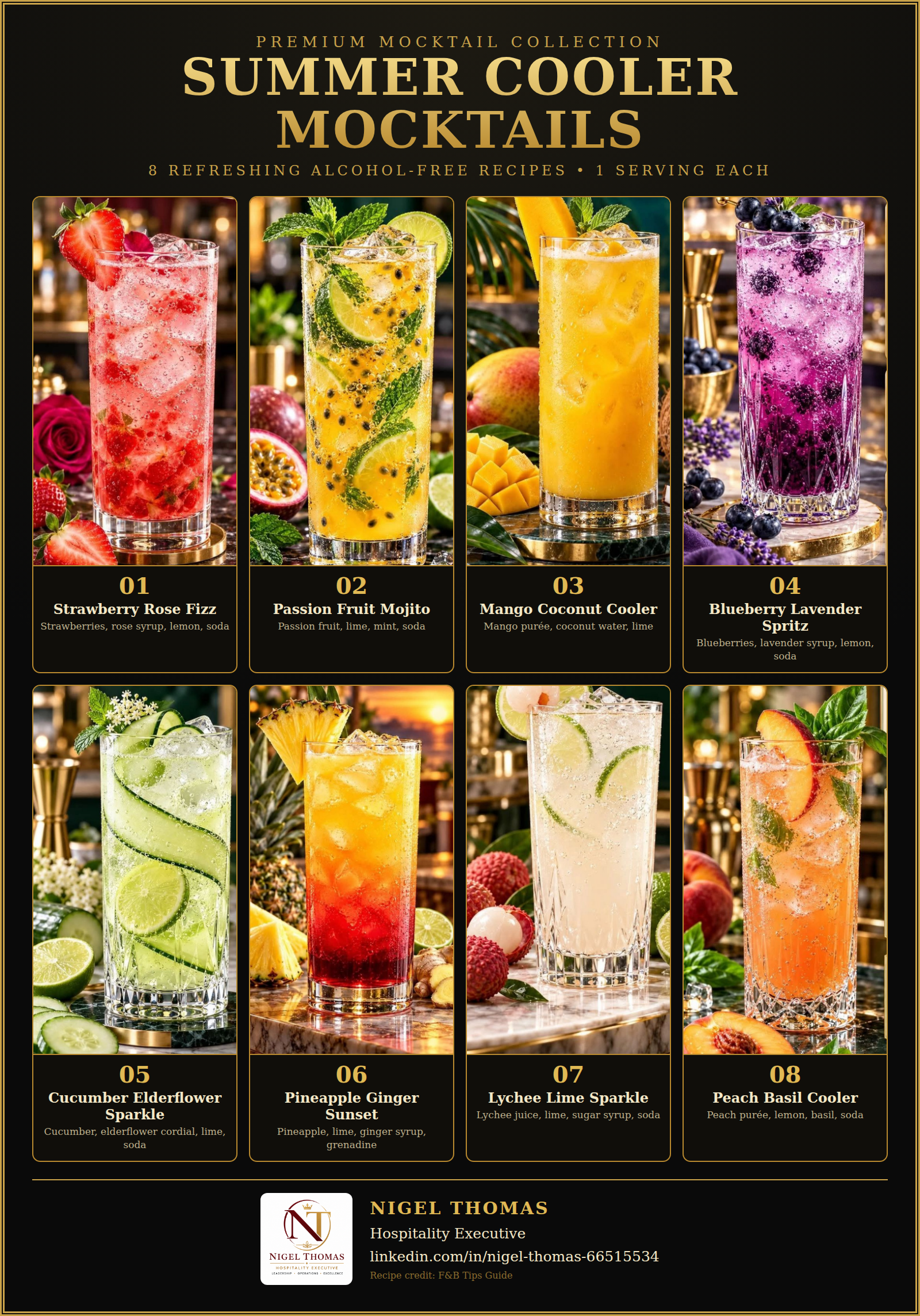
In my years working across luxury hotels, resorts and cruise lines, I have seen a single signature mocktail become the most talked-about item on a summer menu. This collection brings together eight premium summer coolers, each built on the same simple structure: fresh fruit or juice, a measured sweetener, citrus for balance, and soda or coconut water for length. Every recipe is a single serving with exact measures, a short method, a garnish and a service tip. At the bottom of the page there is a free infographic poster that you can view, download and share.
Recipes at a Glance
| # | Mocktail | Key ingredients |
|---|---|---|
| 1 | Strawberry Rose Fizz | Fresh strawberries, Rose syrup, Fresh lemon juice, Soda water |
| 2 | Passion Fruit Mojito | Passion fruit pulp, Fresh lime juice, Sugar syrup, Mint |
| 3 | Mango Coconut Cooler | Mango purée, Coconut water, Fresh lime juice, Sugar syrup |
| 4 | Blueberry Lavender Spritz | Blueberries, Food-grade lavender syrup, Fresh lemon juice, Soda water |
| 5 | Cucumber Elderflower Sparkle | Cucumber, Elderflower cordial, Fresh lime juice, Soda water |
| 6 | Pineapple Ginger Sunset | Pineapple juice, Fresh lime juice, Ginger syrup, Grenadine |
| 7 | Lychee Lime Sparkle | Lychee juice, Fresh lime juice, Sugar syrup, Soda water |
| 8 | Peach Basil Cooler | Peach purée, Fresh lemon juice, Sugar syrup, Basil |
Why Mocktails Matter in Modern Hospitality
The demand for alcohol-free drinks is not a passing trend. Wellness, designated drivers, religious observance, health conditions and plain preference all push more guests towards non-alcoholic choices, and many of them still want to feel part of the celebration. A premium mocktail gives them a drink in a proper glass, with a proper garnish, that says they were thought about.
For the business, mocktails are also an excellent profit centre. Fruit, syrups and soda cost far less than spirits, preparation is fast, and the visual appeal drives sales: when one table receives a glowing pineapple sunset, the next table usually asks what it was. Pricing mocktails on par with cocktails, rather than as an afterthought, signals quality and protects margin.
The Five Building Blocks of a Great Mocktail
Fruit. Fresh, ripe fruit or good-quality purees provide flavour and colour. Taste every batch, because sweetness changes with season and variety.
Acid. Fresh lemon or lime juice is what keeps a mocktail from tasting like a soft drink. Squeeze it daily and never use old, bottled juice where freshness is expected.
Sweetener. Most recipes here use sugar syrup, which is simply equal parts sugar and water, dissolved, cooled and stored cold. Flavoured syrups such as rose, lavender and ginger add personality, but they must be food grade and used in measured amounts.
Aromatics. Mint, basil, cucumber and edible flowers bring aroma and freshness. Press herbs gently, because crushing them releases bitterness.
Length and sparkle. Soda water, chilled and added last, lifts the drink and keeps it crisp. Coconut water or juice can replace soda in still versions.
Equipment, Ice and Glassware
You need very little: a muddler, a bar spoon, a jigger for accurate measures, a shaker with a strainer, and a peeler for garnishes. Accurate measuring is what separates a consistent bar from an inconsistent one, so use the jigger every time, even for experienced staff.
Ice is the most underrated ingredient. Use clean, clear, freshly made ice from a sanitised machine, fill the glass generously, and keep the ice scoop in a clean container, never in the ice itself. More ice means slower dilution and a colder drink. Tall highball or Collins glasses suit every recipe in this collection, and chilling them in advance keeps the soda sparkling.
The Eight Summer Coolers
1. Strawberry Rose Fizz
This is the drink that makes guests pause at the menu. Strawberry brings summer sweetness, lemon keeps it bright, and rose adds a floral perfume that feels special without being heavy. The colour alone sells it, which is why it works so well on a poolside or garden-party menu.
- Fresh strawberries – 60 g
- Rose syrup – 15 ml
- Fresh lemon juice – 15 ml
- Soda water – 100 ml
- Ice – as needed
- Muddle the strawberries with the rose syrup and lemon juice.
- Fill the glass with ice.
- Top with soda and stir gently.
Garnish: Fresh strawberry
Bar notes. Rose syrup varies enormously in strength between brands, so taste before you commit to a standard recipe. Use ripe, fragrant strawberries and muddle just enough to release the juice, not to pulp the fruit. Because the soda is added last, pour it down the bar spoon or the side of the glass to keep the bubbles lively.
Variations. Swap lemon for lime, add a few mint leaves, or finish with an edible rose petal on special occasions. Use food-grade rose syrup only.
2. Passion Fruit Mojito
A virgin mojito is already a favourite, and passion fruit takes it somewhere more tropical. The tart pulp, the cool mint and the sharp lime build layers of flavour, while the black seeds floating in the glass make the drink look generous and fresh.
- Passion fruit pulp – 30 ml
- Fresh lime juice – 20 ml
- Sugar syrup – 15 ml
- Mint – 8 leaves
- Soda water – 100 ml
- Ice – as needed
- Gently press the mint with the lime juice and syrup.
- Add the passion fruit pulp and ice.
- Top with soda and stir gently.
Garnish: Fresh mint and lime
Bar notes. The bartender's most common mistake is over-muddling. Crushing mint tears the leaf and releases bitter chlorophyll, so press lightly and let the lime juice and syrup do the work. Strain out nothing: the seeds are part of the charm, though you can sieve the pulp for a smoother version at banquets where guests may find seeds distracting.
Variations. Add a splash of pineapple juice for extra sweetness or use brown sugar syrup for a deeper, rounder flavour.
3. Mango Coconut Cooler
Mango and coconut are a natural pairing across the tropics, and this cooler captures that in a smooth, hydrating glass. Coconut water keeps the drink light, mango gives body and colour, and lime stops it from tasting flat or cloying.
- Mango purée – 60 ml
- Coconut water – 100 ml
- Fresh lime juice – 15 ml
- Sugar syrup – 10 ml
- Ice – as needed
- Add all ingredients to a shaker with ice.
- Shake until well chilled.
- Strain over fresh ice.
Garnish: Fresh mango slice
Bar notes. Mango sweetness changes with variety and season, which is why the service tip matters. Taste the purée first and reduce or omit the syrup when using ripe Alphonso or Kesar mangoes. Shaking hard gives a lightly frothy top and fully chills the drink. Strain over fresh ice so the glass stays clear and does not dilute too quickly.
Variations. Add a few drops of vanilla, a pinch of ground cardamom, or a splash of soda for a longer, sparkling version.
4. Blueberry Lavender Spritz
Blueberry gives deep colour and gentle sweetness, while lavender adds an elegant floral note that feels like a spa afternoon. Lemon cuts through both and keeps the spritz crisp. It is a refined option for brunches, afternoon tea and wellness-themed events.
- Blueberries – 40 g
- Food-grade lavender syrup – 15 ml
- Fresh lemon juice – 20 ml
- Soda water – 100 ml
- Ice – as needed
- Muddle the blueberries with the syrup and lemon juice.
- Add ice and top with soda.
- Stir gently.
Garnish: Fresh blueberries
Bar notes. Lavender is powerful, so the quantity on the recipe should never be increased casually; too much tastes soapy. Buy only syrup labelled for food and beverage use, never essential oils or craft products. Muddle the berries firmly enough to burst the skins so the colour bleeds into the glass, and garnish with a skewer of fresh blueberries.
Variations. Replace lemon with lime for a sharper edge, or add a sprig of fresh thyme for a savoury herbal twist.
5. Cucumber Elderflower Sparkle
Clean, green and delicately sweet, this is the most refreshing drink in the collection. Cucumber cools, elderflower adds a honeyed, floral lift, and lime ties the two together. It suits guests who prefer drinks that are not sugary, and it pairs beautifully with light lunches and seafood.
- Cucumber – 4 thin slices
- Elderflower cordial – 20 ml
- Fresh lime juice – 15 ml
- Soda water – 120 ml
- Ice – as needed
- Gently muddle the cucumber with the cordial and lime juice.
- Add ice and top with soda.
- Stir gently.
Garnish: Cucumber ribbon
Bar notes. The cucumber ribbon is the visual signature. Slice it lengthwise with a peeler, line it inside the glass before adding ice, and the drink looks polished at once. Keep soda and glasses well chilled, because this recipe has little sugar to mask warmth. Wash the cucumber thoroughly, and discard the first slices if the ends are bitter.
Variations. Add a few mint leaves or a thin slice of green apple, and consider a pinch of salt in the muddle to sharpen the flavours.
6. Pineapple Ginger Sunset
The sunset effect is pure theatre. Grenadine is denser than the juice, so it sinks to the bottom and creates a gradient from gold to deep red. The pineapple is sweet, the lime is sharp, and the ginger adds a warm finish that lingers pleasantly.
- Pineapple juice – 100 ml
- Fresh lime juice – 15 ml
- Ginger syrup – 15 ml
- Grenadine – 10 ml
- Ice – as needed
- Shake the pineapple juice, lime juice and ginger syrup with ice.
- Strain over fresh ice.
- Slowly pour in the grenadine for a layered finish.
Garnish: Pineapple wedge
Bar notes. Pour the grenadine slowly over the back of a bar spoon or down the inside of the glass and leave it untouched. Guests can stir it themselves, but stirring in the kitchen ruins the layers. Use good-quality pineapple juice, preferably freshly pressed, because it carries the whole drink and bottled varieties vary widely in sweetness.
Variations. Top with a splash of ginger beer for fizz, or add a few drops of bitters-free tonic for a drier, more adult profile.
7. Lychee Lime Sparkle
Lychee is fragrant, delicate and slightly floral, and it makes a pale, elegant drink that feels very different from the brighter fruit colours in the collection. Lime sharpens the sweetness, and soda lifts the whole glass into something light and festive.
- Lychee juice – 80 ml
- Fresh lime juice – 20 ml
- Sugar syrup – 10 ml
- Soda water – 80 ml
- Ice – as needed
- Shake the lychee juice, lime juice and syrup with ice.
- Strain over fresh ice.
- Top with soda and stir gently.
Garnish: Peeled lychee and lime wheel
Bar notes. Canned lychee juice is often heavily sweetened, so always taste and cut the syrup as the tip suggests. A fresh peeled lychee on a cocktail pick is the classic garnish; remove the stone completely and tell guests it has been removed, because the seed is a choking hazard. This drink is a natural fit for Asian-inspired menus and wedding receptions.
Variations. Add a few drops of rose water or a sprig of mint, or replace half the soda with jasmine tea for a more aromatic version.
8. Peach Basil Cooler
Peach and basil is a sophisticated pairing: the fruit is soft and honeyed, and the basil adds a peppery, almost anise-like freshness. The colour is a lovely sunset orange, and the aroma from the garnish is the first thing a guest notices.
- Peach purée – 60 ml
- Fresh lemon juice – 20 ml
- Sugar syrup – 15 ml
- Basil – 4 leaves
- Soda water – 100 ml
- Ice – as needed
- Gently press the basil with the lemon juice and syrup.
- Add the peach purée and ice.
- Top with soda and stir gently.
Garnish: Peach slice and fresh basil
Bar notes. Quality depends entirely on the peaches. Ripe, fragrant fruit makes a purée that needs little extra sugar, while hard fruit tastes dull and needs more syrup. Press the basil gently, exactly as you would mint, and slap the garnish lightly between your palms before placing it to release the aroma.
Variations. Try thyme or mint in place of basil, or add a splash of white grape juice for extra body.
Batching and Service at Volume
Events change everything. When a wedding or conference needs two hundred welcome drinks in twenty minutes, preparation has to move off the bar and into the prep kitchen. Multiply the juice, puree and syrup quantities by the number of servings, mix them in a labelled container, and keep it refrigerated. At service, pour the base into ice-filled glasses, top with chilled soda, and garnish. Herbs should still be pressed fresh, or lightly bruised in advance and held cold in a damp towel for only a short time.
Test each batch recipe before the event. Taste it, check the colour, and confirm that the sweetness holds when the drink is served over ice. Layered drinks such as the Pineapple Ginger Sunset need a short demonstration for staff, because the pouring technique is what creates the effect. A two-minute training session before service prevents a tray of muddy-looking drinks.
Food Safety, Allergens and Labelling
Mocktails are food, and they need the same discipline as any other item. Wash all fruit, cucumbers and herbs thoroughly under running water before use. Keep purees, juices and cut fruit chilled, label everything with the date, and discard anything past its safe life. Clean muddlers, shakers and strainers between drinks, and keep garnish trays covered.
Allergens deserve attention. Coconut, depending on local rules, is treated as a tree nut in some regions, and some syrups and cordials may contain additives or derivatives that guests need to know about. Always read labels, keep a simple allergen matrix for the mocktail menu, and train staff to answer guest questions confidently. Lavender and elderflower products must be food grade. Where a stone fruit garnish such as lychee is used, remove the seed completely.
Menu Engineering and Pricing
Treat the mocktail list like any other part of the menu. Offer between four and eight options, group them by flavour profile such as fruity, floral, tropical and herbal, and give each a clear, appealing name. Describe the main ingredients in a single line so guests understand what they are ordering. Calculate cost per glass using the exact measures in each recipe, include garnish and ice, and set a price that reflects the craft involved rather than the cost of the juice alone.
Seasonality helps. In late summer, push peach and mango when they are at their best. In cooler months, swap in apple, pear or citrus-driven drinks. Rotating one or two mocktails each season keeps regular guests curious and gives the team something new to master.
Frequently Asked Questions
Can I make these mocktails in large batches?
Yes, but only partly. Pre-mix the juices, purees and syrups for the whole batch and keep them chilled, then add ice, fresh herbs and soda to each glass at service. Never batch the soda, because it goes flat within minutes.
How do I make simple sugar syrup?
Dissolve equal parts sugar and hot water, stir until clear, cool completely and refrigerate in a clean, labelled container. Discard it after about a week, or sooner if it looks cloudy.
Can I use bottled juices instead of fresh?
You can for pineapple, lychee and mango purée, but fresh lemon and lime juice make a noticeable difference and should be squeezed daily. Taste bottled products and adjust the syrup.
Are these drinks suitable for children and pregnant guests?
They are alcohol-free, but check each guest's allergies and dietary needs, and ask about herbs and floral ingredients if there is any concern. For pregnant guests, a doctor's advice always comes first.
Final Thoughts
A great mocktail is built on the same principles as any great drink: fresh ingredients, careful balance, clean technique and a little theatre. These eight summer coolers give you a complete range, from the floral elegance of the rose fizz and lavender spritz to the tropical punch of the mango cooler and passion fruit mojito. Start with the two or three that suit your menu, perfect them, and train your team to make them identically every time. The guests who are not drinking alcohol will notice, and they will remember.
Free Infographic Poster
All eight recipes appear on one black-and-gold poster. Tap the button to view it, then download it to share with your team, print for the bar, or save for menu planning.

More Food Reading From the Blog
- 8 Homemade Breakfast SnacksQuick recipes with a free poster
- Top 20 Protein-Rich Foods per 100 gRanked protein sources and poster
- Types of MilkDairy varieties and their uses
- Popular Seafood Varieties28 seafood varieties explained
- 5 Classic Italian Pasta RecipesClassic recipes with kitchen tips
- 6 Delicious Chicken Nugget RecipesPoultry protein, six ways

Hospitality executive and corporate trainer with 30+ years across hotels, resorts, cruise lines and F&B operations.
Connect on LinkedIn