8 Homemade Breakfast Snacks: Quick Recipes for Home and Hospitality
Breakfast is the meal that sets the tone for a guest's entire day, and in my thirty-plus years across luxury hotels, resorts, cruise lines and food and beverage operations, I have seen how a simple, well-made breakfast snack can win more loyalty than an elaborate plated dish. Guests rarely remember the size of the buffet. They remember the pancake that arrived hot, the toast that was still crisp, and the porridge that tasted like home.
This guide brings together eight homemade breakfast snacks that are quick, affordable and flexible. Each one uses everyday ingredients, takes only minutes to prepare, and scales comfortably from a family kitchen to a hotel service line. You will find the ingredients, a short method, a chef's tip, and notes on service and variations for each recipe. At the bottom of the page there is a free infographic poster that you can view, download and share.
Why Breakfast Snacks Deserve Attention
A breakfast snack is a small, self-contained item that can be eaten at the table, at a counter, or on the move. It sits between a full cooked breakfast and a simple piece of fruit, and that middle ground is where much of modern demand lies. Business travellers want something fast and satisfying. Families want food that children will actually eat. Wellness-minded guests look for protein, fibre and natural sweetness without heavy sauces.
From an operations point of view, snack-sized items are a gift. They control portions, reduce waste, make cost per plate predictable, and let kitchens offer variety without a large range of expensive ingredients. A single batch of oats, eggs, yogurt and potatoes can produce half a dozen different items, which is exactly how professional kitchens keep menus fresh while protecting margins.
Before You Start: Mise en Place and Kitchen Basics
Good breakfast service begins the evening before. Read each recipe through, weigh and chop ingredients in advance, and keep them labelled and chilled. A blender, a non-stick pan, a muffin tray, a grater and a few small bowls cover almost every recipe here. Heat control matters more than equipment: most of these items cook best on medium-low heat, which prevents burnt exteriors and raw centres.
Measurements in the recipes use cups and spoons for home convenience. For commercial use, convert to grams and millilitres, test one batch, and record the standard recipe so every cook produces the same result. Consistency is what turns a good recipe into a dependable menu item.
The Eight Recipes
1. Banana Oat Pancakes
The ripe banana does three jobs at once: it sweetens the batter, binds it, and keeps the pancake soft without any added sugar. Oats supply slow-release carbohydrate, so guests stay satisfied well beyond the first hour of the morning. The riper the banana, the sweeter the result, which makes this an excellent use for fruit that is past its best for the buffet.
- 1 ripe banana
- 1 egg
- ½ cup rolled oats
- 2 tbsp milk
- ¼ tsp baking powder
- 1 tsp oil
- Blend the banana, egg, oats, milk and baking powder until smooth.
- Lightly oil a pan over medium-low heat.
- Cook small pancakes for 2 to 3 minutes per side, until golden and cooked through.
Service notes. In a service kitchen, blend the batter in larger batches and hold it chilled for no more than a few hours. Cook to order on a lightly oiled flat top, and serve with sliced banana and a thin drizzle of syrup or honey. Because the pancakes are gluten-light only if certified gluten-free oats are used, label them clearly for guests with coeliac disease.
Variations. For a variation, fold in a pinch of cinnamon or a spoonful of grated apple, and swap the milk for a plant-based alternative when you need a dairy-free option.
2. Egg & Cheese Toast
This is the classic that proves a breakfast snack does not need to be complicated. Gentle heat is the secret: eggs scrambled slowly stay soft and creamy, while high heat makes them rubbery and dry. A final minute under the grill melts the cheese into the eggs and gives the top a light golden crust.
- 2 bread slices
- 2 eggs
- ¼ cup grated cheese
- 1 tsp butter
- Salt and pepper, to taste
- Toast the bread until golden.
- Scramble the eggs in butter over gentle heat until just set, then season with salt and pepper.
- Spoon the eggs onto the toast, add the cheese and grill until melted.
Service notes. Toast loses its crunch quickly, so assemble this dish only when the guest is ready to eat. For room service, send the toast and scrambled eggs in separate covered vessels and let the guest assemble, or use a proper hot box. Wholegrain or sourdough bread adds flavour and fibre, and a mature cheddar or a little Parmesan gives a deeper taste with less cheese.
Variations. Try adding chopped chives, a few spinach leaves wilted into the eggs, or a thin slice of tomato under the cheese.
3. Potato Breakfast Patties
Potato patties are one of the smartest ways to turn leftover mashed potato into a fresh menu item. The breadcrumbs absorb excess moisture, the onion adds sweetness, and the coriander lifts the whole patty with a clean, herbal note. They are a natural bridge between Western breakfast plates and Indian-style snacks.
- 1 cup cooked mashed potato
- 2 tbsp breadcrumbs
- 2 tbsp finely chopped onion
- 1 tbsp chopped coriander
- Salt and pepper, to taste
- 1 tbsp oil
- Mix the potato, breadcrumbs, onion, coriander, salt and pepper.
- Shape the mixture into 4 small patties.
- Heat the oil in a pan and cook the patties until golden on both sides and hot throughout.
Service notes. Chilling is the professional trick. Shape the patties, rest them in the refrigerator for twenty to thirty minutes, and they hold together in the pan far better. For volume service, portion with a scoop, flatten evenly, and bake on a lined tray to avoid constant pan-frying. Always cool leftover potato quickly and refrigerate it promptly before reusing it.
Variations. Green chilli, grated cheese or a pinch of cumin all work well, and a spoonful of yogurt or chutney on the side makes the plate feel complete.
4. Yogurt & Fruit Cups
Layered cups look generous and require no cooking at all, which makes them ideal for early starts, grab-and-go counters and lounge service. Plain yogurt provides protein and tang, fruit adds natural sweetness and colour, and granola brings the crunch that keeps the dish interesting to the last spoonful.
- 1 cup plain yogurt
- 1 cup chopped fruit
- ¼ cup granola
- 1 tsp honey, optional
- Divide the yogurt and chopped fruit between two cups in layers.
- Drizzle with honey, if using.
- Add the granola just before serving.
Service notes. Build the yogurt and fruit layers in advance and keep them chilled, but add the granola only at the point of service so it stays crisp. Use seasonal fruit for the best flavour and cost control: mango and banana in summer, apple and pear in cooler months. Offer honey on the side so guests can control sweetness.
Variations. Swap the yogurt for a plant-based version for vegan guests, and check the granola label for nuts, since many blends contain them.
5. Vegetable Egg Muffins
Egg muffins are the batch cook's best friend. They bake in one tray, portion themselves perfectly, and hold their shape for easy handling. The bell pepper adds sweetness and colour, the spinach adds iron and freshness, and the cheese gives savoury depth.
- 3 eggs
- 2 tbsp milk
- ¼ cup chopped bell pepper
- ¼ cup chopped spinach
- 2 tbsp grated cheese
- Salt and pepper, to taste
- A little oil for greasing
- Preheat the oven to 180°C and grease 4 muffin cups.
- Whisk the eggs and milk, then stir in the vegetables, cheese and seasoning.
- Divide among the cups and bake for 15 to 20 minutes, until fully set.
Service notes. Finely chopped vegetables cook evenly and prevent watery pockets, so dry the spinach well before mixing. The muffins can be baked ahead, cooled quickly, refrigerated, and reheated until piping hot. Make sure the eggs are fully set in the centre before service. They travel well for staff meals, packed breakfasts and grab-and-go cabinets.
Variations. Mushrooms, sweetcorn, spring onion or diced ham or chicken sausage can replace the vegetables to suit the menu.
6. Peanut Butter Banana Roll-Ups
These bite-size spirals are fast, filling and popular with guests of all ages. Peanut butter delivers protein and healthy fats, the banana brings natural sweetness, and cinnamon adds warmth without extra sugar. They suit grab-and-go service, children's menus and quick snack stations.
- 2 small tortillas
- 2 tbsp peanut butter
- 1 banana
- A pinch of cinnamon
- Spread the peanut butter evenly over both tortillas.
- Add the sliced banana and sprinkle with cinnamon.
- Roll tightly, then slice into bite-size pieces.
Service notes. Peanuts are one of the most serious food allergens, so this item needs clear labelling and strict separation of utensils, boards and gloves. Never prepare it alongside nut-free items on the same surface. Roll tightly, wrap in film or slice just before serving, and brush the cut banana with a little lemon juice if it must wait, to slow browning.
Variations. For guests who cannot eat peanuts, a seed butter such as sunflower or pumpkin seed butter works well, provided it is made in a nut-free facility.
7. Savory Semolina Pancakes
Semolina pancakes bring a savoury, almost uttapam-style option to the breakfast table. The yogurt gives a gentle tang and tender crumb, while carrot and onion add sweetness, colour and texture. They are an excellent vegetarian choice that does not rely on eggs.
- ½ cup semolina
- ¼ cup plain yogurt
- ¼ cup water, plus extra if needed
- 2 tbsp chopped onion
- 2 tbsp grated carrot
- Salt, to taste
- 2 tsp oil
- Mix the semolina, yogurt, water, onion, carrot and salt.
- Rest for 10 minutes. Add a little water if the batter is too thick.
- Lightly oil a pan and cook small pancakes on medium-low heat until golden and cooked through on both sides.
Service notes. The ten-minute rest is essential, because it lets the semolina absorb liquid and swell, giving a soft, even pancake. Check the batter again before cooking: it often thickens as it stands and needs a splash of water. Cook on gentle heat so the centre sets before the outside darkens, and serve with chutney, yogurt or a simple tomato relish.
Variations. Grated courgette, finely chopped coriander, curry leaves or a pinch of green chilli lift the flavour. Contains wheat, so label it for gluten-sensitive guests.
8. Apple Cinnamon Porridge
Porridge is comfort in a bowl, and the apple and cinnamon version feels like a treat while staying simple and wholesome. The apple softens into the oats, sweetening the porridge naturally, and cinnamon provides aroma that makes the bowl feel special.
- ½ cup rolled oats
- 1 cup milk
- ½ apple, diced
- ¼ tsp cinnamon
- 1 tsp honey, optional
- Add the oats, milk and diced apple to a saucepan.
- Simmer for 5 to 7 minutes, stirring until creamy and the apple softens.
- Stir in the cinnamon and add honey if using.
Service notes. Porridge thickens as it stands, so keep a jug of warm milk nearby and loosen it before serving. For a live station, cook the base in bulk and finish individual bowls with fresh diced apple and a dusting of cinnamon. Use water, plant milk or a mix of milk and water to suit dietary needs and cost targets.
Variations. Top with toasted seeds, raisins or a spoonful of yogurt for extra texture and protein.
Food Safety, Allergens and Dietary Notes
Simple food still needs disciplined handling. Eggs must be cooked until fully set, particularly for children, older guests and anyone who is pregnant or unwell. Keep chilled items such as yogurt cups at refrigeration temperature until service, and discard anything that has been out for longer than your food safety plan allows. When reheating cooked items such as muffins or patties, bring them to a core temperature of 74 to 75°C, and reheat only once.
Allergens appear throughout this collection. Eggs, milk, wheat, peanuts, tree nuts in granola and gluten in oats and semolina are all common concerns. Use separate utensils, wash hands and surfaces between items, and label every dish clearly. If a guest declares an allergy, treat it seriously every time and never guess about ingredients.
Planning a Balanced Breakfast Snack Menu
A balanced offer combines protein, complex carbohydrate and fruit or vegetables. Pairing egg muffins with fruit, or porridge with yogurt, rounds out a plate without adding complexity. Offer at least one vegetarian, one egg-free and one dairy-free option so every guest has a genuine choice rather than a compromise. In this collection, the semolina pancakes, apple porridge made with plant milk, and banana roll-ups with seed butter cover several of these needs.
Think about timing as well. Hot items such as pancakes, toast and porridge need to be cooked close to service, while cold or batch items such as yogurt cups, muffins and roll-ups can anchor the offer during busy periods. Mixing the two keeps the kitchen calm and the guest experience hot where it matters.
Scaling Up for Buffets, Banquets and Room Service
Home recipes become professional recipes when they are tested at volume. Start by multiplying a single recipe by ten, cook one full tray or pan, and record the exact yield, cooking time and any adjustment needed. Larger quantities of batter or mixture hold heat differently, so egg muffins in a deep tray may need a few extra minutes, while pancake batter on a wide griddle may need slightly lower heat to avoid darkening before the centre sets.
For buffets, choose items that hold well. Egg muffins, potato patties and roll-ups tolerate a short hold in a warmed cabinet far better than pancakes or toast, which are best cooked in small, frequent batches at a live station. Replenish often rather than overfilling the chafing dish, because a smaller, fresher tray always looks better than a large, tired one.
For room service, think about transit time. Pack crisp items separately, use vented lids so steam does not soften toast, and keep cold items such as yogurt cups on ice until the moment of delivery. A small handwritten card with the name of the dish and a note on allergens adds a personal touch that guests notice and appreciate. Training your team to check each tray against the order before it leaves the kitchen prevents most breakfast complaints before they happen.
Finally, review feedback weekly. Track which snacks sell out, which are left on the buffet, and which comments recur, and use that evidence to adjust portions, flavours and presentation. The best breakfast menus are never finished; they are refined every week by the people who cook and serve them.
Cost Control and Reducing Waste
Many of these recipes are designed around ingredients that are already in the kitchen. Ripe bananas become pancakes, leftover mashed potato becomes patties, and fruit that is slightly soft goes into yogurt cups. Weigh portions, track yields, and keep a simple log of what sells. Small snack portions let guests try two or three items instead of loading a single large plate, which reduces plate waste and increases perceived value.
Frequently Asked Questions
Can these breakfast snacks be prepared ahead?
Yes, within limits. The egg muffins, potato patties and yogurt cup bases can be prepared in advance and chilled. Pancakes, toast and porridge are best finished to order for the best texture.
How do I scale these recipes for a buffet?
Multiply every ingredient by the same factor, test one batch first, and adjust cooking time because larger trays and pans heat differently. Always taste and check one portion for doneness before service.
Are these recipes suitable for children?
They are generally child-friendly, but check allergies first, especially peanuts, eggs, dairy and wheat. Honey should never be given to babies under 12 months.
What is the safest way to reheat egg dishes?
Reheat until piping hot throughout, with a core temperature of 74 to 75°C, and only reheat once. Cool leftovers quickly and keep them refrigerated.
Final Thoughts
Great breakfast service is not about complexity. It is about care, timing and consistency, and these eight snacks show how a few honest ingredients can deliver all three. Start with the recipe that suits your kitchen best, cook it a few times until it feels natural, and then adapt it with seasonal produce and your own signature touches. Whether you are feeding a family at home or a hundred guests in a hotel dining room, a hot, fresh, well-seasoned breakfast snack is one of the simplest ways to make people feel welcome.
Free Infographic Poster
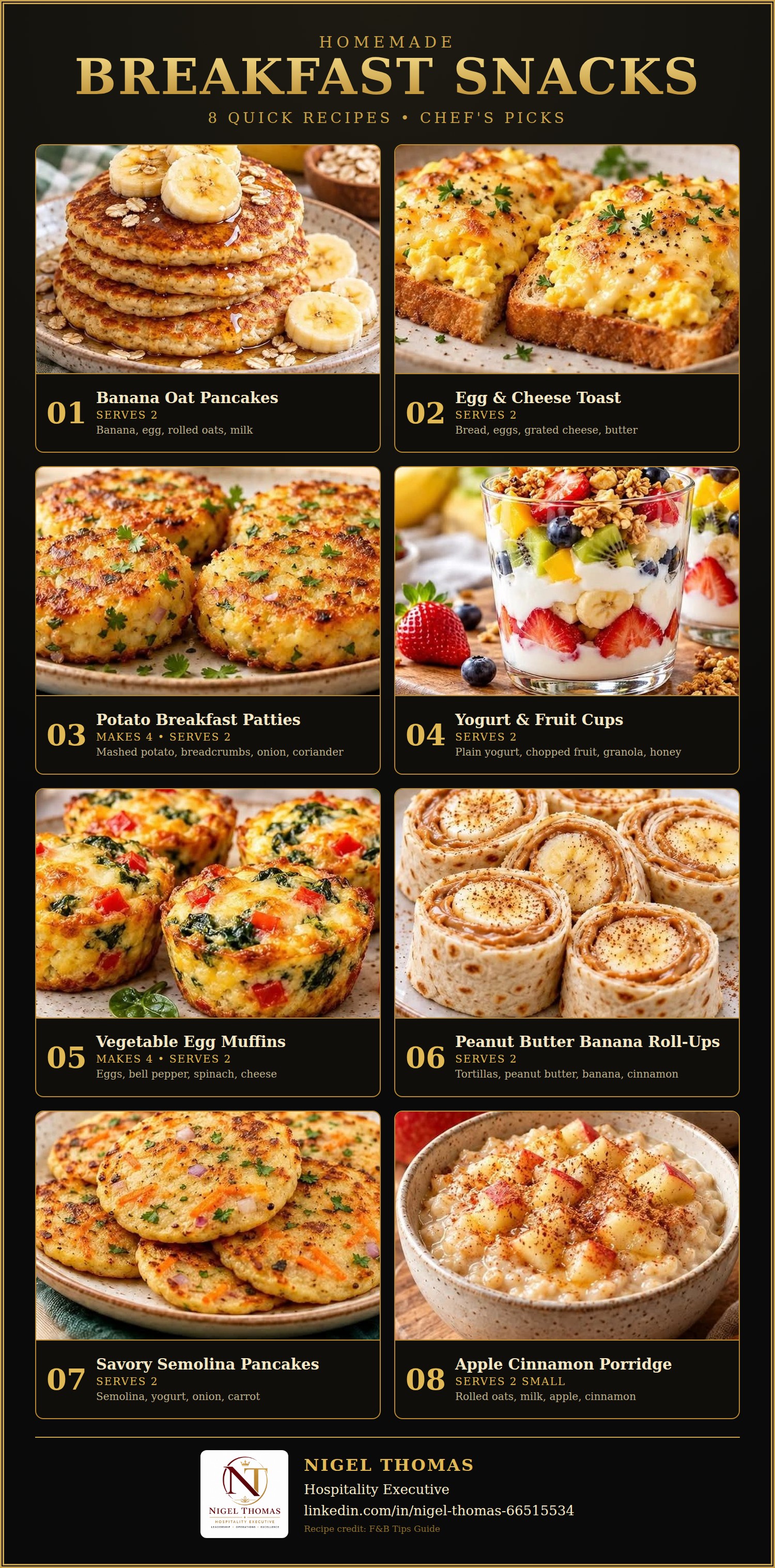
All eight recipes are summarised on one black-and-gold poster. Tap the button to view it, then download it to share with your team, print for a kitchen notice board, or keep for menu planning.

More Food Reading From the Blog
- Top 20 Protein-Rich Foods per 100 gRanked protein sources with a free infographic
- 6 Delicious Chicken Nugget RecipesPoultry protein, six ways
- 5 Classic Italian Pasta RecipesClassic recipes with kitchen tips
- Yogurt, Curd, Paneer & Plant-Based GuideDairy and plant-based options
- Types of MilkDairy varieties and their uses
- Types of Cheese Used in HotelsCheese for toast, muffins and the board

Hospitality executive and corporate trainer with 30+ years across hotels, resorts, cruise lines and F&B operations.
Connect on LinkedIn