
Whether you're running a bar, managing a hotel restaurant, or training new staff, knowing your alcohol categories is non-negotiable. In over thirty years of hospitality operations, I've seen too many service professionals stumble over the basics – confusing a liqueur with a spirit, or not knowing the ABV range of the wine they're pouring. This guide gives you the clear, practical overview every bartender, server, and manager should have at their fingertips.
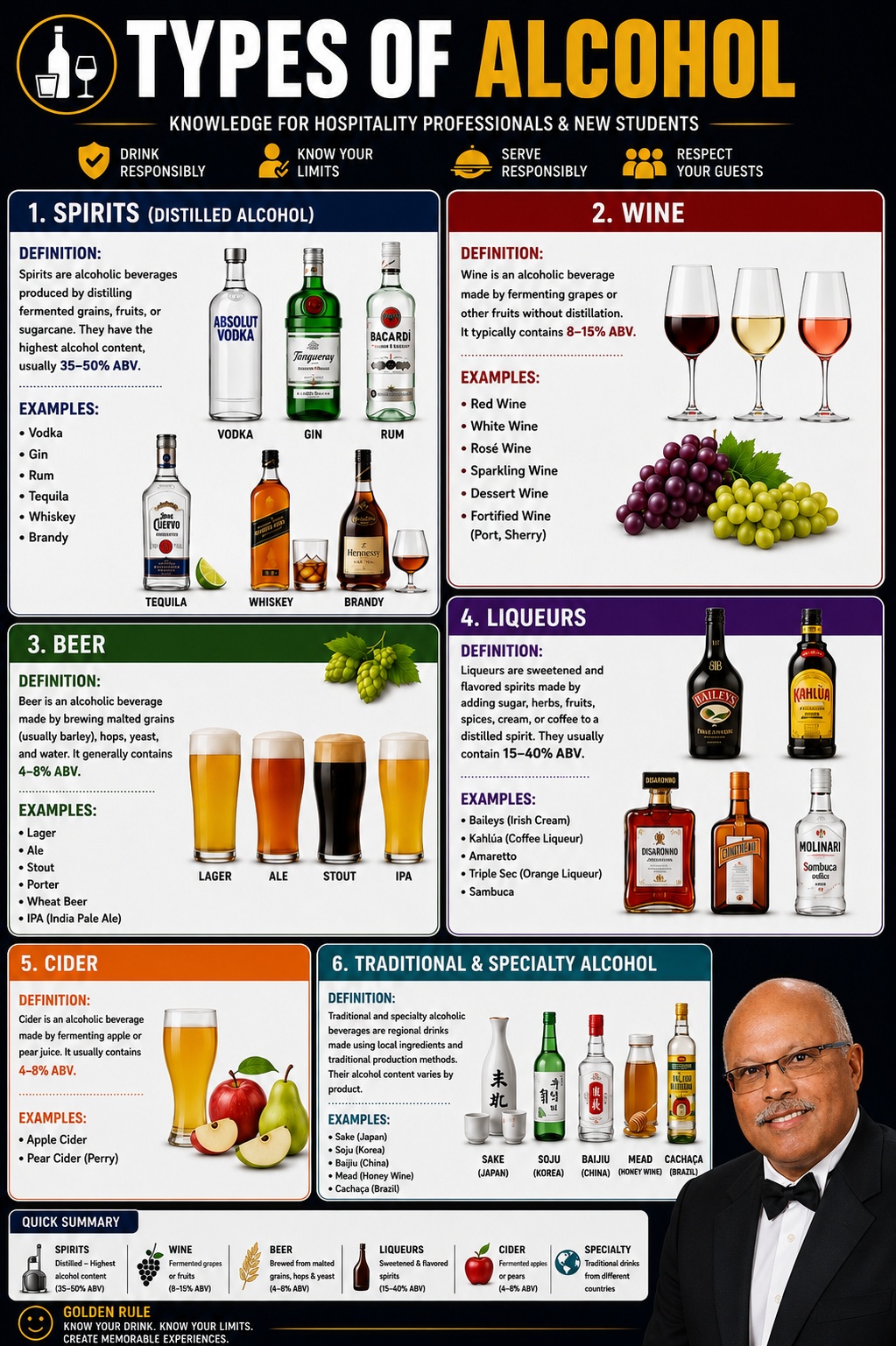
The complete alcohol family – spirits, wine, beer, liqueurs, cider, and traditional specialties.
1. Spirits (Distilled Alcohol)
Definition: Spirits are alcoholic beverages produced by distilling fermented grains, fruits, or sugarcane. They have the highest alcohol content, usually 35–50% ABV.
Common examples:
- Vodka
- Gin
- Rum
- Tequila
- Whiskey
- Brandy
2. Wine
Definition: Wine is made by fermenting grapes or other fruits without distillation. It typically contains 8–15% ABV.
Common examples:
- Red Wine
- White Wine
- Rosé Wine
- Sparkling Wine
- Dessert Wine
- Fortified Wine (Port, Sherry)
3. Beer
Definition: Beer is brewed from malted grains (usually barley), hops, yeast, and water. It generally contains 4–8% ABV.
Common examples:
- Lager
- Ale
- Stout
- Porter
- Wheat Beer
- IPA (India Pale Ale)
4. Liqueurs
Definition: Liqueurs are sweetened and flavored spirits made by adding sugar, herbs, fruits, spices, cream, or coffee to distilled spirit. They usually contain 15–40% ABV.
Common examples:
- Baileys (Irish Cream)
- Kahlúa (Coffee Liqueur)
- Amaretto
- Triple Sec (Orange Liqueur)
- Sambuca
5. Cider
Definition: Cider is made by fermenting apple or pear juice. It usually contains 4–8% ABV.
Common examples:
- Apple Cider
- Pear Cider (Perry)
6. Traditional & Specialty Alcohol
Definition: Traditional and specialty alcoholic beverages are regional drinks made using local ingredients and traditional production methods. Their alcohol content varies by product.
Common examples:
- Sake (Japan)
- Soju (Korea)
- Baijiu (China)
- Mead (Honey Wine)
- Cachaça (Brazil)
Know your drink. Create memorable experiences. The best servers don't just pour – they educate and delight.
Quick Summary
Spirits
35–50% ABVDistilled from grains, fruits, or sugarcane
Wine
8–15% ABVFermented grapes or fruits
Beer
4–8% ABVBrewed from malted grains, hops & yeast
Liqueurs
15–40% ABVSweetened & flavored spirits
Cider
4–8% ABVFermented apples or pears
Specialty
VariesTraditional drinks from different countries
Why This Matters in Hospitality
Knowing the difference between a spirit and a liqueur, or the ABV range of wine vs. beer, isn't just trivia – it's the foundation of responsible service. It helps you recommend the right drink, pair with food, and understand guest preferences. In my training sessions, I always start with this taxonomy because everything else – cocktails, wine lists, bar inventory – builds on it.
When you can explain to a guest why a single malt whisky has a different character than a blended one, or why a dry rosé works better with summer dishes, you elevate the entire experience. That's what separates professionals from order-takers.
📚 You Might Also Like
Five habits that protect margin without touching the guest experience.
Key hotel performance metrics every hotelier must track.