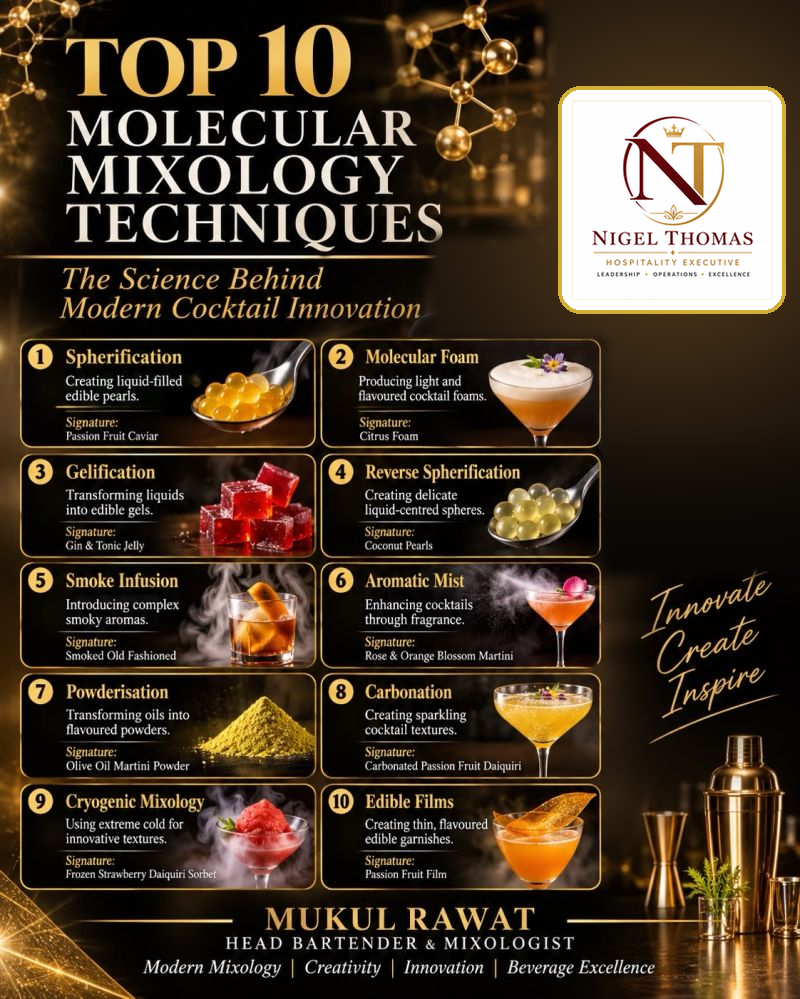
Top 10 Molecular Mixology Techniques: The Science Behind Modern Cocktail Innovation
Molecular mixology borrows the tools and thinking of the science lab and applies them to the bar. It is not about gimmicks. Each technique changes the texture, aroma, temperature or appearance of a drink in a way that ordinary shaking and stirring cannot. Done well, a guest remembers the moment. Done badly, it is slow service, wasted product and a drink that tastes worse than a classic.
After many years behind and above bars on ships, in hotels and in resorts, my view is simple: the technique must serve the flavour. This guide walks through ten techniques, what they actually do, and what a bar team needs to get right before putting them on a menu. Open the infographic at the bottom of the page to download the full poster.
1. Spherification
Spherification turns a flavoured liquid into small pearls with a thin gel skin and a liquid centre. In the basic method, a liquid containing sodium alginate is dropped into a calcium bath, and the skin forms where the two meet. The pearls burst in the mouth and release the flavour all at once. Passion fruit caviar is a classic example, and it works well on top of a sour or sparkling drink. Timing matters: leave the pearls too long in the bath and they set solid. Rinse them in clean water and serve soon after making.
2. Molecular Foam
A foam gives a cocktail aroma and a light first sip without adding weight. Bartenders make foams with soy lecithin and an immersion blender, or with a cream siphon and a nitrous oxide charger. The foam sits on top of the drink and carries the citrus, herb or spice you want the guest to smell first. A citrus foam over a gin sour is a good starting point. Keep foams fresh, because they collapse within minutes, and always make them to order or in small batches.
3. Gelification
Gelification sets liquids into edible gels using agar-agar or gelatin. A gin and tonic jelly, cut into cubes and served on a spoon or beside a glass, lets the guest eat the drink. Agar sets firm at room temperature and holds its shape in warm venues, while gelatin melts near body temperature and gives a softer, silkier bite. Choose by climate and by how the item will be served. Alcohol slows setting, so test your ratios before service.
4. Reverse Spherification
In reverse spherification the calcium sits inside the flavoured liquid and the alginate is in the bath. This allows the use of acidic or alcoholic bases that would not work in the basic method. The sphere keeps gelling slowly from the outside in, so it is best served within a short window. Coconut pearls in a tropical drink are a good example. The result is a delicate, liquid-centred sphere that stays stable long enough to travel from bar to table.
5. Smoke Infusion
Smoke adds depth and an aroma that arrives before the first sip. A handheld smoking gun and a cloche or glass cover let the bar infuse a drink, a glass or a garnish with wood smoke. The smoked old fashioned is the signature here, and oak, cherry and apple woods each give a different note. Use it with discipline. A little smoke lifts a drink; too much makes it taste like an ashtray. Also check that the venue’s fire and ventilation rules allow it at the point of service.
6. Aromatic Mist
Much of what we call taste is smell. An aromatic mist uses a small atomiser to spray a fragrance such as rose water or orange blossom over the surface of a drink, or over the guest’s hands and the glass. A rose and orange blossom martini shows the idea well. Use food-safe, flavour-grade ingredients only, keep the spray light, and clean the atomiser at the end of every shift so old aromas do not carry over.
7. Powderisation
Powderisation uses tapioca maltodextrin to turn fats and oils into a fine, flavoured powder that dissolves on the tongue. An olive oil martini powder, dusted over a dry martini, adds a savoury layer without making the drink greasy. The powder absorbs moisture quickly, so make it in small batches, store it airtight and apply it just before serving. It also works as a rim in place of salt or sugar.
8. Carbonation
Carbonation gives a cocktail fine, lively bubbles and a clean, dry texture. Bars carbonate in kegs, in pressure bottles or with a carbonating cap fitted to a bottle, always using food-grade CO2. Cold liquid holds gas far better than warm, so chill the base first. A carbonated passion fruit daiquiri served in a coupe is a good example. Never mix up CO2 with the nitrous oxide used in cream siphons, and only use equipment rated for the pressure.
9. Cryogenic Mixology
Cryogenic mixology uses liquid nitrogen, at about minus 196 degrees Celsius, to freeze ingredients instantly into very smooth textures, such as a frozen strawberry daiquiri sorbet, and to chill glassware. It also creates dramatic vapour. It is also the technique that demands the most respect. Staff need training, gloves, face protection and a well-ventilated space. Liquid nitrogen must be fully evaporated before a drink is served, and it should never be sealed in a closed container or placed in a glass the guest will drink from. If your team has not been trained, do not use it.
10. Edible Films
Edible films are thin, flavoured sheets made from fruit purée and a setting agent, then dried until they form a flexible garnish. A passion fruit film on the rim or standing in the glass adds colour and a concentrated burst of flavour. They are also a clean way to bring a signature look to a menu. Films are sensitive to humidity, so store them between sheets in an airtight container and place them on the drink at the last moment.
Bringing It Into Service
Before any of these techniques reach a guest, the bar team needs a written recipe, exact measurements, a hygiene routine and a trained second person who can cover the station. Cost every new item, including the extra minutes of labour, and decide where it sits on the menu. A small number of well-run techniques beat a long menu that slows the bar.
Start with one or two techniques that match your venue. A foam or an aromatic mist is simple and cheap to learn. Spherification, carbonation and cryogenic work need more equipment and more training, so add them later. Train in quiet hours, taste everything, and ask whether the drink is better than the classic it replaces. If it is not, change the recipe.