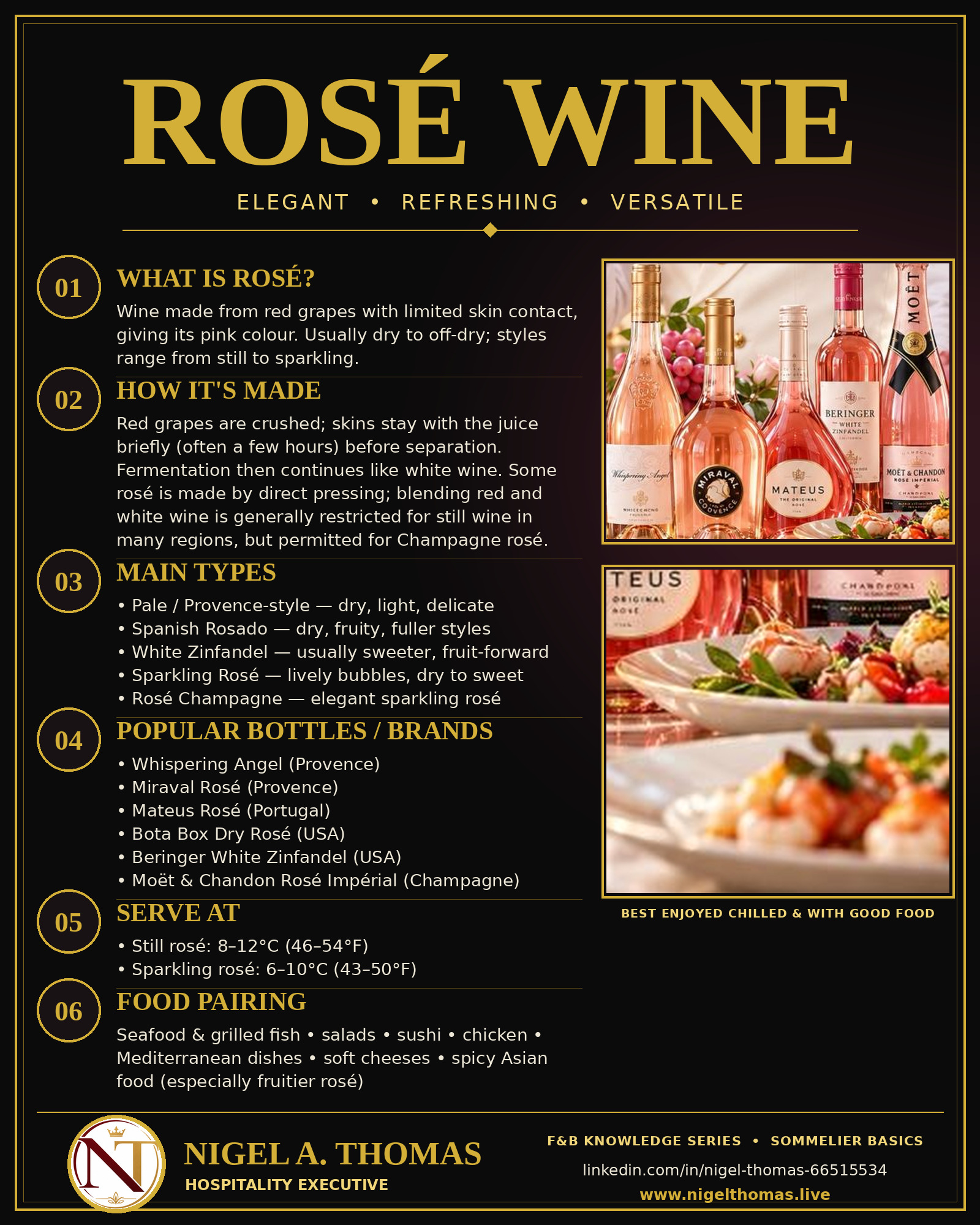
1. What is rosé?
Rosé is wine made from red grapes with limited skin contact. The colour of any wine comes almost entirely from the grape skins, because the juice of nearly every wine grape, red or white, is clear. When red grapes are crushed and the skins stay in contact with the juice for a long time, the result is a deep red wine full of colour, tannin and structure. When the skins are left in for only a short time, the juice picks up just a blush of pink, and the wine that follows is rosé.
That is the whole secret behind the colour, and it is also why rosé sits so comfortably between white wine and red wine. It is made with red grapes, so it carries red-fruit flavours such as strawberry, raspberry and cherry. But it is made, fermented and served much like a white wine, so it is crisp, chilled and refreshing. Rosé is usually dry to off-dry, and the styles range from still to sparkling, from pale and delicate to deep and fruity, and from bone dry to noticeably sweet.
For anyone working in hospitality, rosé deserves proper attention. It is a year-round seller on terraces, at poolside, at brunch, at weddings and on summer menus, and it suits an enormous range of dishes. A team that can explain rosé confidently, and recommend the right style for the right guest, sells more of it and sells it better.
2. How rosé is made
The winemaking steps follow a simple pattern. Red grapes are crushed, and the skins stay with the juice only briefly, often just a few hours, before the juice is separated from the skins. After that, fermentation continues much like white wine: the juice is fermented, usually in temperature-controlled stainless steel to keep the fruit fresh and aromatic, and then clarified, stabilised and bottled, often within months of the harvest.
The main production methods
- Short maceration (skin contact). Red grapes are crushed and left to sit with their skins for a short, carefully monitored period. The winemaker tastes and checks the colour, then draws off the juice once it reaches the desired shade. The longer the contact, the deeper the colour and the fuller the flavour. This is the method behind many quality rosés.
- Direct pressing. The grapes are pressed straight away, gently, and the juice picks up colour only during the pressing itself. This produces the palest, most delicate wines and is widely used for the light, dry, Provence-style rosés.
- Saignée ("bleeding"). Some juice is run off a tank of fermenting red wine early on. The red wine left behind becomes more concentrated, and the juice that was bled off is fermented separately as rosé. Some producers treat saignée rosé as a by-product, while others plan it deliberately.
- Blending. Mixing red and white wine to make pink wine is generally restricted for still wine in many regions, so it is not how most rosé is made. Blending is, however, permitted for Champagne rosé, where a small amount of still red wine is commonly added to the base wine to create the colour.
Why timing matters
The shade of rosé is a decision, not an accident. Winemakers choose the grape variety, the length of skin contact and the pressing method to hit a target style. Grenache and Cinsault tend to give pale, delicate wines. Syrah, Mourvèdre and Tempranillo can give deeper colour and more body. Because the wine is made to be enjoyed fresh, most rosé is harvested a little earlier than red wine grapes, which preserves acidity and gives that crisp, lively finish guests expect.
Because rosé is typically bottled young and meant for early drinking, there is rarely any heavy oak influence. The focus is on fruit, freshness and balance.
3. The main types of rosé
Understanding the five main styles lets you guide a guest from "I want something pink" to the exact bottle they will enjoy.
Pale / Provence-style: dry, light, delicate
Provence, in the south of France, is the benchmark for pale rosé. The wines are usually blends led by Grenache, Cinsault and Syrah, with Mourvèdre and other local grapes in the mix. The colour is a very pale pink, sometimes described as "onion skin" or "salmon". The palate is dry and light, with notes of red berries, citrus, melon and sometimes a herbal or saline touch. This style has become so popular that many producers around the world now copy it.
Bandol, a Provence appellation, is the interesting exception: its rosé is based on Mourvèdre, which brings more structure and a little more age-worthiness. Nearby in the southern Rhône, Tavel is another French classic made only as rosé, with a deeper colour and a fuller, more food-friendly style.
Spanish Rosado: dry, fruity, fuller styles
In Spain, rosé is called rosado. Regions such as Navarra and Rioja are well known for it, and the wines are typically made from Garnacha (Grenache) or Tempranillo. They tend to be a little deeper in colour, with riper strawberry and cherry flavours and a fuller body than their Provençal cousins, while remaining dry. Rosado is a natural partner for tapas, grilled meats and paella.
White Zinfandel: usually sweeter, fruit-forward
White Zinfandel is a Californian style made from the red Zinfandel grape. It is typically light pink and noticeably sweeter, with soft strawberry, watermelon and candy-like fruit and low tannin. It is an easy-drinking, approachable wine and one of the best-selling rosé styles in the USA. It is a good choice for guests who normally avoid dry wines, and it pairs well with spicy food, where a touch of sweetness cools the heat.
Sparkling rosé: lively bubbles, dry to sweet
Sparkling rosé covers everything from affordable, fruity bottle-fermented or tank-method wines to premium examples. Sweetness varies widely, from bone dry (brut) to off-dry and sweet, so it is always worth checking the label or asking the guest what they prefer. The bubbles add a celebratory feel, which makes sparkling rosé a favourite for brunches, weddings, receptions and toasts.
Rosé Champagne: elegant sparkling rosé
Rosé Champagne is the luxury end of the category. It comes only from the Champagne region of France and is made by the traditional method, with the second fermentation taking place in the bottle. Champagne is the one place where blending still red wine into white base wine is permitted to make rosé, though some houses also use skin contact. The wines are elegant and refined, with fine bubbles, red-berry fruit and a savoury, toasty depth from ageing on the lees. It is a showpiece bottle and an excellent upsell for celebrations.
| Style | Typical sweetness | Body & colour | Best for |
|---|---|---|---|
| Pale / Provence-style | Dry | Light, very pale pink | Aperitif, seafood, salads |
| Spanish Rosado | Dry | Medium to fuller, deeper pink | Tapas, paella, grilled meats |
| White Zinfandel | Usually sweeter | Light, bright pink | Spicy dishes, easy-drinking glass pour |
| Sparkling rosé | Dry to sweet | Light to medium, lively | Brunch, weddings, celebrations |
| Rosé Champagne | Mostly dry (check label) | Elegant, fine bubbles | Special occasions, fine dining |
4. Popular bottles and brands
Every bar and restaurant team should recognise the names guests ask for most often. These six bottles cover the main styles and price points and appear on the poster that goes with this guide.
- Whispering Angel (Provence). One of the best-known Provence rosés in the world: pale, dry, crisp and easy to love. A reliable by-the-glass hero and a common request at beach clubs and terraces.
- Miraval Rosé (Provence). Another Provence name with a very strong guest following. Pale and elegant, with fresh red fruit and citrus, in a distinctive bottle that people recognise on sight.
- Mateus Rosé (Portugal). A classic with a long history and a recognisable rounded bottle. Lightly fruity and approachable, it is a name many guests remember from years ago.
- Bota Box Dry Rosé (USA). A dry rosé sold in a box rather than a bottle. Boxed wine stays fresher for longer once opened, which makes this format useful for casual venues and events.
- Beringer White Zinfandel (USA). The classic Californian White Zinfandel, soft, sweet and fruit-forward, ideal for guests who prefer a gentler, sweeter glass.
- Moët & Chandon Rosé Impérial (Champagne). The Champagne choice: elegant sparkling rosé for celebrations, toasts and premium service.
When you recommend a bottle, always describe it in terms of style first (dry, light, fruity, sweet, sparkling), then name the producer. Guests remember a clear description more than a brand name.
5. How to taste and describe rosé
Use the same simple structure you would for any wine: look, smell, taste, think.
- Look. Tilt the glass against a white napkin. Colours range from the palest onion-skin and peach through salmon and coral to deeper pink and light ruby. Colour is a clue to style, but not a measure of quality or sweetness. A pale wine is not necessarily drier than a deeper one.
- Smell. Typical aromas include strawberry, raspberry, red cherry, watermelon, peach, citrus peel, melon, rose petal and fresh herbs. Fuller styles may add red plum, spice or a little cream.
- Taste. Assess sweetness (dry, off-dry, sweet), acidity (should feel fresh and mouth-watering), body (light, medium or fuller) and finish. A good rosé is balanced, with fruit and freshness in harmony and no flabbiness or harsh bitterness.
- Think. Which food or occasion suits this wine? Rosé is a pairing wine and a mood wine, so linking the tasting note to a dish or moment is what turns a description into a sale.
Alcohol is usually moderate, commonly in the region of 11.5 to 13.5 percent by volume, but always check the label because styles vary.
6. Serving temperature, glassware and service
Serve at the right temperature
Temperature is the single biggest factor in how rosé tastes. Serve it too warm and it feels flat and heavy; serve it too cold and the flavours vanish.
- Still rosé: 8 to 12°C (46 to 54°F).
- Sparkling rosé: 6 to 10°C (43 to 50°F).
Lighter, drier wines can go toward the cooler end of the range, while fuller rosados and richer styles open up with a little more warmth. In a hot climate, a bottle can warm up quickly on a terrace, so keep it in a cooler or bucket between pours.
Glassware
A standard white-wine glass or a slightly tulip-shaped glass concentrates the aromas and shows off the colour. For sparkling rosé, a tulip-shaped flute or a small white-wine glass is better than a wide coupe, which lets the bubbles and aroma disappear quickly. Hold the glass by the stem so your hand does not warm the wine, and make sure glasses are polished and free of fingerprints, because the colour of rosé looks beautiful and should be on show.
Service steps
- Confirm the order and bring the bottle chilled, with a clean napkin.
- Present the label to the host so they can confirm the wine, producer and vintage.
- Cut the capsule cleanly and open the bottle quietly. For sparkling wine, hold the cork firmly, turn the bottle slowly and ease the cork out with a soft sigh rather than a pop.
- Offer the host a taste, and serve ladies and guests first, finishing with the host.
- Pour about one third to one half of the glass so the wine stays cool and the aromas have room.
- Return the bottle to an ice bucket filled with ice and water, which chills faster and more evenly than ice alone, and watch glasses so you can top up smoothly.
Storage
Most rosé is made to be drunk young, usually within a year or two of the vintage, while it is fresh and fruity. Store bottles lying down or standing in a cool, dark place away from heat and sunlight. A few structured rosés, such as Bandol and some Tavel, and vintage rosé Champagne, can age gracefully, but those are the exception rather than the rule. Always rotate stock so older vintages are sold first.
7. Food pairing
Rosé is one of the most food-friendly wines in the world. It has the freshness and acidity of white wine and a touch of the red-fruit character of red wine, which lets it bridge dishes that neither colour handles perfectly. Classic pairings include:
- Seafood and grilled fish. Crisp, dry rosé lifts prawns, grilled sea bass, seared tuna and fish stews, and handles tomato-based sauces better than many whites.
- Salads. Niçoise, Greek, Caprese and grilled-chicken salads all suit a pale, dry rosé.
- Sushi. The light fruit and freshness work well with raw fish, especially salmon and tuna, and with soy and ginger.
- Chicken. Roast, grilled or herb-marinated chicken is a natural match, particularly with a medium-bodied style.
- Mediterranean dishes. Think olives, hummus, grilled vegetables, ratatouille, paella and anything with olive oil, garlic and herbs.
- Soft cheeses. Fresh goat cheese, mozzarella, feta and brie suit the bright acidity and red-fruit notes.
- Spicy Asian food. Especially with fruitier rosé, where a hint of sweetness softens the heat of curries, Thai dishes and Szechuan flavours. White Zinfandel and off-dry styles shine here.
Quick pairing rules for service staff
- Match weight with weight: pale and light rosé for delicate dishes, fuller rosado for grilled meats and richer sauces.
- Use sweetness to balance spice: the hotter the dish, the more a touch of sweetness helps.
- Use sparkling rosé as a palate-cleanser with fried and salty starters, canapés and charcuterie.
- When in doubt, ask the guest what they are eating and suggest a style, not just a brand.
For a deeper look at matching wine with food, read my guide on The Art of Food & Wine Pairing.
8. Rosé on the wine list
If you design or manage a beverage programme, a few simple decisions make rosé profitable and easy to sell.
- Cover the styles. Offer at least one pale dry rosé, one fuller or fruitier option, and one sparkling choice. Add a sweeter style if your guest profile supports it.
- Sell it by the glass. Rosé is an ideal by-the-glass wine, and the first glass often leads to a bottle for the table.
- Describe, don't just list. Add a short descriptor such as "dry, crisp, red-berry fruit" so guests know what to expect.
- Keep it fresh. Because most rosé is best young, order sensibly, rotate stock and avoid carrying old vintages that have lost their sparkle.
- Plan for the season. Promote rosé on summer menus, terraces, brunch, pool bars and weddings, but remember it can sell well all year with the right pairing suggestions.
- Upsell with sparkling. A rosé Champagne or premium sparkling rosé is a strong celebration upgrade for anniversaries and birthdays.
To go deeper into regions and labels, my guides on the wine regions of France and wine terminology will help you read and explain any wine list with confidence, and why a wine bottle holds 750 ml is a fun fact worth sharing at the table.
9. Common myths about rosé
- "Rosé is just a mix of red and white." For most still rosé, no. It is made from red grapes with brief skin contact, and blending is generally restricted for still wine in many regions. Champagne is the notable exception.
- "Rosé is always sweet." No. Rosé is usually dry to off-dry. Provence and Spanish rosado are typically dry. Some styles, such as White Zinfandel, are sweeter, which is why clear labels and descriptions matter.
- "Darker means sweeter." Not necessarily. Colour comes from the grape variety and skin contact, not sugar. A deep pink wine can be completely dry.
- "Rosé is only for summer." It is most popular in warm weather, but its versatility with food makes it a good choice in any season, especially with spiced dishes, roast chicken and Mediterranean cooking.
- "Rosé is not a serious wine." Quality rosé takes careful vineyard work and precise winemaking. The best examples are complex, elegant and food-worthy.
10. Staff training questions
Use these as a short briefing or quiz with your team before service.
- What gives rosé its pink colour?
- Name two ways rosé can be made, and which gives the palest result.
- Where is blending permitted to make rosé?
- What is the serving temperature range for still rosé? For sparkling rosé?
- Which style would you recommend to a guest who wants something sweet and fruity?
- Which rosé would you suggest with grilled fish and salads? With spicy Asian food?
- Which bottles on our list represent Provence, Portugal, California and Champagne?
- How do you open and serve a bottle of sparkling rosé at the table?
If your team can answer these confidently, they are ready to sell rosé with credibility.
11. Quick FAQ
Is rosé red or white wine?
Neither: it sits between the two. It is made from red grapes but with limited skin contact, and it is vinified more like a white wine.
Is rosé sweet or dry?
It is usually dry to off-dry, but sweetness varies by style and producer. Check the label or ask your server.
Should rosé be served cold?
Chilled, yes, but not ice-cold. Still rosé is best at about 8 to 12°C, and sparkling rosé at about 6 to 10°C.
Can I age rosé?
Most rosé is meant to be drunk within a year or two. A few structured styles and prestige Champagne rosés are exceptions.
What is the best rosé for beginners?
A pale, dry Provence-style rosé is the easiest introduction, or a fruity White Zinfandel for those who prefer sweeter wines.