Red wine is more than a drink. It is agriculture, chemistry, geography and history poured into a glass, and it is one of the most important beverages in any restaurant, hotel or bar. A guest who orders red wine is usually looking for warmth, depth and a sense of occasion, and the person who serves it is expected to know enough to guide that choice with confidence. Yet red wine is also one of the easiest subjects to overcomplicate, with long lists of grapes, villages and vintages that can overwhelm even experienced staff.
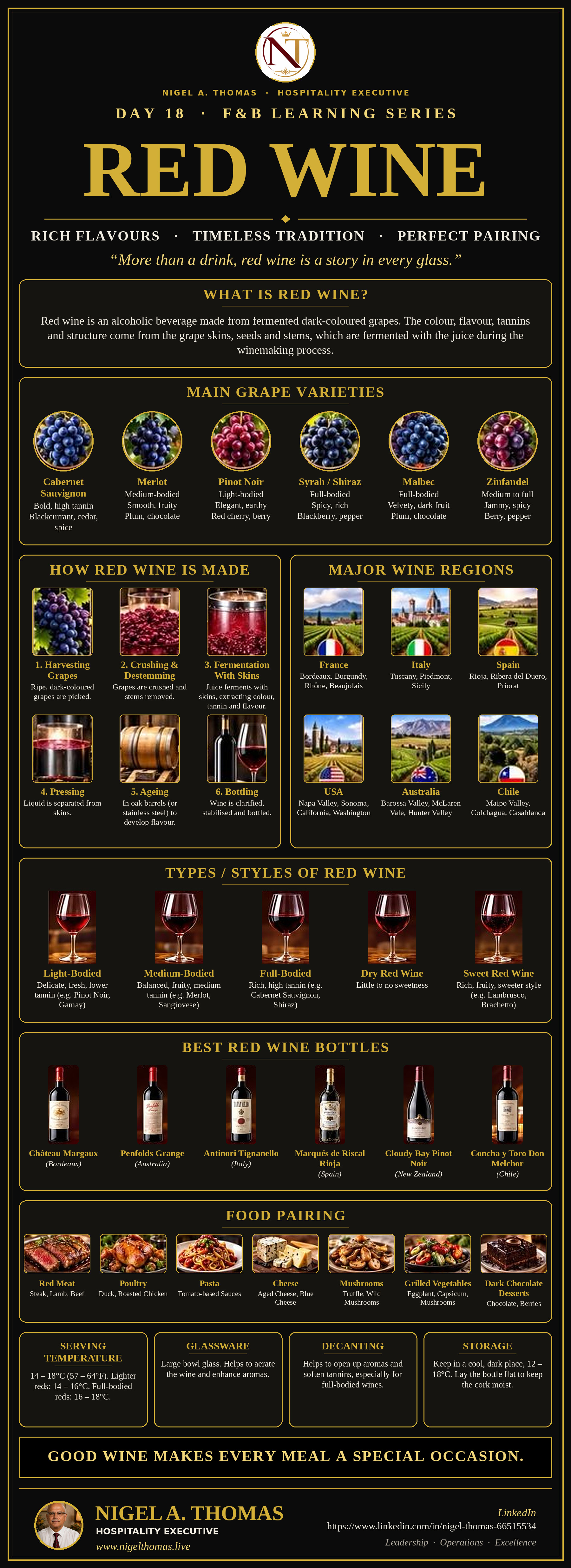
This guide goes with the Day 18 Red Wine poster below. It follows the same logical path as the poster: what red wine is, the main grape varieties, how it is made, where it comes from, the styles you will meet, some benchmark bottles, which foods it suits, and how to serve and store it properly. After more than thirty years in hospitality, on ships, in hotels and in restaurants across India, the Middle East and the USA, I have learned that guests do not want a lecture. They want a clear, confident recommendation. The knowledge below is what makes that possible.
What Is Red Wine?
Red wine is an alcoholic beverage made from fermented dark-coloured grapes. The key point, and the one that surprises many guests, is that the juice of almost all grapes is clear. The colour, flavour, tannins and structure of red wine come from the grape skins, seeds and stems, which are fermented together with the juice during the winemaking process. This contact is what turns a pale juice into a deep purple, ruby or garnet wine, and it is also what gives red wine its grip, complexity and ability to age.
Three elements shape almost everything you taste in a glass of red:
- Colour compounds from the skins, which range from purple in young wines to garnet and brick as they age.
- Tannin, a natural compound from skins, seeds, stems and oak that creates the drying, slightly grippy sensation on the gums and tongue.
- Acidity and alcohol, which give red wine its freshness and body, and which are influenced strongly by climate and ripeness.
If you want the vocabulary to describe these qualities, our wine terminology guide is a useful companion.
The Main Red Grape Varieties
Thousands of grape varieties exist, but a small group accounts for most of the red wine you will serve. The poster highlights six. Learn their character, and you can describe most wine lists with confidence.
Cabernet Sauvignon
Bold and high in tannin, with flavours of blackcurrant, cedar and spice. Cabernet Sauvignon has thick skins that give deep colour and firm structure, and it is the backbone of famous wines in Bordeaux, Napa Valley, Chile and Australia. It is a classic partner for steak and aged cheese, and it ages beautifully.
Merlot
Medium-bodied, smooth and fruity, with notes of plum and chocolate. Merlot is softer and rounder than Cabernet, with gentler tannins, which makes it approachable and popular with guests who prefer an easy-drinking red. It is widely planted in Bordeaux, where it is often blended with Cabernet.
Pinot Noir
Light-bodied, elegant and earthy, with red cherry and berry flavours. Pinot Noir has thin skins, so it is paler and lower in tannin than most reds. It is a delicate grape that expresses the place it grows, and it is the great red of Burgundy. It is also one of the most food-friendly wines, working with duck, salmon, mushrooms and poultry.
Syrah / Shiraz
Full-bodied, spicy and rich, with blackberry and pepper notes. The same grape is called Syrah in France and Shiraz in Australia, and the name often signals the style: Syrah tends to be more peppery and restrained, while Shiraz is usually riper, fuller and fruitier. It suits grilled meats and spiced dishes.
Malbec
Full-bodied, velvety, with dark fruit, plum and chocolate. Malbec originated in France but found its greatest fame in Argentina, where it produces plush, generous wines that pair brilliantly with barbecued beef.
Zinfandel
Medium to full-bodied, jammy and spicy, with berry and pepper notes. Zinfandel is closely associated with California, where it makes bold, fruity reds that are often higher in alcohol. It works well with barbecue, burgers and robust tomato-based dishes.
How Red Wine Is Made
The process of making red wine can be summarised in six steps. Each decision along the way affects the wine in the glass.
- 1. Harvesting grapes. Ripe, dark-coloured grapes are picked, by hand or by machine. The timing of the harvest matters: pick too early and the wine is thin and sharp, too late and it may be heavy and overly alcoholic.
- 2. Crushing and destemming. Grapes are crushed and the stems are removed. Gentle crushing releases the juice and breaks the skins so that colour and flavour can be extracted.
- 3. Fermentation with skins. The juice ferments with the skins, and yeast converts sugar into alcohol. During this stage, called maceration, colour, tannin and flavour are extracted. The winemaker manages temperature and the way the skins are mixed with the juice, using techniques such as pumping over or punching down the cap of skins that rises to the surface.
- 4. Pressing. After fermentation, the liquid is separated from the skins. The wine that drains freely and the wine from pressing may be kept separate or blended.
- 5. Ageing. The wine matures in oak barrels or in stainless steel. Oak adds flavours such as vanilla, toast and spice and allows tiny amounts of oxygen to soften the wine, while stainless steel preserves fresh fruit character. Many reds also undergo a second, softening fermentation that converts sharp malic acid into gentler lactic acid.
- 6. Bottling. The wine is clarified, stabilised and bottled. Some wines are released young, while others spend further time in bottle before they are ready to drink.
This is why two wines made from the same grape can taste so different. The vineyard, the vintage, the length of skin contact, the type of oak and the length of ageing all leave their mark.
Major Red Wine Regions
Geography matters in wine, because climate and soil shape how grapes ripen. The poster covers six major producers, and a few notes on each will help you place a bottle on the list. For a deeper look at the most celebrated of them, read our guide to the wine regions of France.
- France: Bordeaux (Cabernet Sauvignon and Merlot blends), Burgundy (Pinot Noir), the Rhône (Syrah and Grenache blends) and Beaujolais (light, fruity Gamay).
- Italy: Tuscany (Sangiovese, the grape of Chianti), Piedmont (Nebbiolo, behind Barolo and Barbaresco) and Sicily (bold, sun-ripened reds).
- Spain: Rioja (Tempranillo, often aged in oak), Ribera del Duero (powerful Tempranillo) and Priorat (concentrated, mineral reds).
- USA: Napa Valley and Sonoma in California, famous for Cabernet Sauvignon and Zinfandel, and Washington State.
- Australia: Barossa Valley (rich Shiraz), McLaren Vale and the Hunter Valley.
- Chile: Maipo Valley (Cabernet Sauvignon), Colchagua and Casablanca, offering excellent value and quality.
A useful rule of thumb is that cooler regions tend to produce lighter, more elegant reds with higher acidity, while warmer regions produce riper, fuller and more alcoholic wines.
Styles of Red Wine
Rather than memorising grapes, it is often easier to describe red wine by style. The poster uses five categories that you can use on the floor.
- Light-bodied: delicate, fresh and lower in tannin, such as Pinot Noir and Gamay.
- Medium-bodied: balanced and fruity with medium tannin, such as Merlot and Sangiovese.
- Full-bodied: rich with high tannin, such as Cabernet Sauvignon and Shiraz.
- Dry red wine: with little to no sweetness. The vast majority of table reds are dry.
- Sweet red wine: rich, fruity and sweeter in style, such as Lambrusco and Brachetto, which are often lightly sparkling and served chilled.
When a guest says “I like something smooth,” they usually mean lower tannin, so look to Merlot, Pinot Noir or Gamay. When they ask for “something bold,” they typically want a full-bodied, tannic red. Learning to translate these everyday words into styles is the heart of good wine service.
Benchmark Bottles From Around the World
The poster features six bottles that are often cited as reference points for their regions. They are not the only great wines, and they are certainly not all affordable, but they are useful names to know.
- Château Margaux (Bordeaux, France): one of the famous first growth estates of the 1855 Bordeaux classification, known for its elegance and perfume.
- Penfolds Grange (Australia): a rich, long-lived Shiraz-based wine from South Australia, first made in the 1950s and regarded as the country’s most iconic red.
- Antinori Tignanello (Italy): a Tuscan red based on Sangiovese, widely credited as a pioneer of the so-called Super Tuscan style.
- Marqués de Riscal Rioja (Spain): a classic Rioja from one of the region’s historic producers, built on Tempranillo and oak ageing.
- Cloudy Bay Pinot Noir (New Zealand): a fresh, fruity Pinot Noir from Marlborough, from a winery better known for its Sauvignon Blanc.
- Concha y Toro Don Melchor (Chile): a Cabernet Sauvignon-led red from the Maipo Valley, regarded as one of Chile’s leading wines.
In practice, the most useful skill is not memorising famous labels but being able to recommend a good bottle at the price the guest wants to pay. Knowing the style and the region gets you there.
Food Pairing With Red Wine
Red wine and food is a topic in itself, and our full guide to food and wine pairing goes deeper. The poster summarises seven reliable matches:
- Red meat (steak, lamb, beef): tannin cuts through fat and the meat softens the tannin. Cabernet Sauvignon, Malbec and Shiraz are classic choices.
- Poultry (duck, roasted chicken): medium-bodied and lighter reds such as Pinot Noir suit richer birds without overpowering them.
- Pasta (tomato-based sauces): tomato is acidic, so choose a red with good acidity, such as Sangiovese or Chianti.
- Cheese (aged and blue cheese): aged cheeses suit structured reds. Blue cheese is trickier, and a sweet or fortified wine often works better.
- Mushrooms (truffle, wild mushrooms): earthy flavours love earthy wines, and Pinot Noir is the natural partner.
- Grilled vegetables (aubergine, capsicum, mushrooms): smoky char suits a fruity Shiraz, Grenache or medium-bodied red.
- Dark chocolate desserts (chocolate, berries): choose a sweeter red or fortified wine, since a dry tannic red can taste bitter next to chocolate.
The guiding principles are simple. Match the weight of the wine to the weight of the dish, remember that tannin loves fat and protein, and be careful with very spicy or very salty food, which can make tannic wines taste harsh. For Indian and other spiced dishes, softer, fruitier, lower-tannin reds are generally safer.
Serving Red Wine Properly
A good wine can be spoiled by poor service, and a modest wine can shine when it is served well. Four details make the biggest difference.
Serving temperature
The poster recommends serving red wine at 14 to 18°C (57 to 64°F). Lighter reds such as Pinot Noir and Gamay show best at 14 to 16°C, and full-bodied reds such as Cabernet Sauvignon and Shiraz at 16 to 18°C. The old rule of serving red wine at “room temperature” comes from cool European cellars. In a warm climate, a room can be 28°C or more, which makes red wine taste heavy, alcoholic and flat. Chill a warm bottle for 15 to 20 minutes before serving, and keep it in a cooler or ice bucket in hot weather.
Glassware
A large-bowl glass gives red wine room to breathe. It helps to aerate the wine and enhance the aromas, and the generous surface area lets scent gather above the wine. Fill the glass to roughly one third so that guests can swirl comfortably.
Decanting
Decanting means pouring the wine from its bottle into a separate vessel. It helps to open up aromas and soften tannins, especially for full-bodied wines. Young, powerful reds often benefit from 30 to 60 minutes in a decanter. Older wines are decanted differently, slowly and gently, mainly to separate the wine from natural sediment. Light, delicate wines such as old Pinot Noir may need very little air, so taste before you decide.
Storage
Keep wine in a cool, dark place at a steady 12 to 18°C, and lay the bottle flat to keep the cork moist, which protects it from drying out and letting in air. Avoid heat, strong light and vibration, and avoid wide temperature swings. Once opened, a red wine will usually keep for three to five days if re-stoppered and stored cool, although it will slowly lose freshness.
The Steps of Red Wine Service
A confident, consistent service sequence reassures guests and protects the wine. Adapt it to your venue’s standards:
- Present the bottle to the host, label facing them, so that they can confirm the wine, producer and vintage.
- Open it neatly: cut the capsule below the lip, wipe the neck, remove the cork smoothly and check it for faults.
- Offer a taste to the host, who confirms that the wine is sound. The taste is to check for faults, such as a musty, cork-tainted smell, not to approve a style they have already chosen.
- Pour ladies and guests first, the host last, and pour in a consistent measure.
- Wipe the lip of the bottle after each pour and turn it slightly to avoid drips.
- Keep the bottle within reach, and top up at a sensible pace without rushing guests.
How to Taste Red Wine: A Simple Method
Tasting is a skill that improves quickly with practice. A simple five-step approach works for guests and staff alike:
- See: tilt the glass against a white background. Young reds are purple, while older reds show garnet and brick tones at the rim.
- Swirl: a gentle swirl releases the aromas.
- Smell: notice fruit, spice, oak and earthy notes.
- Sip: note the sweetness, acidity, tannin, alcohol and body.
- Savour: pay attention to the finish, the length of the flavour after you swallow.
Use plain, descriptive language when explaining a wine to guests. “Rich and spicy with dark berry fruit” helps a guest far more than a string of technical terms.
Responsible Service and Guest Care
Wine service carries responsibilities. Follow your venue’s responsible service of alcohol policy and local laws, pay attention to the pace of drinking, offer water, and never serve guests who are intoxicated. Wine labels in many markets must state that the wine contains sulphites, and some guests have allergies or sensitivities, so be ready to answer questions honestly or to check with a manager. Offer wines by the glass, and tasting measures where possible, so that guests can explore without over-committing.
Building a Balanced Red Wine List
A good list does not need to be long. A compact selection that covers each style gives guests real choice and keeps staff knowledgeable. Include at least one light-bodied, one medium-bodied and one full-bodied red, a spread of regions such as France, Italy, Spain, the Americas and Australia, and a few options by the glass at accessible prices. Describe each wine in a short, plain line, for example “smooth and fruity with plum and soft tannin”, so that guests can choose without feeling intimidated. Review the list each season, watch which wines sell and which stay on the shelf, and train the team to recommend from it with confidence.
Common Red Wine Mistakes to Avoid
- Serving red wine too warm, which makes it taste heavy and alcoholic.
- Over-chilling light reds, or serving full-bodied reds straight from a very cold fridge.
- Using small, narrow glasses that trap aromas.
- Assuming that expensive or heavy always means better, when the best wine is the one that suits the guest and the dish.
- Pairing tannic reds with very spicy, salty or delicate seafood dishes.
- Storing bottles upright for long periods or in a hot room.
- Leaving opened bottles for weeks and then serving them.
Quick Reference: Red Wine at a Glance
| Grape | Body | Typical flavours | Pairs with |
|---|---|---|---|
| Cabernet Sauvignon | Full | Blackcurrant, cedar, spice | Steak, aged cheese |
| Merlot | Medium | Plum, chocolate | Roast chicken, pasta |
| Pinot Noir | Light | Red cherry, earthy berry | Duck, salmon, mushrooms |
| Syrah / Shiraz | Full | Blackberry, pepper | Grilled meats, spiced dishes |
| Malbec | Full | Plum, dark fruit, chocolate | Barbecued beef |
| Zinfandel | Medium to full | Jammy berry, pepper | Barbecue, burgers |
Frequently Asked Questions
Should red wine always be served at room temperature?
No. Room temperature is a vague idea that dates from cool European cellars. Aim for 14 to 18°C, which means lightly chilling red wine in warm climates.
What are tannins?
Tannins are natural compounds from grape skins, seeds, stems and oak that create a drying, grippy feel in the mouth. They help red wine to age and they pair well with fatty, protein-rich food.
Does red wine need to breathe?
Many young, full-bodied reds improve with air, and decanting is the quickest way to give them it. Delicate or old wines may need very little, so taste first.
How long does opened red wine last?
Usually three to five days if it is re-stoppered and kept in a cool place. Fresh, light wines fade sooner than robust, tannic ones.
Is a more expensive bottle always better?
No. Price reflects many things, including rarity, brand and cost of production. A well-chosen bottle that suits the dish and the guest is better than an expensive one that does not.
What is the difference between Syrah and Shiraz?
They are the same grape. The name often signals a style: Syrah suggests a more restrained, peppery wine, and Shiraz a riper, fuller and fruitier one.
Final Thoughts
Red wine rewards curiosity. Learn the six grapes, understand the six steps of winemaking, know the regions and the styles, match the wine to the dish, and serve it at the right temperature in the right glass. Do that, and you will be able to guide almost any guest to a bottle they will enjoy, whatever the occasion.
As the poster says, good wine makes every meal a special occasion. Use the poster as a quick reference in the training room or at the bar, and use this guide for the reasoning behind it. If you would like to keep learning, the related wine guides below are a good next step. Then taste widely, keep notes and always listen to the guest.
Other Wine Guides From the Blog
Wine Regions of France
Explore the great French wine regions, their grapes and their signature styles.
Read Article →Wine Terminology
Essential wine terms every hospitality professional should know.
Read Article →Why Is a Wine Bottle 750 ml?
The history and logic behind the standard wine bottle size.
Read Article →The Art of Food & Wine Pairing
Match steak, seafood, cheese and dessert with the right wine.
Read Article →About the Author
Nigel A. Thomas is a hospitality executive and corporate trainer with 30+ years of international experience across luxury hotels, resorts, cruise lines and F&B operations. Read more about Nigel or connect on LinkedIn.