Getting Wine Service Right, Start to Finish

Wine service is one of the few moments left in hospitality that's still fully theatrical — a guest watches every motion, from the first glimpse of the label to the pour in their glass. Done well, it barely registers; the guest simply feels looked after. Done poorly — a popped cork, a dripped bottle, a warm glass of rosé — it's the kind of small failure that guests remember long after the meal itself is forgotten.
This guide covers the three fundamentals every F&B team should have down cold: correct wine opener etiquette at the table, when and how to present a red wine in a wine basket, and how to properly chill and serve white and rosé wines from a wine bucket.
1. Wine Opener Etiquette — Step by Step
Opening a bottle tableside is a sequence, not a single action, and skipping steps is what turns a smooth service moment into an awkward one. Here is the standard, in order:
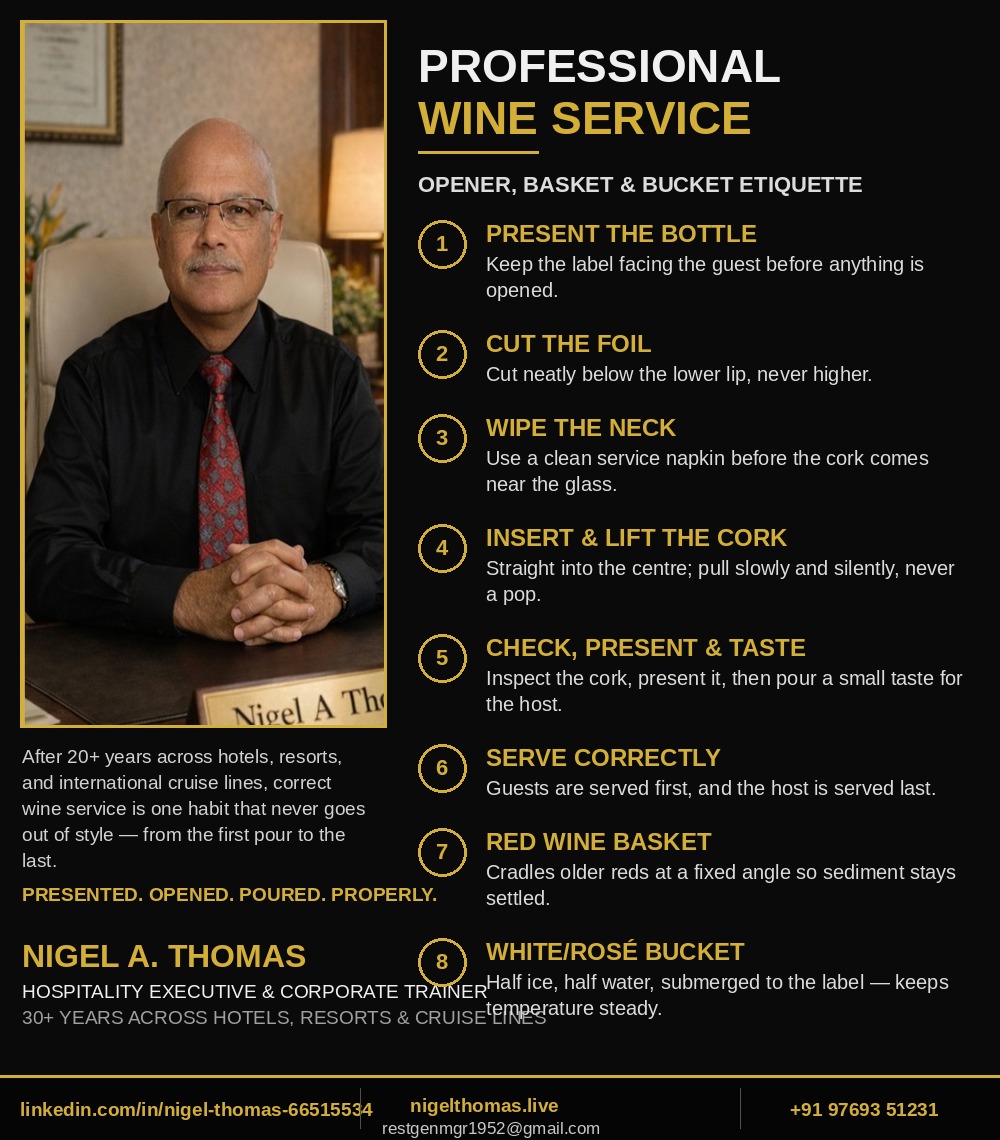
- Present the bottle — Keep the label facing the guest so they can confirm it's the wine they ordered before anything is opened.
- Cut the foil — Cut neatly below the lower lip of the bottle, never higher, so the cut edge stays hidden once the foil is removed.
- Wipe the neck — Use a clean service napkin to remove any residue before the cork comes anywhere near the glass.
- Insert the screw — Place it straight into the centre of the cork; an off-centre insertion is the most common cause of a broken or crumbling cork.
- Lift the cork — Pull slowly and silently. A popping sound is a service error, not a flourish — it signals loss of control, not celebration.
- Check and present — Inspect the cork for dryness or taint, and present it to the host if they want to check it themselves.
- Offer a taste — Pour a small tasting portion for the host before serving the table.
- Serve correctly — Guests are served first, and the host is served last.
Don't — Damage the cork, touch the bottle neck with bare hands, or open the bottle near the guest's face.
Professional wine opener etiquette, step by step — the full downloadable poster is at the bottom of this page.
2. The Wine Basket — For Red Wines
A wine basket (or wine cradle) exists to solve one specific problem: sediment. Older, full-bodied reds that have been cellared and stored on their side develop natural sediment, and standing the bottle upright before service stirs that sediment back into the wine. A basket lets the bottle stay in roughly the same horizontal position it was stored in, right through to the pour, so the sediment stays settled at the bottom rather than clouding the glass.
When to use one
A basket is for older vintage reds, not everyday table wine. If a red hasn't been cellared for years or shows no visible sediment, decanting or standard tableside service is usually the better call — a basket for a young, unaged red is more theatre than function.
Service standard
- Retrieve the bottle from storage in the same horizontal orientation it was resting in — don't tip or shake it upright first.
- Keep the bottle cradled at roughly the same angle throughout presentation, opening and pouring.
- Pour slowly and steadily; a sudden tilt or fast pour will disturb settled sediment.
- Watch the neck as the wine level drops — stop pouring before any sediment reaches it, and decant the last portion separately if needed.
3. The Wine Bucket — For White & Rosé Wines
Where a basket protects sediment, a wine bucket protects temperature. White and rosé wines are served chilled, and unlike a red, they need to stay that way throughout the meal — a bucket keeps the bottle at serving temperature at the table instead of warming in a guest's hand or on a warm tabletop.
Getting the temperature right
The standard is a half-ice, half-water mix, not ice alone. Water fills the gaps around the bottle and makes contact with far more of the glass surface than ice cubes packed in dry — a dry-ice bucket chills unevenly and slowly by comparison. Submerge the bottle to just below the label so the label stays legible and dry for presentation.
Service standard
- Prepare the bucket before the bottle is ordered where possible, so it's already at temperature by the time service begins.
- Present and open the bottle the same way as any other — label visible, neck wiped, cork checked — before returning it to the bucket between pours.
- Always dry the bottle with a service napkin before pouring; a dripping bottle over a guest's table is a basic but common service lapse.
- Leave a folded napkin over the neck of the bottle when it's resting in the bucket, both to keep it dry and to signal it's ready for the next pour.
The basket and the bucket solve opposite problems with the same idea: control. A basket controls sediment by controlling angle. A bucket controls flavor by controlling temperature. Train your team on the "why" behind each tool, not just the motion, and they'll know when to reach for a decanter instead of a basket, or an ice bath instead of a fridge-cold bottle straight to the table.
The Bottom Line
Correct wine service isn't about ceremony for its own sake — every step, from cutting the foil below the lip to cradling an old red at the right angle, exists to protect the wine and the guest's experience of it. Get the opener sequence right, know when a basket earns its place at the table, and keep whites and rosés properly chilled in a bucket, and wine service becomes what it should be: quiet, confident, and unremarkable in the best possible way.