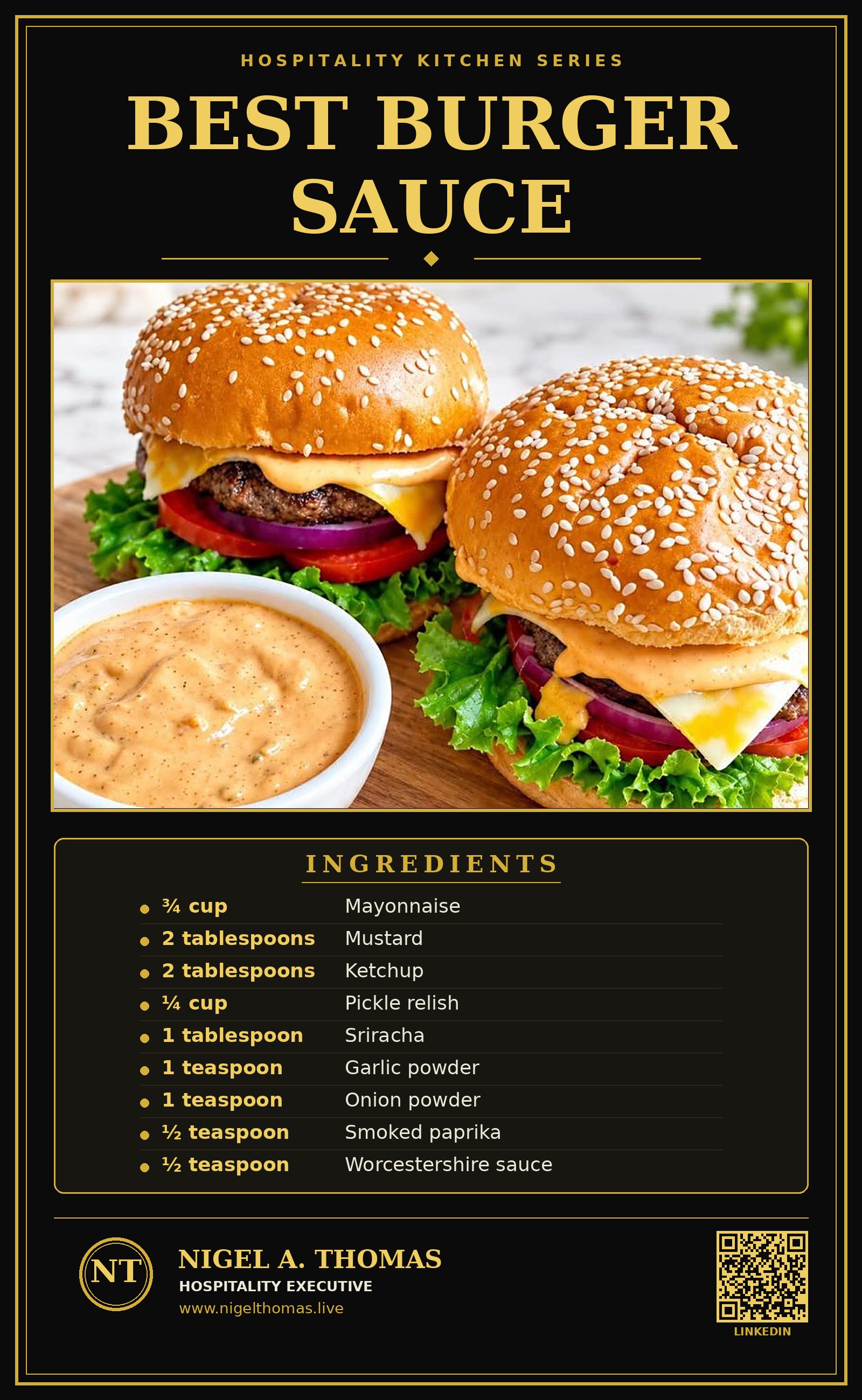
Ask any burger lover what separates a good burger from a great one and the answer is rarely the patty. It is the sauce. That creamy, tangy, slightly smoky, gently spicy spoonful that runs down your fingers is what people remember, and it is what brings them back to the same restaurant, the same food truck or the same kitchen table. In more than thirty years across ships, hotels, resorts and restaurants, I have watched a single well-made sauce lift an ordinary burger into a signature dish. This is the one I trust: a simple, balanced, nine-ingredient burger sauce that takes five minutes to make and works in a home kitchen as well as it does on a busy line.
The Recipe at a Glance
Ingredients
- ¾ cup mayonnaise
- 2 tablespoons mustard
- 2 tablespoons ketchup
- ¼ cup pickle relish
- 1 tablespoon Sriracha
- 1 teaspoon garlic powder
- 1 teaspoon onion powder
- ½ teaspoon smoked paprika
- ½ teaspoon Worcestershire sauce
Method in Brief
- Add the mayonnaise, mustard, ketchup and relish to a clean bowl.
- Add the Sriracha, garlic powder, onion powder, smoked paprika and Worcestershire sauce.
- Whisk until completely smooth and an even peach-orange colour.
- Rest in the refrigerator for at least 30 minutes, then taste and adjust.
Makes about 1½ cups (roughly 360 ml), enough for around a dozen generous burger portions.
Why the Sauce Makes the Burger
A burger is a beautifully simple structure: a bun, a patty, some cheese and vegetables. Because it is so simple, every component has to pull its weight, and the sauce carries more of the load than most people realise. It adds moisture to a lean patty. It adds acidity to cut through fat and melted cheese. It adds sweetness to balance the bitterness of charred meat, and it adds heat and smokiness that makes each bite interesting. A burger without sauce is a dry sandwich. A burger with the wrong sauce is a muddle. A burger with the right sauce feels complete.
From a hospitality point of view, the sauce is also your signature. Anyone can buy the same buns, the same cheese and the same beef from the same supplier. What your guest cannot get anywhere else is your sauce. That is why serious burger restaurants guard their sauce recipes so carefully, and why a consistent, repeatable recipe written in clear measurements is worth far more than a cook’s casual instinct. The recipe in this guide uses cup and spoon measures, so it can be scaled, costed, taught and reproduced by any member of your team on any shift.
The flavour logic behind this sauce is easy to remember. Mayonnaise gives richness and body. Mustard and ketchup give the tang and sweetness that people associate with a classic cheeseburger. Pickle relish adds crunch, sharp acidity and a little extra sweetness. Sriracha brings controlled heat. Garlic powder and onion powder add the savoury background notes. Smoked paprika adds a hint of the grill, and a few drops of Worcestershire sauce add depth that most guests will feel but never identify. It is a classic “special sauce” style, built from pantry staples that any kitchen already holds.
The Ingredients, One by One
Understanding what each ingredient does is the difference between following a recipe and mastering it. When you know the job of each item, you can fix a sauce that is slightly off, adapt it for a different audience and explain it with confidence to your team.
¾ Cup Mayonnaise: The Foundation
Mayonnaise is the base, and it makes up more than half of the sauce by volume. It is an emulsion of oil, egg yolk and acid, and it gives the sauce its creamy body, its clinging texture and its richness. Choose a good quality, full-fat mayonnaise with a neutral, clean taste. Light or low-fat versions tend to be thinner and sweeter, which changes the balance of the whole sauce. If you make your own mayonnaise in a professional kitchen, remember that it is made with raw egg and must be handled under strict temperature control. A trusted commercial product is often the safer and more consistent choice for a high-volume operation.
2 Tablespoons Mustard: The Tang
Mustard brings sharpness and a gentle bite that keeps the sauce from tasting heavy. Plain yellow mustard gives the most classic, American-style flavour, with a bright vinegar tang and a golden tone. Dijon will make the sauce a little more refined and slightly more pungent. Whichever you use, stay with a smooth mustard rather than a grainy one, so the sauce keeps a silky texture. Mustard also helps hold the emulsion together, which is a small technical benefit on top of its flavour.
2 Tablespoons Ketchup: The Sweetness and Colour
Ketchup supplies sweetness, mild acidity and the warm colour that makes the sauce look so appetising against a golden bun. It is also the ingredient that ties the sauce to the familiar taste of a classic burger. Too much ketchup makes the sauce sugary and flat, so keep to the measure given. If your guests like a less sweet profile, you can reduce the ketchup slightly and increase the mustard by the same amount.
¼ Cup Pickle Relish: The Crunch and Acid
Sweet pickle relish is the secret to the texture of this sauce. Tiny pieces of pickled cucumber give a pleasant bit of crunch and a burst of sweet-sour flavour in every bite. If you prefer a sharper sauce, use dill relish. For the smoothest version, drain the relish well and chop it finer before adding it. Draining matters: wet relish can thin the sauce and make it watery after a day in the refrigerator.
1 Tablespoon Sriracha: The Heat
Sriracha is a chilli-garlic sauce with a little sweetness, and it adds heat without overpowering the other flavours. One tablespoon gives a warm, rounded kick that most guests enjoy without finding it spicy. Because tolerance for heat varies widely, this is the ingredient to adjust first. Start with the full tablespoon, taste after the resting period, and then decide whether to add more or reduce it for the next batch. For a family or school menu you might halve it; for a pub menu you might add an extra teaspoon.
1 Teaspoon Garlic Powder: The Savoury Base
Garlic powder is used here instead of fresh garlic for two practical reasons. First, it blends smoothly without leaving sharp, raw pieces in the sauce. Second, it behaves predictably over several days of storage, whereas raw garlic in a mayonnaise base becomes harsher and more aggressive as it sits. Powder also removes the need to peel and chop in a busy prep period, which saves time and keeps the recipe consistent from one cook to the next.
1 Teaspoon Onion Powder: The Rounded Depth
Onion powder works alongside the garlic to build a savoury, almost grilled-onion background. It is gentle, slightly sweet and very good at rounding off the sharp edges of mustard and relish. Together, garlic powder and onion powder give the sauce the familiar flavour of a well-seasoned burger spread, without any texture of their own.
½ Teaspoon Smoked Paprika: The Hint of the Grill
Smoked paprika is a small amount with a big effect. It gives a gentle campfire note and a beautiful warm colour, so even a burger cooked on a flat-top griddle tastes as though it came off a charcoal grill. Use a good, fresh smoked paprika, because old paprika turns dusty and dull. Sweet smoked paprika is the best choice here; hot smoked paprika will push the heat up on top of the Sriracha.
½ Teaspoon Worcestershire Sauce: The Secret Depth
Worcestershire sauce is a fermented condiment with a deep, savoury, umami character. In such a small quantity you will not taste it as a separate flavour, but you will notice that the sauce feels fuller and more complete without it. One important point for any menu: traditional Worcestershire sauce contains anchovies, so it is not suitable for strict vegetarians or guests with a fish allergy. We will return to this in the allergen section below.
How to Make the Best Burger Sauce, Step by Step
This is a no-cook sauce, so the technique is simple, but small details make a visible difference in the final result.
- Start clean. Wash your hands, then use a clean, sanitised bowl, whisk and spatula. Because the sauce contains mayonnaise and will be stored, hygiene at the start protects its quality and safety later.
- Measure accurately. Level your cups and spoons. A heaped tablespoon of Sriracha or a generous spoon of ketchup can change the balance noticeably, and accuracy is what makes the recipe repeatable.
- Combine the wet ingredients first. Put the ¾ cup of mayonnaise in the bowl, then add the mustard, ketchup, drained relish, Sriracha and Worcestershire sauce. Mixing the liquids first avoids lumps of dry powder.
- Add the dry seasonings. Sprinkle the garlic powder, onion powder and smoked paprika over the surface. If your powders are clumpy, press them through a small sieve.
- Whisk until smooth. Use a whisk or a spatula until the sauce is one even colour with no streaks. It should look like a soft peach-orange cream, lightly flecked with relish and spice.
- Rest it. Cover and refrigerate for at least 30 minutes. This is the step many people skip. The powders hydrate, the garlic and onion mellow and the flavours join together, so the sauce tastes noticeably better after resting.
- Taste and adjust. Use a clean spoon for every taste. If it needs more lift, add a few drops of pickle brine. If it needs more heat, add a little more Sriracha. If it is too sharp, add a pinch more ketchup.
The sauce should be thick enough to sit on a spoon and fall in a slow ribbon, and loose enough to spread easily on a toasted bun. If it is too thick, whisk in a teaspoon of cold water or pickle brine. If it is too thin, stir in a spoonful of mayonnaise.
Scaling the Recipe for Service and Costing the Portion
One batch of this recipe makes about 1½ cups, or roughly 360 ml. At a standard sauce portion of two tablespoons (about 30 ml) per burger, that is around twelve burgers from a single batch. This is a useful working number for any kitchen, because it lets you plan production directly from your sales forecast.
The recipe scales cleanly because it is built on simple ratios. To make a bigger batch, multiply every ingredient by the same factor. Double the recipe for about two dozen burgers, quadruple it for roughly four dozen, and so on. When you scale up, taste the sauce again before you commit it to service, because spices and heat do not always scale in perfect proportion once the batch becomes large. Always scale the seasonings slightly cautiously and finish by taste.
For costing, the method is straightforward. Add up the cost of each ingredient used in one batch, divide by the number of portions, and you have the sauce cost per burger. Sauces are usually a very small part of the plate cost but a very large part of the perceived value, which makes them one of the best returns on a menu. A distinctive house sauce lets you charge confidently for the burger, supports a premium description on the menu and gives your service team something specific to talk about.
In a busy operation, assign one person to the sauce each day and give them a prep sheet with the batch size, the date, the quantity to make and a sign-off line for tasting. This keeps the sauce consistent and keeps the responsibility clear, which is the same discipline we apply to every other mise en place item.
Delicious Variations on the Classic
Once your team can make the base sauce reliably, variations give you room to create specials, seasonal menus and signature burgers without starting from zero each time.
- Extra smoky sauce. Increase the smoked paprika to a full teaspoon and add a few drops of liquid smoke or a spoonful of chipotle paste. This pairs very well with bacon and aged cheddar burgers.
- Mild family sauce. Reduce the Sriracha to one teaspoon and add an extra tablespoon of ketchup. This keeps the flavour friendly for children and guests who avoid spice.
- Fiery sauce. Double the Sriracha and add a pinch of cayenne. This is excellent with grilled chicken burgers and crispy fried chicken sandwiches.
- Garlic aioli style. Replace the ketchup with extra mayonnaise and add a small amount of freshly grated garlic just before service. Use this variation the same day, because raw garlic becomes sharp in storage.
- Tangy dill version. Use dill relish instead of sweet relish, and add a teaspoon of chopped fresh dill. This works nicely with fish burgers and salmon patties.
- Vegetarian and vegan version. Use a plant-based mayonnaise and replace the Worcestershire sauce with a vegetarian or vegan version, or with a small dash of soy sauce. This keeps the umami without the anchovy, and it suits plant-based patties perfectly.
- Honey-mustard twist. Add a teaspoon of honey and an extra teaspoon of mustard for a sweeter, glossier sauce that suits chicken and turkey burgers.
Whenever you create a variation, change only one or two things at a time, record the exact quantities and name the version clearly. A recipe you cannot repeat is only an accident that tasted good once.
Storage, Food Safety and Shelf Life
Because this sauce is made with mayonnaise, it belongs in the category of foods that need temperature control. Handling it properly is not optional; it is part of protecting your guests.
Store the finished sauce in a clean, airtight, food-grade container and keep it refrigerated at or below 5°C (41°F). Label the container with the name of the sauce, the date it was made and the use-by date, following your kitchen’s labelling system. In my own kitchens I recommend a working shelf life of about five days for a house-made sauce of this kind, and I treat seven days as the outer limit that should never be exceeded. At home, aim to finish the sauce within a week.
Good habits make the biggest difference. Always use a clean spoon, never a spoon that has touched a patty or a bun. Never top up an old container with fresh sauce; start a new, labelled container instead. Do not leave the sauce standing at room temperature on a service counter for long periods; decant a small working amount into a squeeze bottle or a chilled pot and keep the main batch in the refrigerator. If the sauce smells sour, shows any separation that will not stir back together, or has been out of temperature control for too long, discard it. When in doubt, throw it out.
Freezing is not recommended. Mayonnaise-based sauces split when they thaw, leaving a grainy, oily texture that cannot be rescued.
Allergens and Dietary Notes
Every guest deserves accurate information, and a burger sauce can hide several common allergens. The mayonnaise contains egg. The mustard is itself a recognised allergen in many countries. The Worcestershire sauce normally contains fish, because of the anchovies. Some brands of ketchup, relish and Sriracha may also contain sulphites or other additives. Always read the labels of the exact brands you purchase, record the allergens on your recipe card and make sure your service team knows how to answer a guest’s question honestly. For vegetarian menus, remember that the standard recipe is not suitable unless you change the Worcestershire sauce.
Troubleshooting: Fixing Common Problems
- The sauce is too thin. The relish was probably not drained well. Stir in an extra spoonful of mayonnaise, and drain the relish thoroughly next time.
- The sauce is too thick. Whisk in a teaspoon of cold water or pickle brine until it falls in a slow ribbon.
- It tastes too sweet. Add a small amount of mustard or a few drops of pickle brine to bring the acid back into balance.
- It tastes too sharp. Add a little more mayonnaise or a pinch more ketchup to soften the edge.
- It is too spicy. Stir in extra mayonnaise to dilute the heat, and reduce the Sriracha in the next batch.
- It tastes flat. Check the salt level in your mayonnaise and add a few drops of Worcestershire sauce or a pinch of smoked paprika to lift the flavour.
- It looks oily or split. This usually means the mayonnaise was warm or the sauce was overmixed. Whisk a spoonful of fresh, cold mayonnaise into the sauce a little at a time to bring it back together.
How to Serve and Pair the Sauce
The classic way to use this sauce is on the bun itself. Toast the cut sides of the bun until golden, spread a thin layer on the base and another on the crown, and then build the burger with lettuce, tomato, red onion and your cheese of choice. Spreading on both halves gives you a little sauce in every bite and protects the bun from becoming soggy from the juices of the vegetables.
It is just as good in a small bowl on the side. Offering the sauce for dipping turns a burger plate into a shared experience, and it is perfect with French fries, onion rings, chicken tenders, mozzarella sticks and crispy potato wedges. You can also use it as a dressing for a burger-style salad, a spread for club sandwiches and wraps, a drizzle over loaded fries or a dip alongside grilled chicken skewers.
For plating, a small ramekin of sauce beside a burger looks generous and professional. For fast service, a squeeze bottle gives accurate portion control and a neat finish. For a gourmet touch, add a light dusting of smoked paprika over the sauce in the ramekin just before it goes to the table.
Training Your Team to Make It Right
A recipe is only as good as the people who follow it. When I train service and kitchen teams, I teach sauces the same way I teach every other standard: show it, explain it, let them do it and then check it. Walk the team through the recipe card, let each person make a small batch under supervision and taste the result together. Ask them to describe what they taste in their own words. When a cook can say “it needs a little more tang” and explain which ingredient will fix that, you have a cook who understands the sauce, not just one who can copy it.
Put the recipe in a simple standard operating procedure with exact measures, the method, the storage instructions, the shelf life and the allergen information. Keep a laminated copy in the kitchen and make sure the dining room team knows the sauce well enough to describe it to a guest. A server who says “our house burger sauce is creamy, tangy and a little smoky with a gentle kick of chilli” will sell far more burgers than one who says “it comes with sauce.”
Finally, build the pause into your routine. Before a batch goes into service, take a moment to taste it, check the colour, check the texture and check the label. That small, deliberate pause is a habit I teach in every kitchen I work with, because it catches the little mistakes before the guest does.
Frequently Asked Questions
Can I make this burger sauce ahead of time?
Yes, and it is better when you do. Making it at least 30 minutes ahead lets the flavours blend, and it keeps well in the refrigerator for several days when stored in a clean, airtight container.
How long does homemade burger sauce last?
Treat it as a mayonnaise-based sauce. Keep it at or below 5°C (41°F), label it with the date and aim to use it within five days, never beyond seven.
Can I use fresh garlic and onion instead of powder?
You can, but powder gives a smoother sauce and a steadier flavour over storage. If you use fresh garlic, grate it very finely, use it the same day and expect a sharper taste.
How do I make the sauce less spicy?
Reduce the Sriracha to one teaspoon or leave it out altogether, and add a little extra ketchup to keep the flavour rounded.
Is this sauce vegetarian?
Not in its standard form, because traditional Worcestershire sauce contains anchovies. Replace it with a vegetarian version or a dash of soy sauce, and use a plant-based mayonnaise for a vegan sauce.
Final Thoughts
The best burger sauce is not complicated. It is balanced. It respects the beef, lifts the cheese, brightens the vegetables and leaves the guest wanting another bite. With nine simple ingredients, a few minutes of mixing and a short rest in the refrigerator, you can make a sauce that deserves a place on any menu. Measure it carefully, taste it honestly, store it safely and teach it well, and it will quietly become the thing your guests talk about long after the plate has gone.
Download the poster below, print it for your kitchen wall, share it with your team and make the sauce your own.