Few foods travel as far, or connect as many people, as the noodle. A bowl of ramen in Tokyo, a plate of pad thai on a Bangkok street, a steaming laksa in Singapore and a simple dish of spaghetti with garlic and olive oil in Naples all begin the same way: flour or starch, water, and the skill of the person who shapes and cooks them. Over thirty years in luxury hotels, resorts, cruise lines and restaurant kitchens across India, the Middle East and the USA, I have watched noodles appear on breakfast buffets, room-service menus, staff canteens, banquet stations and fine-dining tasting menus. Guests from every background order them, and chefs who understand them consistently turn a humble ingredient into the dish people remember.
This guide walks through 20 noodles from Japan, China, Southeast Asia, Korea and Italy. For each one you will find what it is made from, how it behaves in the pan or the pot, and the dishes it is traditionally matched with. At the end you will find the factors professional chefs weigh when choosing a noodle, practical tips for hotel and restaurant kitchens, and a free infographic poster you can download and pin up in your own kitchen or classroom.
What Makes One Noodle Different From Another?
Before meeting the individual noodles, it helps to understand the four variables that separate them. The first is the base ingredient. Wheat flour gives chew and structure through gluten. Rice flour produces a softer, more delicate bite with no gluten at all. Buckwheat brings an earthy, nutty flavour, while starches from mung bean or sweet potato create the translucent strands we call glass noodles. Eggs enrich a dough and add colour, richness and a firmer texture.
The second variable is alkalinity and salt. Many Chinese and Southeast Asian wheat noodles contain an alkaline agent known as kansui, which gives ramen and egg noodles their yellow tint, springy bounce and distinctive aroma. Italian pasta relies on durum semolina and water, producing a firm texture that holds its shape when cooked al dente.
The third is shape and thickness, which decides how long a noodle takes to cook and how it carries sauce or broth. The fourth is the method of making: extruded, rolled and cut, hand-pulled, or sliced straight from a block of dough. A noodle cut with a knife has a rustic irregularity that a machine-cut strand can never copy, and that irregularity is part of the pleasure of eating it.
The Noodles of Japan
1Ramen Noodles
Japan
Ramen noodles are wheat noodles with a firm, springy texture, made with kansui so they stay bouncy even when sitting in hot broth. They are the heart of a bowl that may be built on pork bone, chicken, soy or miso, then topped with sliced pork, a marinated soft egg, spring onion, nori and sweetcorn. The skill in a ramen kitchen is timing: the noodles are cooked to order, often for under two minutes, drained thoroughly and placed into the bowl at the last moment so they never turn soft. In a hotel setting, ramen works well as a late-night or room-service item because the components, broth, tare, toppings and noodles, can be prepared ahead and assembled in minutes.
2Udon Noodles
Japan
Udon are thick, soft and wonderfully chewy wheat noodles, traditionally served in a light dashi-based soup or stir-fried with vegetables and meat. Their thickness makes them forgiving: they hold heat well and absorb seasoning without falling apart. Classic presentations include kake udon in a clear hot broth, tempura udon with crisp prawns on the side, and yaki udon tossed with soy and mirin. Because udon is so mild, the quality of the broth and the freshness of the toppings define the dish. They are also an excellent choice for guests who find thinner noodles too delicate.
3Soba Noodles
Japan
Soba are made from buckwheat, giving them a distinctive earthy flavour and a slightly grainy bite. They can be served hot in broth or, more famously, cold on a bamboo tray with a dipping sauce called tsuyu, wasabi and spring onion. After cooking, soba must be rinsed in cold water to remove surface starch and stop the cooking, which keeps them clean and firm. Pure buckwheat soba contains no wheat, but most commercial soba blends buckwheat with wheat flour, so always check the label if a guest has a dietary requirement. The soba cooking water, called sobayu, is traditionally stirred into the leftover dipping sauce and drunk at the end of the meal.
The Noodles of China
4Chow Mein Noodles
China
Chow mein means “stir-fried noodles”, and the name describes the technique exactly. Wheat noodles are boiled briefly, drained and dried, then fried in a very hot wok with vegetables, proteins and a savoury sauce of soy, oyster sauce and a little sugar. The goal is a slight char and a lightly crisp edge, which comes from high heat and from not overcrowding the pan. In many Indian-Chinese kitchens, chow mein is one of the best-selling items on the menu, and getting the wok hei, the breath of the wok, is what separates a good plate from an ordinary one.
5Lo Mein Noodles
China
Lo mein, meaning “tossed noodles”, uses soft wheat noodles that are cooked first and then tossed with vegetables, meat or seafood and a flavourful sauce. Unlike chow mein, the noodles are not fried crisp; they stay soft and glossy, coated in sauce. The difference is subtle on paper but obvious on the plate. Lo mein suits banquet service because the noodles hold well and can be finished in large batches without losing their texture, provided they are lightly oiled after boiling to prevent sticking.
6Rice Vermicelli
China & Southeast Asia
Rice vermicelli are thin rice noodles used across China and Southeast Asia in soups, salads, spring rolls and stir-fried dishes. They are usually soaked in hot water rather than boiled, which keeps them tender and prevents them from breaking. Their neutral taste makes them an ideal base for fresh herbs, lime, chilli and nuoc cham dressing, and they are naturally gluten free. Cold vermicelli salads with grilled meat and herbs are a refreshing choice for summer menus and poolside dining.
9Egg Noodles
China
Egg noodles are wheat noodles enriched with egg, which gives a rich flavour, a golden colour and a more resilient texture. They are among the most versatile noodles in any kitchen, equally at home in a clear chicken soup, a wonton noodle bowl or a quick stir-fry. Fresh egg noodles cook in two to three minutes, dried nests take a little longer, and both should be shaken free of excess water before going into the wok so the sauce clings instead of pooling at the bottom of the plate.
16La Mian
China
La mian are hand-pulled wheat noodles, made by stretching and folding the dough repeatedly until it forms long, even strands. The process develops the gluten and creates an elastic, silky texture that is ideal for soups, particularly the beef noodle soups of northwestern China. Watching a skilled noodle maker pull a single lump of dough into hundreds of strands in under a minute is theatre in itself, and a live noodle-pulling station can be a memorable feature at a hotel food festival.
17Knife-Cut Noodles
China
Knife-cut noodles, or dao xiao mian, are shaved or cut directly from a block of dough, producing thick, irregular ribbons with thin edges and thicker centres. That variation gives a pleasantly chewy texture and a rustic look. They are commonly served in hearty braises and rich sauces that can cling to the uneven surface. Because the shape is not uniform, the noodles should be stirred gently while boiling so thinner pieces do not overcook before the thicker ones are ready.
The Noodles of Southeast Asia
7Pad Thai Rice Noodles
Thailand
Pad thai uses flat rice noodles stir-fried with tamarind, fish sauce, palm sugar, eggs, peanuts and often prawns or tofu. The balance of sweet, sour, salty and nutty is what defines the dish, and it is finished with bean sprouts, chives and a wedge of lime. The key technique is soaking the dried noodles in warm water until they are pliable but still firm, then finishing them in the wok where they absorb the sauce. Over-soaking is the most common mistake and results in a mushy, broken plate.
10Pancit Canton
Philippines
Pancit canton is a popular Filipino stir-fried dish made from wheat-based noodles with vegetables, meat, seafood and seasonings. It is a festive food in the Philippines, often served at birthdays because long noodles symbolise long life. The dish is typically built with garlic, onion, soy sauce, cabbage, carrots and a mix of pork, chicken or shrimp, finished with a squeeze of calamansi. Its generous, homely character makes it a favourite for staff meals and buffet stations.
11Mie Goreng Noodles
Indonesia
Mie goreng is Indonesia’s famous fried noodle dish, made with wheat or egg noodles, sweet soy sauce (kecap manis), shallots, garlic, chilli, vegetables and a protein, and often topped with a fried egg and crisp shallots. The sweet, smoky and slightly spicy profile is distinctive. Kecap manis is the essential ingredient; it caramelises in the wok and gives the noodles their dark, glossy appearance. It travels well across menus, from breakfast to late-night, and is a safe favourite on international buffets.
12Pho Noodles
Vietnam
Pho noodles are flat rice noodles served in an aromatic broth with herbs, meat and fresh garnishes. The broth, simmered for hours with charred ginger and onion, star anise, cinnamon, clove and cardamom, is the soul of the dish. The noodles are cooked separately, placed in the bowl and covered with boiling broth at the table, accompanied by basil, mint, bean sprouts, lime and chilli. Pho is a model of how a simple noodle can carry a complex dish, and it is wonderfully suited to a live-station service.
13Hokkien Noodles
Southeast Asia
Hokkien noodles are thick wheat-and-egg noodles used in regional stir-fries, often paired with seafood, vegetables and savoury sauces. In Malaysia and Singapore they are fried with dark soy and prawns, while in Australia and elsewhere the name is used for thick yellow noodles found in the chilled section. They are usually sold pre-cooked and oiled, so they only need a rinse in hot water to separate the strands before they go into the wok.
14Laksa Noodles
Malaysia & Singapore
Laksa is a spicy, aromatic noodle soup served with rice noodles or other regional varieties in a broth that may be built on coconut milk, shrimp paste and lemongrass, or on a sour tamarind base. Toppings include seafood, chicken, tofu puffs, bean sprouts and fresh herbs such as laksa leaf. The broth is rich, so noodles with some thickness stand up best. Preparing the spice paste, or rempah, from scratch is time consuming but is the difference between a restaurant laksa and an average one.
The Noodles of Korea
8Japchae Glass Noodles
Korea
Japchae uses translucent sweet potato starch noodles known as dangmyeon, which have a springy, slightly chewy texture. They are stir-fried with vegetables such as spinach, carrots, mushrooms and onions and seasoned with soy sauce, sesame oil and a touch of sugar. Each vegetable is cooked separately and combined at the end so that colours stay bright and textures distinct. Japchae is served at celebrations and holidays in Korea, and it can be served warm or at room temperature, which makes it very practical for banquets and catered events.
18Naengmyeon Noodles
Korea
Naengmyeon are thin, chewy noodles, often made with buckwheat and other starches, traditionally served cold in a chilled beef broth or with spicy seasoning. Garnishes typically include sliced Korean pear, cucumber, a boiled egg and sometimes slices of beef. The noodles are so elastic that restaurants often provide scissors to cut them at the table. This is a perfect summer dish and a good option for hotels in warmer climates that want a refreshing noodle on the menu.
Glass Noodles Across Asia
15Glass Noodles
Thailand & East Asia
Glass noodles are transparent noodles made from starches such as mung bean, known for their slippery texture and their ability to absorb flavours. In Thailand they appear in yum woon sen, a spicy salad with minced pork, prawns and lime, and in Chinese hot pots and braises. They are gluten free, soaked rather than boiled, and they quickly take on the character of whatever sauce or broth they meet. Because they are so absorbent, season the dish a little more boldly than you think necessary.
The Pastas of Italy
19Spaghetti
Italy
Spaghetti is a long, thin pasta made from durum wheat semolina and water, paired with sauces such as tomato, garlic and olive oil, or seafood. It is probably the most recognised noodle on the planet. The rules of good spaghetti are simple but strict: cook it in generously salted boiling water, stop one minute before the packet time, finish it in the sauce with a ladle of starchy pasta water, and serve immediately. Aglio e olio, pomodoro, carbonara and vongole each show a different side of the same strand.
20Fettuccine
Italy
Fettuccine is a flat, ribbon-shaped pasta made from wheat and often eggs, commonly served with creamy sauces, mushrooms and more. Its wide surface area carries rich sauces beautifully, which is why Alfredo, wild mushroom and chicken-and-cream preparations are classics. Fresh egg fettuccine cooks in two to three minutes, dried in eight to ten. In a hotel kitchen, fresh pasta rolled and cut in the morning is a mark of quality that guests notice.
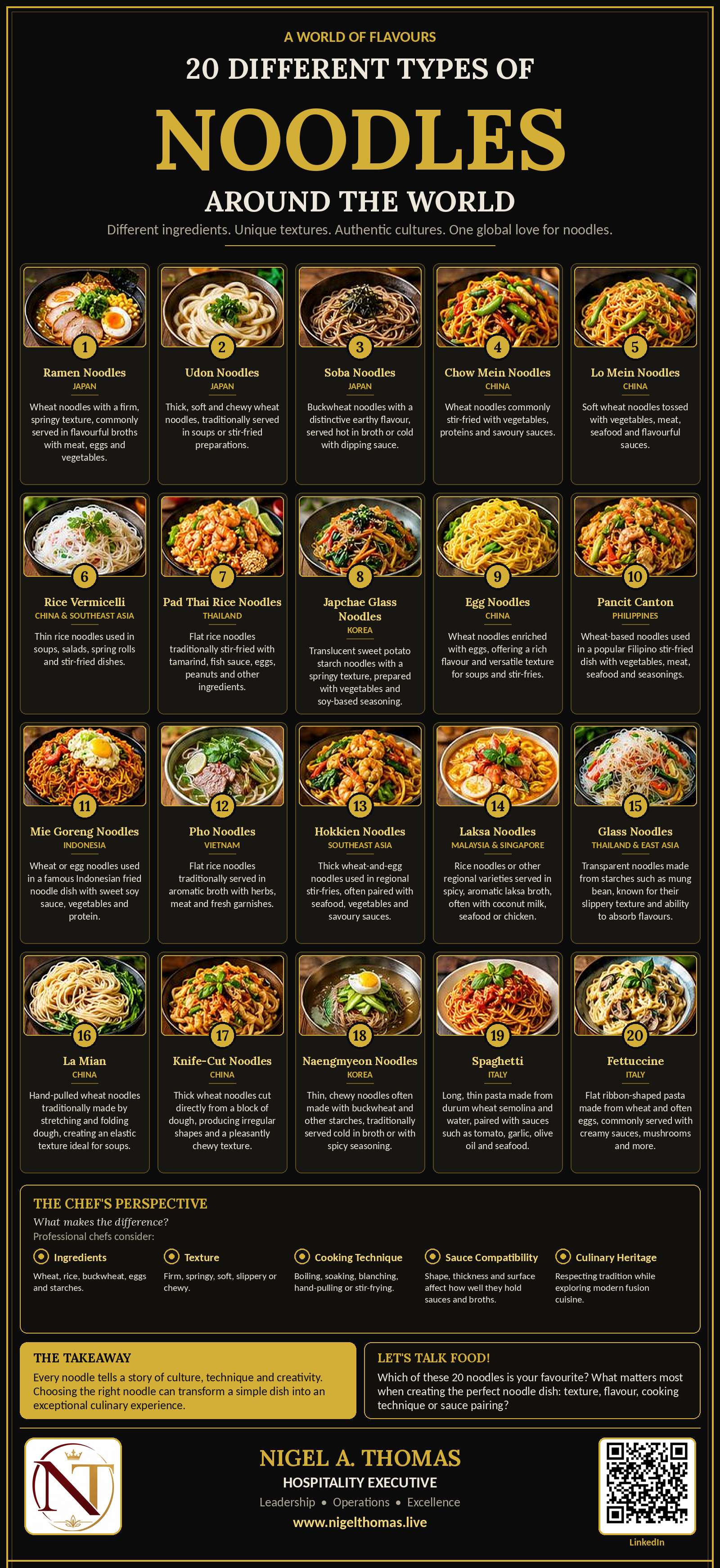
The Chef’s Perspective: What Makes the Difference?
Understanding noodles goes well beyond memorising their names. When a professional chef chooses a noodle for a dish, five things are weighed almost instinctively.
The five factors
- Ingredients: wheat, rice, buckwheat, eggs and starches each behave differently under heat and in sauce.
- Texture: firm, springy, soft, slippery or chewy; the texture should match the dish, not fight it.
- Cooking technique: boiling, soaking, blanching, hand-pulling or stir-frying decide how a noodle should be prepared.
- Sauce compatibility: shape, thickness and surface determine how well a noodle holds sauce or broth.
- Culinary heritage: respecting tradition while exploring modern fusion keeps the dish honest.
A thin, delicate rice vermicelli would vanish in a heavy ragu, and a thick udon would overwhelm a light consomme. Matching the noodle to the sauce is the single most useful skill to build, and the more you cook, the more instinctive it becomes.
Cooking Techniques Every Kitchen Should Master
Boiling and shocking. Most wheat and egg noodles are boiled in plenty of water, then drained. When serving cold, rinse them under cold running water to remove surface starch and halt cooking. Soba, naengmyeon and cold sesame noodles all depend on this step.
Soaking. Rice noodles and glass noodles are often soaked in warm or hot water rather than boiled. This gives better control and avoids overcooking. Check them frequently, because the window between underdone and mushy is short.
Stir-frying. A hot wok, a small quantity of food at a time and quick tossing are essential. Overloading the wok drops the temperature, and the noodles steam instead of fry. For hotel volumes, work in batches and finish to order.
Hand-pulling and knife-cutting. These are skills worth training for chefs who want a signature item. The dough needs to rest so the gluten relaxes, otherwise it springs back and tears.
Finishing in the sauce. This applies to pasta and to many Asian stir-fries. The noodle spends its last moments in the sauce, absorbing flavour, instead of being simply covered with it. A splash of cooking water brings the sauce together.
Noodles in a Hotel and Restaurant Operation
From a management point of view, noodles are one of the most profitable categories on a menu. The raw material cost is low, portions are easy to control, and the perceived value is high when the dish is well presented. A few practical points I have found useful over the years follow.
Kitchen and F&B tips
- Mise en place is everything. Pre-portion noodles, sauces, garnishes and proteins so a bowl can be assembled in under three minutes.
- Standardise portions. Use a weight, typically 80 to 100 g dry or 150 to 200 g cooked for a main course, and record it in the standard recipe card.
- Blanch and chill for volume. For banquets, cook noodles to just under done, shock them, lightly oil them and refresh in boiling water to order.
- Control allergens. Wheat, egg, soy, sesame, peanut and shellfish appear throughout noodle dishes. Label menus clearly and keep gluten-free noodles and utensils separate.
- Store correctly. Keep fresh noodles refrigerated and use within the date on the pack. Keep dried noodles sealed in a cool, dry store. Cooked noodles should be cooled quickly and held below 5 degrees Celsius, following your HACCP plan.
- Train the team. A noodle station is a skill station. Teach timing, wok technique and plating, and rotate staff so the knowledge is shared.
Pairing Noodles With Sauces and Broths
A simple rule of thumb: delicate sauces and clear broths call for thin noodles, while robust, oily or chunky sauces call for thicker ones. Rice vermicelli and glass noodles suit light dressings and clear soups. Ramen, udon and la mian handle intense broths. Chow mein, mie goreng and pancit canton need noodles that can survive the wok. Fettuccine carries cream and mushroom, while spaghetti suits oil, tomato and seafood. When you create a fusion dish, begin by respecting these relationships and only then break them deliberately.
Consider also the temperature and the setting. Cold noodle dishes such as soba, naengmyeon and vermicelli salads are very effective in hot climates and at outdoor venues. Hot, brothy bowls are comforting in the monsoon season or at hill-station resorts, and a well-run noodle bar can become one of the most talked-about features of a property.
Common Mistakes and How to Avoid Them
The most frequent error is overcooking. Noodles continue to cook in a hot sauce or broth, so draw them out when they are slightly firmer than you want to serve them. The second is skipping the rinse for cold dishes, which leaves them gummy. The third is under-seasoning the water for pasta, which cannot be fixed later. The fourth is using the wrong noodle simply because it is available, for example, a thin vermicelli in a stir-fry that needs a strong strand. The fifth is crowding the wok. Finally, do not forget to taste the noodle itself as it cooks, because the best test of doneness is always your own palate.
The Takeaway
Every noodle tells a story of culture, technique and creativity. Choosing the right noodle can transform a simple dish into an exceptional culinary experience.
Frequently Asked Questions
Which noodles are gluten free? Pure rice noodles, rice vermicelli, glass noodles made from mung bean or sweet potato starch and 100 per cent buckwheat soba are gluten free, but always verify the ingredient list because many products are blended with wheat.
What is the difference between chow mein and lo mein? Chow mein noodles are stir-fried and often have a slightly crisp edge, while lo mein noodles are boiled and tossed in sauce, so they stay soft.
Are ramen and udon the same? No. Ramen is thinner, springy and made with kansui. Udon is thicker, softer and made without it.
Can pasta be used in Asian dishes? It can, as a fusion technique, but it will behave differently. Traditional noodles are matched to their sauces, so test small batches before adding a pasta-based dish to the menu.
Which noodle is best for a buffet? Lo mein, pancit canton and mie goreng hold well. Delicate rice noodles are better cooked to order.
Let’s Talk Food
Which of these 20 noodles is your favourite? What do you consider most important when creating the perfect noodle dish: texture, flavour, cooking technique or sauce pairing? Share your thoughts and signature noodle dishes with me on LinkedIn.