Walk into any well-run restaurant an hour before service and you'll see two very different worlds preparing for the exact same goal. 🍽️ On one side of the pass, a Beverage Manager is restocking the speed rail, polishing glassware, and checking the keg lines. On the other, a Chef is laying out knives on a magnetic strip, color-coding cutting boards, and sharpening a blade that's about to break down forty pounds of protein. Neither side could survive a Friday night without the right equipment — and neither gets much credit for how much skill lives inside that equipment. This guide walks through both worlds: the gear that defines Front of House beverage operations, and the tools that define Back of House kitchen work.
The Beverage Manager's Equipment Arsenal 🍹
A Beverage Manager's job isn't just curating a menu — it's running a small, fast-moving production line of ice, liquid, and glass, often under the pressure of a packed room. Every piece of equipment behind the bar exists to make that production line faster, more consistent, and safer. Here's what's actually in that arsenal.
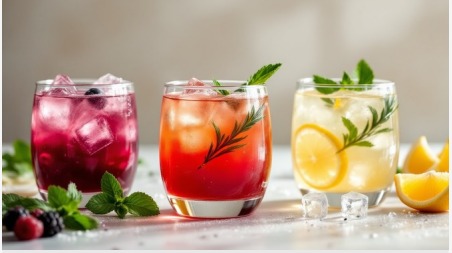
🥃 Measuring & Mixing Tools
📏 Jigger
The bartender's measuring spoon — usually a double-sided stainless cone giving exact pours (e.g. 1oz/2oz). Consistency here directly controls cost and taste.
Precision pouring🥄 Bar Spoon
A long, twisted-handle spoon used to stir cocktails gently without bruising or over-diluting spirits, and to layer ingredients in stacked drinks.
Stirred cocktails🔨 Muddler
A blunt wooden or plastic rod used to crush herbs, fruit, and sugar at the bottom of a glass — releasing oils and juice for drinks like a Mojito or Old Fashioned.
Flavor extraction🍸 Cocktail Shaker
Comes in two main styles: the three-piece Cobbler shaker (built-in strainer, beginner-friendly) and the two-piece Boston shaker (a metal tin plus glass or metal base, preferred by pros for speed and seal).
Emulsifying drinks🧵 Hawthorne Strainer
A flat strainer with a coiled spring that fits inside a shaker tin, holding back ice and pulp while pouring a smooth cocktail.
Shaken drinks🕸️ Fine Mesh Strainer
Used in tandem with a Hawthorne for "double straining," catching small ice shards or herb fragments for a silky finish.
Double straining🍷 Glassware & Underbar Organization
🥃 Glassware Sets
Rocks, highball, coupe, Nick & Nora, flute, Collins, snifter, and wine glasses — each shape engineered to direct aroma and temperature differently. Glass selection is part of the recipe.
Presentation & aroma🏎️ Speed Rail
The well of bottles mounted at the bartender's hip — arranged by frequency of use so the busiest spirits are grabbed without looking.
Workflow speed🧊 Ice Machine & Ice Wells
Beverage Managers often spec different ice types — cubed, crushed, or clear "Kold-Draft" cubes — because ice shape changes dilution rate and drink temperature.
Dilution control🧴 Bar Mats & Rail Mats
Rubber mats that absorb spills, reduce glass breakage, and keep the workstation from becoming a slip hazard during a rush.
Safety & cleanup🍇 Wine & Spirits Service
🍾 Waiter's Friend (Corkscrew)
The compact folding corkscrew every server carries — built with a foil cutter, worm, and lever for fast, clean cork removal tableside.
Tableside service🌬️ Decanter
Used to aerate young, tannic reds or separate sediment from older vintages, opening up aroma before the wine reaches the glass.
Aeration💉 Coravin / Wine Preservation System
A needle-based system that pours wine from a bottle without removing the cork, letting Beverage Managers sell wine by the glass without spoilage.
By-the-glass programs❄️ Wine Fridge / Cellar Storage
Temperature- and humidity-controlled storage that protects a wine list's value — reds, whites, and sparkling each held at their ideal serving range.
Inventory protection🍺 Draft, Cold Storage & Tech
🚰 Draft Beer System
Kegs, CO2/nitrogen tanks, and chilled lines running to the tap tower. Line cleaning and pressure balancing are constant Beverage Manager responsibilities.
Draft quality🥤 Soda Gun & Post-Mix System
Delivers mixers (cola, tonic, soda water) from bulk syrup tanks instead of bottles — faster service and lower cost per pour.
High-volume mixers🍋 Citrus Juicer / Press
Fresh-pressed lime, lemon, and orange juice is the backbone of most classic cocktails; a hand press or electric juicer keeps up with volume.
Fresh juice program🔬 Refractometer / Hydrometer
Used by more technical bar programs to measure sugar content (Brix) in syrups and batched cocktails, keeping recipes consistent night after night.
Recipe consistency💻 POS System
The point-of-sale terminal ties every pour to inventory and revenue — Beverage Managers use POS data to track pour cost percentage and catch over-pouring.
Cost control🌿 Garnish Caddy
A multi-compartment tray of citrus wheels, olives, cherries, herbs, and picks, replenished throughout service to keep garnishing fast and tidy.
Finishing touches"A bar program is only as consistent as the tools behind it. Great bartenders rely on great equipment to make the same drink taste the same way every single time." 🍸
The Chef's Toolkit: Cutting Boards & Color Coding 🔪
If a bar's job is consistency in a glass, a kitchen's job is consistency — and safety — on a plate. The single most important food-safety habit in any professional kitchen is color-coded cutting boards, a system designed to stop cross-contamination before it starts. Each color is assigned to a specific food category, so raw chicken juice never touches a salad, and fish never lingers where bread is sliced.

Some kitchens add a purple board for allergen-flagged ingredients. Exact color schemes vary slightly by region and health code, but the principle — one color, one category, no crossover — is universal across professional kitchens.
Beyond color, board material matters too. Dense plastic (polyethylene) boards are non-porous, dishwasher-safe, and the standard for raw-protein stations because they resist bacteria absorption. Wooden boards, while beautiful and gentler on knife edges, are reserved in most professional settings for bread, cheese, and garnish work rather than raw meat. Larger kitchens also use rubber composite boards on prep tables for their durability under repeated knife strikes.
Knives: The Chef's Most Personal Tool 🗡️
Ask any Chef and they'll tell you: a knife roll is closer to a surgeon's case than a toolbox. Most cooks own their own knives and guard them fiercely, because a blade's weight, balance, and edge become an extension of the hand. Here's the core lineup found in nearly every professional kitchen.
🔪 Chef's Knife
The workhorse of the kitchen, typically 8–10 inches with a broad, slightly curved blade that allows a rocking motion for fast chopping, dicing, and mincing. If a cook owns only one knife, this is it — used for everything from breaking down vegetables to portioning proteins.
🍓 Paring Knife
A small, 3–4 inch blade for precision work where a chef's knife is overkill: peeling, trimming, deveining shrimp, hulling strawberries, or turning vegetables into decorative shapes (the classic "tourné" cut).
🦴 Boning Knife
Narrow and flexible, designed to maneuver around joints, cartilage, and bone with minimal waste — essential for butchery stations breaking down whole chickens, primal beef cuts, or pork.
🍖 Carving / Slicing Knife
A long, thin, often slightly flexible blade meant for clean, even slices off roasted meats — think a whole turkey, prime rib, or ham. The length lets the chef slice in one continuous motion instead of sawing, which preserves juices and presentation.
🍞 Bread Knife
Identified by its serrated edge, built to saw through crusty exteriors without crushing soft interiors — equally useful on cakes, tomatoes, and other delicate-skinned items.
🪓 Cleaver
Heavy and rectangular, used for forceful tasks like chopping through bone, splitting poultry, or crushing garlic with the flat side. Common in butchery and Asian-influenced kitchens.
🐟 Fillet Knife
Thin and highly flexible, purpose-built to glide along fish bones and skin to separate clean fillets with minimal flesh loss.
🔧 Utility Knife
A mid-size all-rounder, smaller than a chef's knife but larger than a paring knife — handy for sandwiches, smaller produce, and quick tasks that don't need a full-size blade.
🥬 Santoku
A Japanese-style knife with a flatter edge and sheepsfoot tip, popular for vegetable-heavy prep and clean push cuts rather than rocking motions.
🧀 Mezzaluna & Mechanical Choppers
The mezzaluna's curved, double-handled blade rocks side to side for fast herb and garlic chopping. Many kitchens pair this with mechanical choppers and food processors for high-volume prep — mincing onions, nuts, or herbs in seconds rather than minutes — and mandoline slicers for paper-thin, uniform vegetable cuts that would be nearly impossible to replicate by hand.
🪨 Honing Rod & Whetstone
A knife is only as good as its edge. Chefs hone blades almost daily with a honing rod to realign the edge, and periodically sharpen on a whetstone to actually remove metal and restore a true edge — a dull knife is far more dangerous than a sharp one because it requires more force and is more likely to slip.
Supporting Tools That Keep a Kitchen Moving 🍳
🦾 Tongs
The most-used tool on any line — flipping proteins, plating, and pulling items from hot oil or grills without direct hand contact.
Line work🐠 Fish Spatula
Thin, slotted, and flexible — slides under delicate fillets and pastries without tearing them apart.
Delicate items🌀 Whisk
Aerates and emulsifies sauces, eggs, and batters — a balloon whisk for volume, a flat whisk for shallow pans and gravies.
Sauces & batters🌡️ Probe Thermometer
Confirms safe internal temperatures on proteins — arguably the single most important food-safety tool after the color-coded boards.
Food safety⚖️ Digital Scale
Used for portion control and baking precision, where volume measurements like cups are too inconsistent.
Portioning🥔 Peeler
A simple Y-peeler or straight peeler removes skins fast with far less waste than a knife.
Prep speed✂️ Kitchen Shears
Spatchcocking poultry, trimming herbs, or opening packaging — a small tool that saves constant trips back to the knife roll.
Multi-purpose🍳 Sauté & Sheet Pans
The vessels everything ultimately passes through — sized, seasoned, and chosen station by station for the right heat transfer.
Cooking vesselsTwo Stations, One Standard 🤝
On the surface, a Hawthorne strainer and a boning knife have nothing in common. But both rooms are run on the same underlying philosophy: the right tool, used the same way every time, is what turns a one-off good drink or good dish into a repeatable standard guests can trust.
| Theme | 🍹 Front of House (Bar) | 🔪 Back of House (Kitchen) |
|---|---|---|
| Precision tool | Jigger | Digital scale |
| Primary cutting/extraction tool | Muddler, channel knife, citrus press | Chef's knife |
| Safety system | Bar mats, glass handling protocol | Color-coded cutting boards |
| Cost-control tool | POS pour tracking | Portion scales, prep sheets |
| Climate-sensitive storage | Wine fridge, draft lines, ice machine | Walk-in cooler, blast chiller |
| Daily maintenance ritual | Polishing glassware, cleaning shaker tins | Honing knives, sanitizing boards |
The Beverage Manager and the Chef rarely cross paths during service — one is calling out drink tickets, the other is calling out plate tickets — but they're solving the same problem from opposite ends of the building: how do you take raw materials and deliver something excellent, safe, and identical, ticket after ticket, all night longEquipment is the answer in both rooms. It's just dressed differently — stainless and glass on one side, steel and color-coded plastic on the other.
🍽️ The Real Lesson
Good equipment doesn't make a bartender or a chef — but it removes the excuses. Once the right tools are in place, what separates good from great is the same on both sides of the pass: practice, care, and respect for the craft.