Area Manager Restaurant Visit: The 5 Diagnostic Lenses
Every restaurant visit is an opportunity to diagnose, not just inspect. The difference between a good area manager and a great one lies in how they see the operation — not what they look at, but what they see. This framework, the 5 Diagnostic Lenses, is designed to move area managers beyond checklist inspections and into real-time diagnosis, so a routine store visit becomes a structured, data-driven assessment that uncovers root causes, not just symptoms.
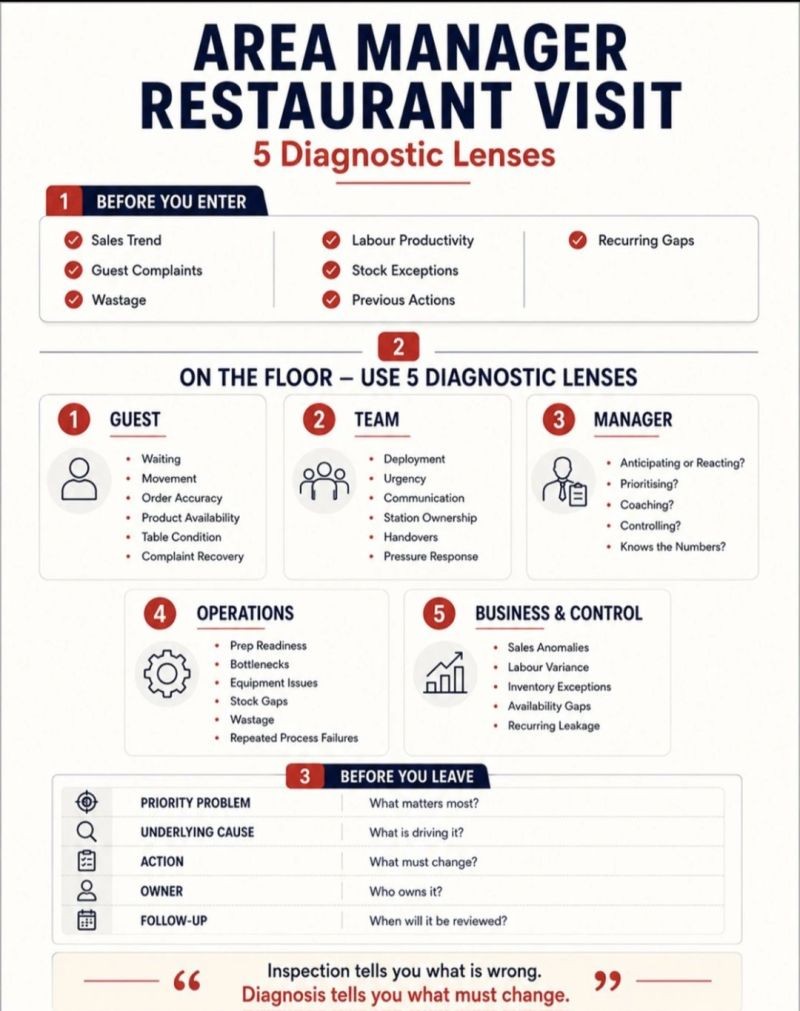
Use these five lenses before you enter, on the floor, and before you leave. Each one sharpens your focus so you leave with clarity, not just observations.
1. Before You Enter — The Data Layer
Before you step onto the floor, you already have a story — if you know how to read it. This is where you build your hypothesis. Don't walk in blind.
- Sales trend — up, down, or flat? What's the pattern over the last four weeks?
- Guest complaints — what are customers telling you? Look for recurring themes.
- Wastage — are there spikes? Which categories are bleeding?
- Labour productivity — sales per labour hour. Over- or under-deployed?
- Stock exceptions — variances, write-offs, or discrepancies that signal deeper issues.
- Previous actions — what did you agree last time? Has it been executed?
This pre-work tells you where to look before you even walk through the door.
2. On the Floor — The 5 Diagnostic Lenses
Once you're inside, shift from observation to diagnosis. Each lens reveals a different layer of reality.
Walk the floor with these lenses active. Take notes, ask questions, and observe without interrupting. The goal is not to catch problems — it's to understand them.
3. Before You Leave — The Priority Framework
As you wrap up, resist the urge to list everything you saw. Distill your findings into a single, focused action plan.
| Element | Your Answer |
|---|---|
| 🔴 Priority Problem | What matters most right now? |
| 🔍 Underlying Cause | What is driving that problem? |
| ✅ Action | What must change — specifically? |
| 👤 Owner | Who owns the outcome? |
| 📅 Follow-Up | When will it be reviewed? |
This isn't a to-do list — it's a commitment. Naming the priority problem, its root cause, and the specific action creates a line of sight from diagnosis to execution.
Why This Framework Works
Most area managers conduct visits that are heavy on observation but light on diagnosis. They see the symptoms — a dirty table, a slow line, a stock gap — but don't connect the dots to the underlying system failure. This framework forces you to look before you leap, see through multiple lenses, and distill to one action.
Conclusion
Use these lenses on your next visit. Then use them again. Over time, they become second nature — and your visits become more impactful, more focused, and more valuable to your restaurants.